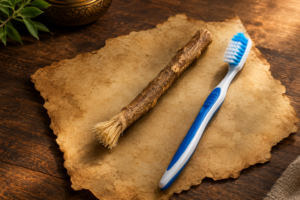
Most people who give up on miswak never actually got to the brushing part. They opened the packet, chewed the end, got a mouthful of splinters and a bitter taste, and decided it was not for them.
The preparation is the part that goes wrong, and it goes wrong in about five predictable ways. This guide walks through it properly, from opening the packet to the moment the bristles are ready, and covers what to do when each of those five things happens to you.
Brushing itself is a separate skill with its own technique, and we cover that fully in how to use a miswak stick correctly. This page stops where that one begins.
The Short Answer
Rinse the stick, rehydrate it if it feels stiff, peel about a centimetre of bark from one end, chew that end gently until the fibres fan out into soft bristles, and test them against the back of your hand before they go anywhere near your gums. Total time is five to ten minutes, or longer if the stick needs a proper soak.
You do this once per stick. After that you are only trimming and re-chewing a fresh tip every couple of days, which takes under a minute.
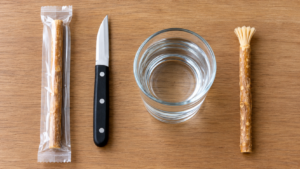
What You Need
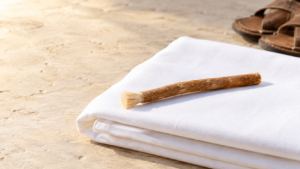
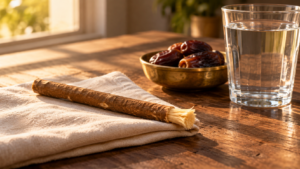
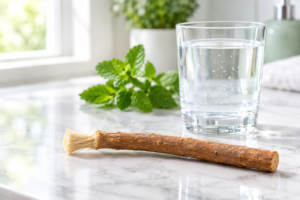
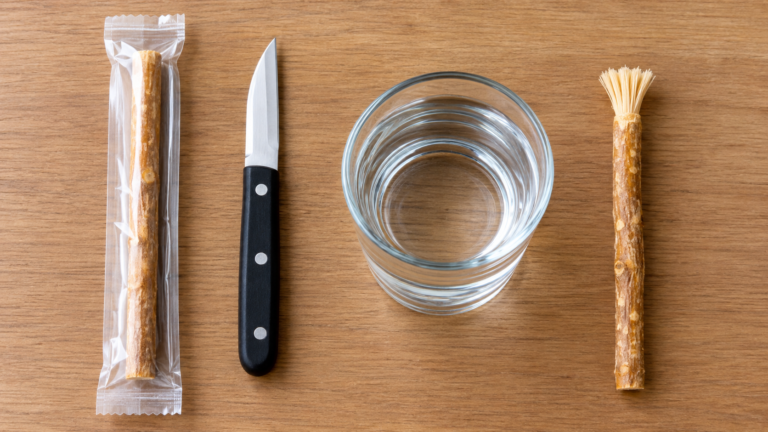
- The stick itself. Roughly as thick as your thumb and 15 to 20 cm long suits most adults.
- Clean water. Room temperature. Not hot.
- A small knife, or your fingernail. A knife gives a cleaner peel. Wash the blade first.
- A cup or glass, if the stick needs soaking.
That is the whole list. No sterilising solution, no boiling, no special tools. People overcomplicate this.
Step 1: Inspect the Stick Before Anything Else
Two minutes here saves you a frustrating twenty later. A stick that arrived in poor condition will not prepare properly no matter what you do to it.
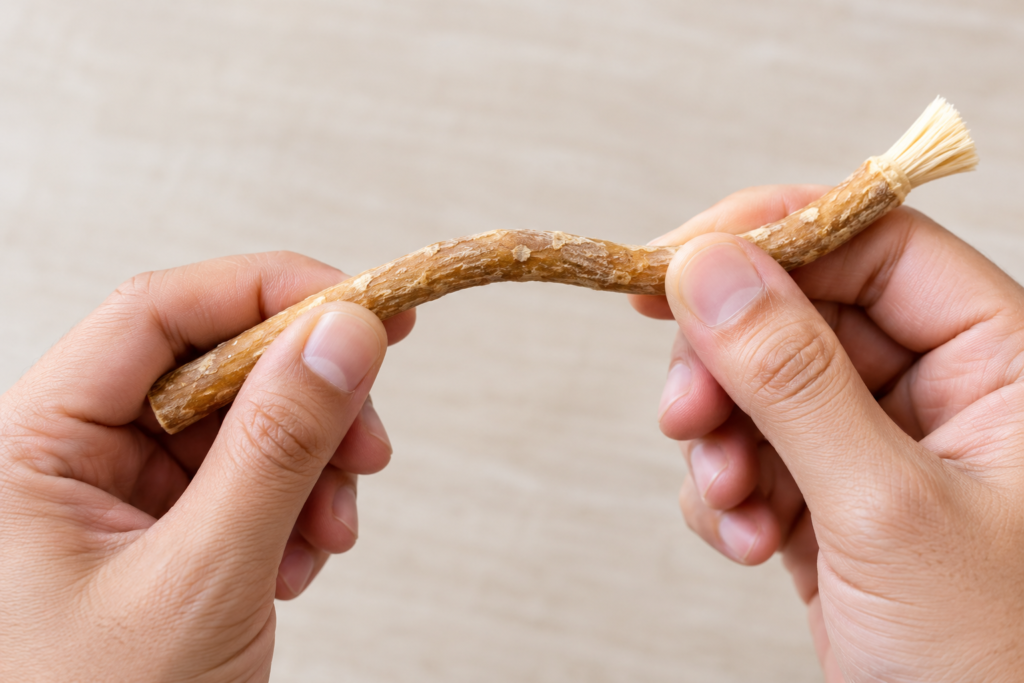
Check four things:
- Flex. Press gently. It should give slightly. If it feels like a pencil and snaps rather than bends, it has dried out.
- Smell. Fresh arak is woody and faintly peppery. Musty, sour or damp-cardboard smells mean it has gone off.
- Bark. Should be tight against the wood. Bark flaking off on its own points to poor storage in transit.
- Surface. Look for dark or fuzzy patches, especially at the cut ends. That is mould, and it is the one finding that means bin the stick rather than try to rescue it.
If you bought a sealed pack: only open one stick at a time. The rest stay sealed and stay fresh. Opening the whole bundle on day one is the single most common reason people end up with a drawer of dried-out sticks.
For that storage guidance, see how to store miswak properly. If your sticks routinely arrive dry, the problem may be upstream, and where to buy miswak sticks covers what to look for in a supplier.
Step 2: Rinse It
Hold the end you are about to prepare under running water for ten or fifteen seconds and rub it with your fingers. This removes dust and anything picked up in handling and transport.
Do not scrub it with soap. Do not use boiling water. Both strip the surface and neither is necessary.
Step 3: Rehydrate If It Feels Stiff
This is the step the internet gives one line to, and it is the step that decides whether the rest works.
A stick that has lost moisture will not form bristles. Chew it and the fibres either refuse to separate or break into hard splinters. Forcing it is how people end up with sore gums and a bad first impression.
| How the stick feels | What to do | How long |
|---|---|---|
| Flexible, slightly moist, bends without cracking | Nothing. Go straight to peeling | None |
| Firm but not brittle | Soak the tip only, in room temperature water | 20 to 30 minutes |
| Stiff, no give, but no cracks | Soak the tip, then re-test before chewing | 2 to 4 hours |
| Hard and brittle, snaps rather than bends | Soak overnight. If it is still brittle afterwards, replace it | 8 to 12 hours |
| Cracked lengthwise along the grain | Replace it. Splitting wood splinters in the mouth | Not salvageable |
| Dark patches or a fuzzy surface | Replace it. Do not soak or trim around it | Not salvageable |
Three rules for soaking:
- Soak the tip, not the whole stick. Saturating the entire length makes the handle soggy and shortens the stick’s working life. Stand it in a glass with two or three centimetres of water.
- Room temperature water only. Hot water damages the fibres and drives off the volatile compounds that make the stick worth using.
- Shake off the excess afterwards. A soaked stick that then gets sealed in a container is how mould starts. Climate makes a real difference here, as explained in how humidity affects miswak quality.
Step 4: Peel the Bark
Remove about one centimetre of bark from one end. Roughly the width of a thumbnail.
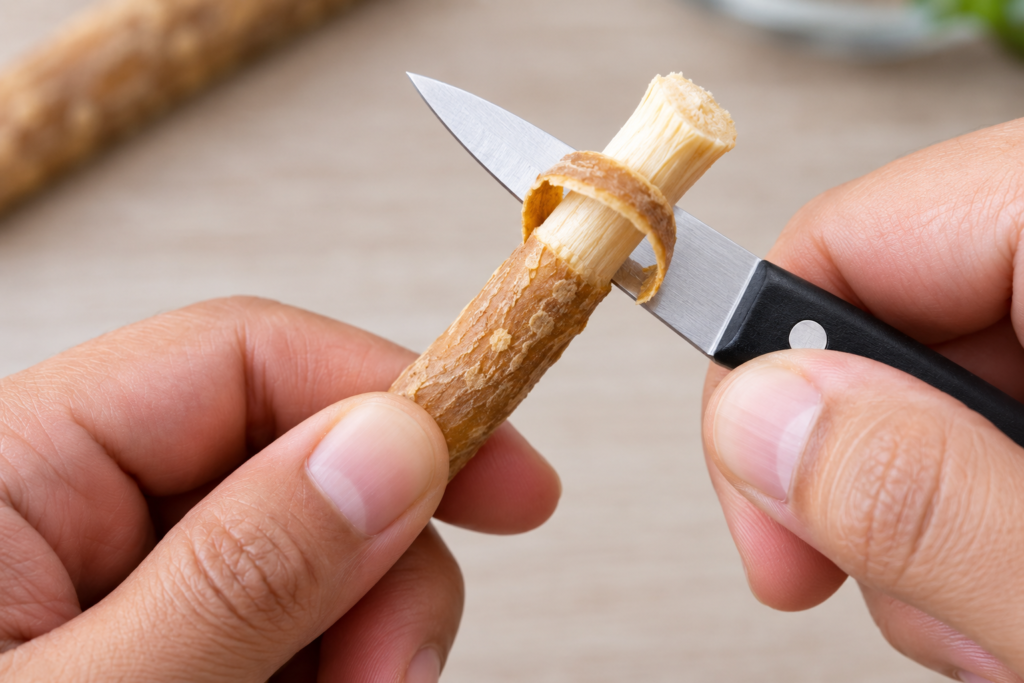
Hold the stick firmly and work the blade or your nail under the bark edge at the cut end, then peel away from you along the length. It should come off in strips. If it resists, the stick is still too dry, so go back to soaking.
Two things people get wrong here. Peeling too much, which wastes stick and gives you a floppy tip with no structure. And skipping the peel entirely, which does not work at all, because bark will not soften into usable bristles no matter how long you chew it.
Peel a clean ring all the way round. A partial peel leaves a hard ridge of bark that scrapes the gums on one side.
Step 5: Chew the Tip Into Bristles
Place the peeled end between your molars, not your front teeth. Molars give you controlled, even pressure. Front teeth tend to crush one spot.
Bite gently and rotate the stick slightly between bites, working your way around the full circumference. You are separating fibres, not crushing wood. Aggressive chewing produces a mashed, splintered tip rather than a brush.
Expect this to take one to two minutes on a well-hydrated stick. The taste will be bitter and faintly peppery. That is the compounds coming out of the wood, which is the point.
Step 6: Test the Bristles
Before it touches your teeth, press the tip against the back of your hand.
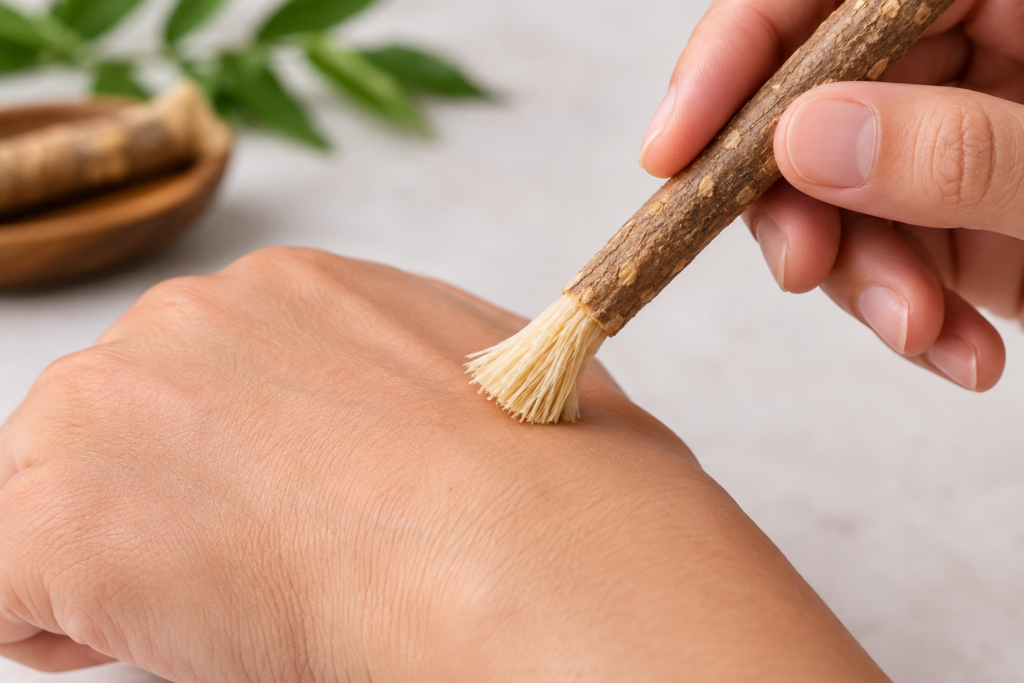
- Soft and slightly springy, fibres fanned out. Ready.
- Scratchy or prickly. Not ready. Chew for another thirty seconds, or soak longer if it will not soften.
- Mushy, with no structure. Over-soaked or over-chewed. Trim it back and start again on fresh wood.
This test takes three seconds and it is the difference between a good first experience and sore gums. Do not skip it, especially if your gums are already tender. There is specific guidance in miswak for sensitive gums.
Once the bristles pass, you are done preparing. Technique from here is covered in how to use a miswak stick correctly, and how many sessions a day in how often to use miswak.
Step 7: Look After the Rest of the Stick
You have prepared one centimetre of a twenty centimetre stick. The other nineteen need to stay in good condition, or you will be repeating step three every time.
After each session, rinse the tip, shake off the water, and stand it somewhere dry and airy with the bristle end upward. Not sealed in a wet container. Not face down on a wet surface. Full detail in the best way to keep miswak fresh.
Trim the used bristles every one to two days and chew a fresh tip. That takes under a minute since the stick is already hydrated. When to replace the whole thing is covered in signs your miswak needs replacing and how long does miswak last.
Troubleshooting
The five things that actually go wrong, and what each one means.
| Problem | Likely cause | Fix |
|---|---|---|
| Fibres will not separate, tip stays solid | Stick is too dry | Soak the tip for two to four hours and try again |
| Tip splinters into sharp fragments | Dry wood, or chewing too hard | Soak longer and chew gently with the molars, rotating between bites |
| Bristles feel scratchy against the hand | Under-chewed, or bark not fully removed | Check the peel goes all the way round, then chew another thirty seconds |
| Tip goes soft and shapeless | Over-soaked or over-chewed | Trim back to fresh wood and redo with a shorter soak |
| Taste is overwhelmingly bitter | Normal for fresh arak, especially the first week | It fades. Olive miswak is milder if it remains a problem, see types of miswak |
| Stick smells musty after a few days | Stored damp or sealed while wet | Bin the tip, trim well back, and change how you are storing it |
On that bitter taste, it is worth saying that the peppery bite is not a fault. It is the compounds doing what they do, and it settles within about a week as you get used to it. If it genuinely does not suit you, olive is the milder option. See types of miswak.
What to Expect in the First Week
A few things that are normal and a couple that are not, so you can tell them apart.
- Normal: a strong bitter taste that fades over several days, a slight tingling at the gums, and the feeling that you are being clumsy with it. The technique takes about a week to become automatic.
- Normal: mild gum tenderness in the first few sessions, particularly if you have not been flossing. Gums that are not used to being cleaned at the margin react at first.
- Not normal: bleeding that continues past the first week, sharp pain, or any cut. That means the pressure is too heavy or the bristles were not soft enough. See miswak stick side effects and safe and effective miswak usage tips.
Preparing a Stick for a Child
Two adjustments. Soak the tip longer than you would for yourself so the bristles come out noticeably softer, and prepare it yourself rather than having them chew it, since the chewing stage is where a child is most likely to bite off a fragment.
A thinner stick is also easier for smaller hands to control. Age guidance and supervision notes are in can children use miswak.
Frequently Asked Questions
How long does it take to prepare a new miswak?
Five to ten minutes if the stick is fresh. Add two to four hours if it needs soaking, or overnight if it is genuinely dry. After the first preparation, re-tipping takes under a minute.
Do I have to soak a miswak before using it?
Only if it is stiff. A fresh, flexible stick can be peeled and chewed straight away. Soaking a stick that does not need it makes the tip mushy rather than better.
How much bark should I peel off?
About one centimetre, all the way round. Less and the bark interferes with the bristles. More and you get a floppy tip without enough structure to clean with.
Can I use a knife instead of chewing it?
You can score the end lightly with a blade to help the fibres start separating, but chewing is what actually produces soft bristles. A knife alone leaves stiff, cut edges. The chewing also releases the compounds, so it is doing more than shaping.
Should I boil or sterilise a new miswak?
No. Boiling damages the fibres and drives off the volatile compounds. A rinse under running water is sufficient. General hygiene points are covered in hygiene tips for safe miswak use.
Why does my miswak taste so bitter?
Because it is fresh. The peppery bitterness comes from the active compounds in the wood, and a stick with no taste has usually lost most of them. It fades within about a week of regular use.
Can I prepare several sticks at once?
You can, but there is no reason to. A prepared tip starts drying out immediately, so you would just be creating work. Prepare one, keep the rest sealed.
The Bottom Line
Preparing a miswak is not difficult, but it is unforgiving of two mistakes: using a stick that is too dry, and chewing too hard. Almost every bad first experience traces back to one of those.
Check the stick, soak it if it needs it, peel a clean centimetre, chew gently with the molars, and test the bristles on your hand before they reach your gums. That is the whole process.
Get it right once and the rest is a thirty second trim every couple of days.
Buying in volume? Al Safaa Miswak supplies fresh, vacuum-sealed Salvadora persica sticks to distributors, retailers and oral care brands worldwide, packed to arrive flexible rather than dried out. Browse our products, see our miswak packaging solutions, or contact us for wholesale pricing.