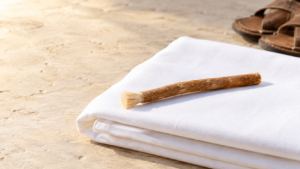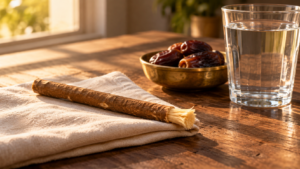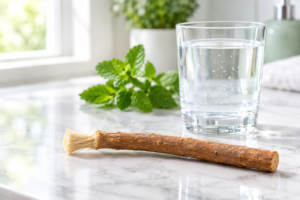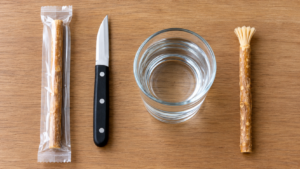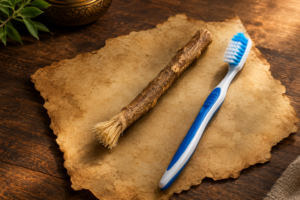

Most people who pick up their first miswak use it once, decide it was interesting, and then leave it on a shelf until it dries out. Which is a shame, because frequency is the entire point of this tool. It is not a once-a-day product pretending to be a toothbrush. It works precisely because you are meant to reach for it more often than that.
So how often is often enough? Here is the practical answer, plus what changes depending on who you are and what your mouth is dealing with.
The Short Answer
Use a miswak three to five times a day, for roughly two minutes each session. Twice a day is the floor if your schedule is tight. Five is the traditional pattern, tied to prayer times, and it is the frequency almost all of the favourable research on miswak is built around.
That is more sessions than most people manage with a toothbrush, and that gap is exactly where the benefit sits. A miswak needs no sink, no water and no paste, so the barrier to using it a fourth or fifth time is close to zero.
Why Frequency Matters More Than Technique Here
Plaque is a living bacterial film, not leftover food. It starts rebuilding on a clean tooth within about four hours, and the timeline from there decides how much damage it does.
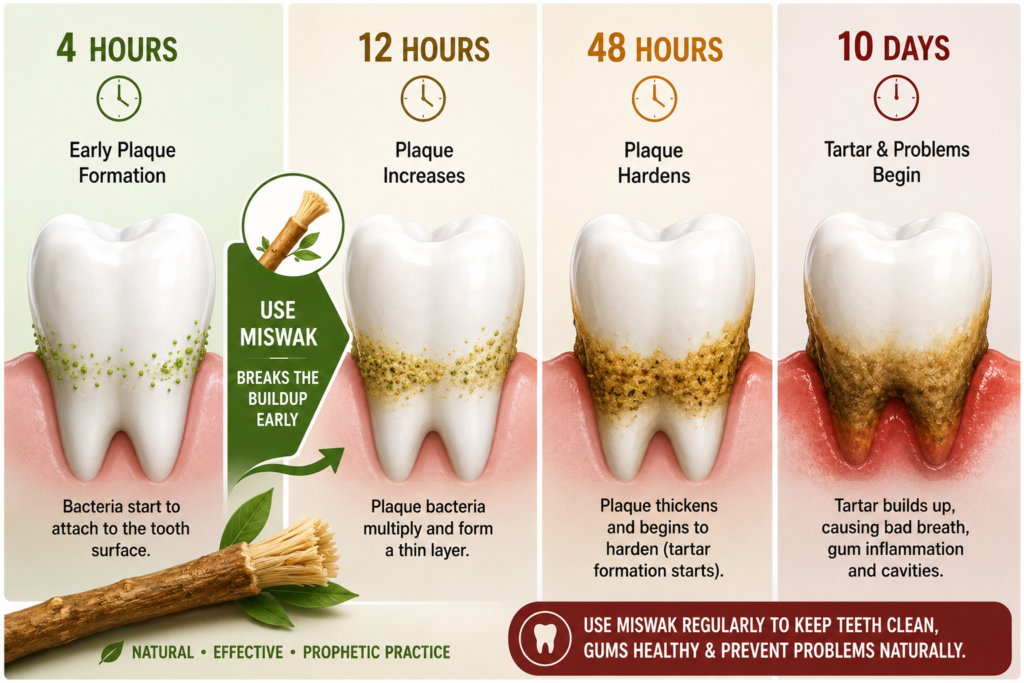
- Hours 0 to 4. A thin protein layer forms on the enamel. Harmless by itself.
- Hours 4 to 12. Early bacteria settle onto it. Soft, easy to wipe away.
- Hours 12 to 48. The colony matures, harsher anaerobic species arrive, acid output rises.
- Day 10 and beyond. Saliva minerals harden the film into calculus. Now only a dental scaler removes it.
Clean twice a day and you are catching the film somewhere in stage two or three. Clean five times and it never reliably gets past stage one. The bacteria are simply never given the hours they need to organise. That is the mechanism, and it is why a miswak used often beats a miswak used well but rarely.
The antibacterial compounds in the wood help on top of this, slowing recolonisation between sessions. If you want the evidence behind that, we went through it in does miswak actually work.
A Realistic Daily Miswak Schedule
You do not need to restructure your day. Here is a pattern that fits around normal routines.
| When | Why this slot | Priority |
|---|---|---|
| On waking | Clears the bacterial load that built overnight while saliva flow was low | Essential |
| After breakfast | Removes food debris before it feeds the biofilm. Wait 30 minutes if you had juice or fruit | High |
| Midday or after lunch | The easiest session to add, since no sink is needed | High |
| Late afternoon | Useful if you drink tea, coffee or soft drinks through the day | Optional |
| Before bed, with brush and fluoride paste | Saliva flow drops overnight, so enamel needs fluoride protection most here | Essential, do not substitute |
One rule worth keeping: the night session stays with a toothbrush and fluoride toothpaste. Miswak covers almost everything paste does, but it does not deliver fluoride at a therapeutic level. Full explanation in the comparison below.
We laid out where each tool fits in miswak vs toothpaste and miswak vs toothbrush.
How Long Should Each Session Be?
Around two minutes, the same as brushing. Split it roughly into four quarters of the mouth and give each about thirty seconds. Most beginners rush it and finish in forty seconds, which is not long enough for the natural compounds to do much.
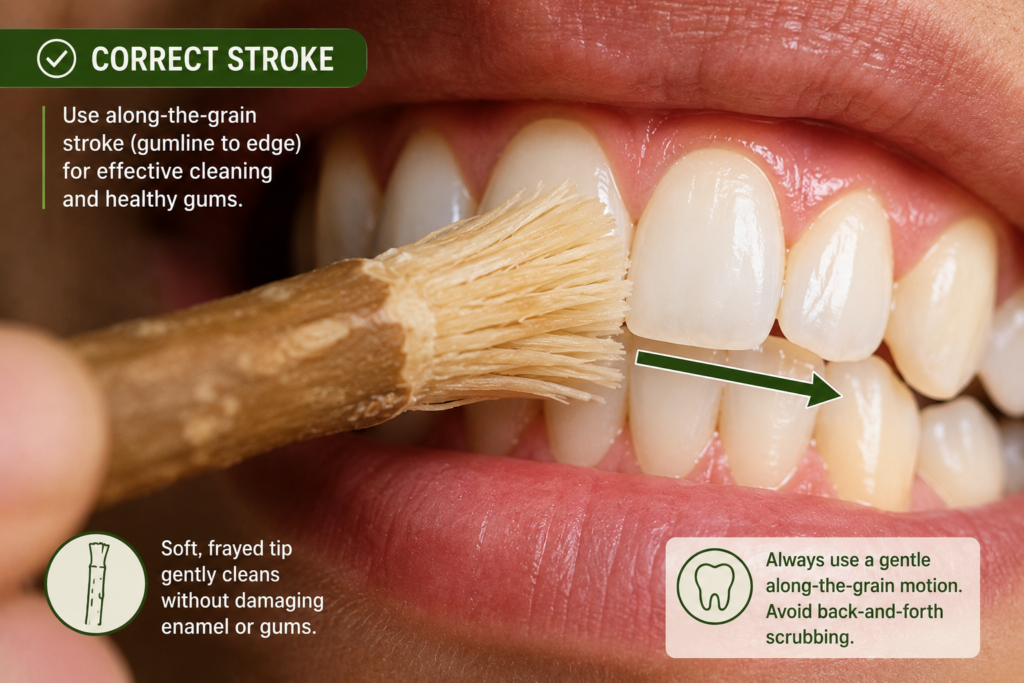
Pressure matters more than speed. Brush along the grain of the teeth in short strokes rather than sawing side to side, and let the fibres do the work. If your gums feel sore afterwards, you pressed too hard. The proper method is walked through step by step in how to use a miswak stick correctly.
Can You Use Miswak Too Often?
Frequency is rarely the problem. Pressure and a dried-out stick are. Five gentle sessions with a fresh, soft-tipped miswak will not damage anything. Two aggressive sessions with a hard, month-old stick can.
The three habits that actually cause harm:
- Heavy scrubbing. Repeated hard pressure pulls gum tissue back from the teeth. This is the most common issue dentists see in long-term users, and it is a technique fault, not a tool fault.
- Sawing side to side. Horizontal scrubbing wears at the neck of the tooth where enamel is thinnest.
- Using a hardened stick. Dry wood behaves like fine sandpaper. Soak the tip in clean water for a few hours or trim back to fresher wood before use.
There is one timing trap worth knowing. After anything acidic, citrus, soft drinks, vinegar dressings, enamel is temporarily softened. Cleaning immediately can wear it. Rinse with plain water, wait about thirty minutes, then use the miswak. The full risk list is in miswak stick side effects, and the practical precautions are in safe and effective miswak usage tips.
How Often for Different People
The three to five range is a general guide. Adjust it to your situation.
| If you are | Recommended frequency | Notes |
|---|---|---|
| New to miswak | 2 times a day for the first week, then build up | Give your gums time to adjust. The taste takes about a week to get used to |
| Dealing with gum inflammation | 4 to 5 times a day, very light pressure | The tannins help, but only if you are not scrubbing |
| A heavy tea or coffee drinker | 4 times, including one after your last cup | Stops staining before it settles into the enamel surface |
| A smoker | 4 to 5 times a day | Higher bacterial load and heavier staining both need more frequent removal |
| Fasting during the day | Follow the guidance you normally observe | Scholarly opinion differs. Many permit an unscented stick |
| A child over six | 1 to 2 times, supervised | Fluoride toothpaste stays the main tool at this age |
| Wearing braces | Not as your primary tool | Fibres cannot navigate brackets and wires. Ask your orthodontist first |
| Travelling | Same as home, it is the easiest tool to keep up | No water or paste needed, which is the whole advantage |
If sore or bleeding gums are your reason for trying miswak, there is a dedicated guide on miswak for sensitive gums. For younger users, see can children use miswak.
How Often to Trim and Replace the Stick
Frequency of use is only half the answer. The stick itself needs maintenance, or you end up cleaning with something that has stopped working.
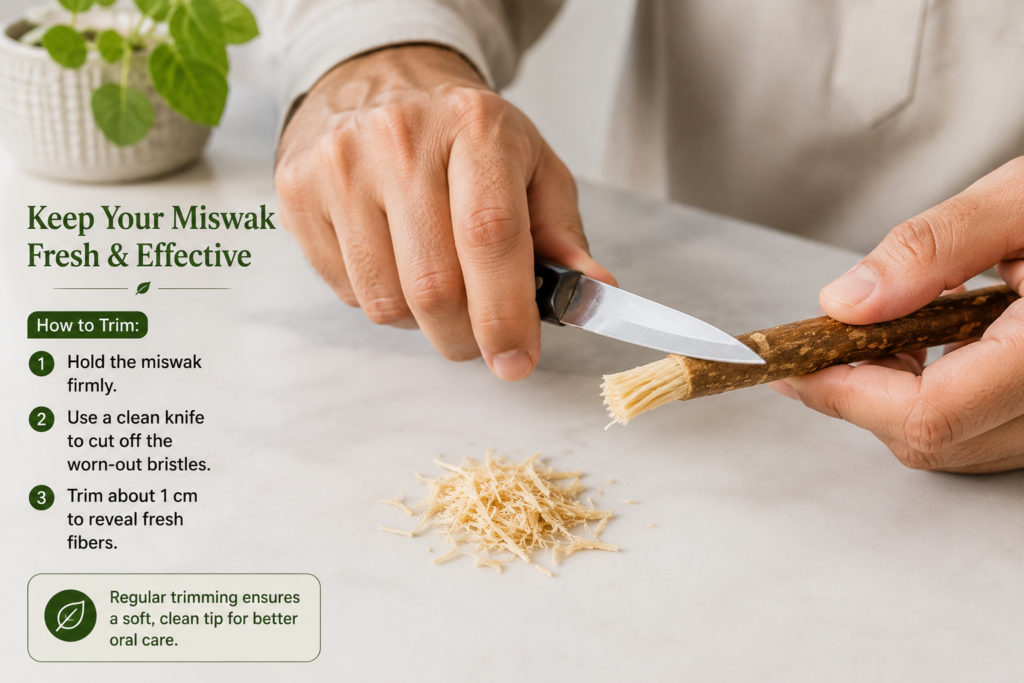
- Trim the used bristles every one to two days. Cut off the frayed tip and chew a fresh one. Worn fibres go flat and stop cleaning properly.
- Rinse before and after every session. It is organic material going in your mouth several times a day.
- Replace the whole stick every two to four weeks. Sooner if it hardens, smells musty, or refuses to form soft bristles.
Storage decides how long you get. Sealed in a wet pouch, it grows mould within days. Left in direct heat, it cracks. Somewhere dry, shaded and breathable is the middle ground. We covered this in how to store miswak properly and the best way to keep miswak fresh, and there is a lifespan breakdown in how long does miswak last plus the warning signs in signs your miswak needs replacing.
Where the Toothbrush and Floss Still Fit
Using a miswak five times a day does not remove the need for the other two things.
Fluoride, once a day minimum. Commercial paste carries 1,000 to 1,450 parts per million of fluoride, which is what hardens enamel against acid. Arak wood contains fluoride only in trace amounts. Keep the night-time brush.
Floss, once a day. Roughly 40 percent of a tooth surface sits in the contact points between teeth, and miswak fibres are too thick to reach there. So is a toothbrush, for that matter. Frequency of miswak use does not compensate for this. Nothing does except floss or an interdental brush.
Get those two right and five miswak sessions a day sit on top of a solid base. More on the broader routine in best oral care habits for whiter teeth.
Frequently Asked Questions
Is twice a day enough for miswak?
It works, and it is far better than nothing, but you are leaving most of the benefit unused. The research showing miswak matching or beating manual brushing is largely built on four to five daily sessions. At twice a day you are essentially using it as a toothbrush substitute rather than as the tool it is designed to be.
Can I use miswak every hour?
You can, but there is no added benefit past about five sessions, and the extra handling raises the chance of scrubbing too hard out of habit. Five is plenty. Spend the effort on technique instead.
Should I use miswak before or after eating?
After, in most cases, so you clear the food debris. The exception is anything acidic. After citrus, soft drinks or vinegar, rinse with water and wait about half an hour before cleaning.
How often should I use miswak for bad breath?
Four to five times a day, and include the tongue surface gently, since that is where most odour-causing bacteria live. Results usually show within a week. If breath problems persist beyond that, see a dentist, because it can point to gum disease or another underlying cause. We compared the options in miswak vs mouthwash.
Does using miswak more often whiten teeth faster?
It removes surface stains faster, yes, but it does not bleach enamel, so there is a ceiling to what more frequency achieves. Expect a cleaner natural shade in two to three weeks, not a dramatic change. Detail in does miswak whiten teeth.
Can I use miswak instead of brushing entirely?
For low cavity risk, mostly yes, provided you keep one fluoride session daily. If you have a history of cavities or fillings, no. Fluoride paste twice a day stays necessary, and miswak becomes an addition rather than a replacement.
The Bottom Line
Three to five sessions a day, two minutes each, light pressure, fresh stick. That is the whole formula. Keep your night-time fluoride brush and your daily floss, and the miswak handles everything in between.
If you only change one thing after reading this, make it frequent. A miswak used five times a day with average technique will outperform a miswak used once a day with perfect technique, every time.
Buying in volume? Al Safaa Miswak supplies fresh, vacuum-sealed arak sticks to distributors, retailers and oral care brands worldwide, direct from the source. Browse our products, see our miswak packaging solutions, or contact us for wholesale pricing.