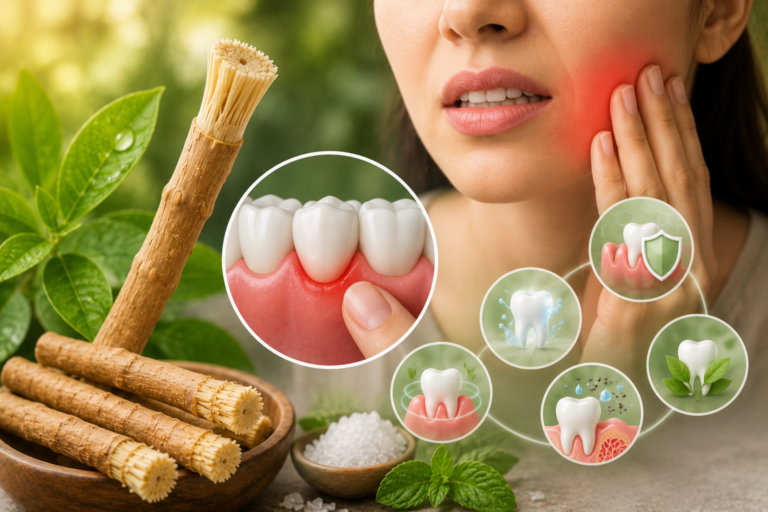
If your gums bleed when you brush, ache when you drink something cold, or feel tender for no obvious reason, the idea of scrubbing them with a wooden stick probably sounds like a terrible plan. I get it. A twig against inflamed gums? That’s the reaction most people with sensitive gums have when they first hear about miswak.
Here’s the short answer: yes, miswak is safe for sensitive gums — and in many cases it actually helps them heal. But there’s a catch, and it comes down to which stick you use and how you use it. Let me walk you through the whole picture, including when you should hold off. (And if you’re completely new to the stick itself, this beginner’s guide to miswak covers the basics before you dive into the gum-specific stuff below.)
Why Miswak Is Gentler Than It Looks
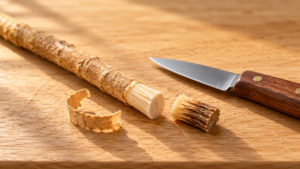
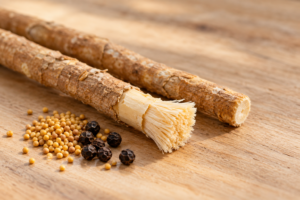
The stick itself never touches your gums. That’s the part people miss. When you chew the tip of a fresh miswak, the wood fibers separate into a cluster of fine, soft bristles — softer, in most cases, than a “soft” toothbrush from the pharmacy. Those bristles are what do the brushing, and because they’re natural fibers still holding moisture, they flex and give in a way nylon doesn’t.
Compare that to what usually irritates sensitive gums: stiff nylon bristles, aggressive back-and-forth scrubbing, and abrasive whitening toothpastes. Miswak sidesteps all three.
What’s Actually in the Wood Helps Too
This is where miswak goes from “not harmful” to “genuinely good” for tender gums. The Salvadora persica tree — the source of the classic peelu miswak — carries a small pharmacy inside its fibers:
Tannins are astringents. They tighten swollen gum tissue and have been shown to reduce bleeding, which is exactly what inflamed gums need.
Vitamin C supports tissue repair. Bleeding gums are often a sign your gum tissue is struggling to heal itself.
Antibacterial compounds — alkaloids, sulfur compounds, essential oils — target the bacteria that cause gingivitis in the first place. Sensitive gums are usually irritated gums, and irritated gums are usually a bacteria problem.
Natural anti-inflammatories in the resin calm tissue rather than aggravate it.
Several clinical studies have found miswak users show less gum bleeding and lower gingivitis scores than manual toothbrush users — not despite the stick, but because of what’s in it.
The Catch: Three Things That Make Miswak Hurt
Miswak only earns its gentle reputation when three conditions are met. Break any of them and yes, it can absolutely irritate sensitive gums.
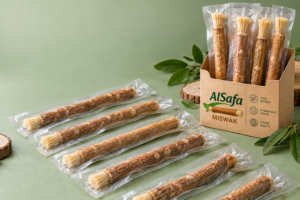
1. The stick must be fresh. This is the big one. A dried-out miswak forms stiff, sharp bristles that poke and scratch instead of sweeping. If your stick snaps like a dead branch or the bristles feel like a wire brush, it’s too old. A fresh stick bends slightly and forms bristles that feel almost feathery. This is why sourcing matters — a vacuum-sealed stick from a proper supplier stays soft; a loose stick that’s been sitting in a shop for months won’t.
2. The bristles must be trimmed regularly. Even a fresh stick’s bristles harden and fray after a few days of use. Cut the used tip off every two or three days and chew a fresh one. Old bristles are the most common reason beginners complain of gum irritation.
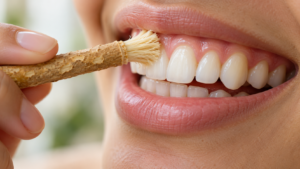
3. Your technique must be right. Brush away from the gum line — from the gum toward the edge of the tooth — with light pressure. Jabbing the stick sideways into your gums or sawing across them will hurt no matter how soft the bristles are. Honestly, the same is true of a toothbrush; sensitive gums punish bad technique with any tool. This step-by-step technique walkthrough will save your gums weeks of trial and error.
Which Miswak Is Best for Sensitive Gums?
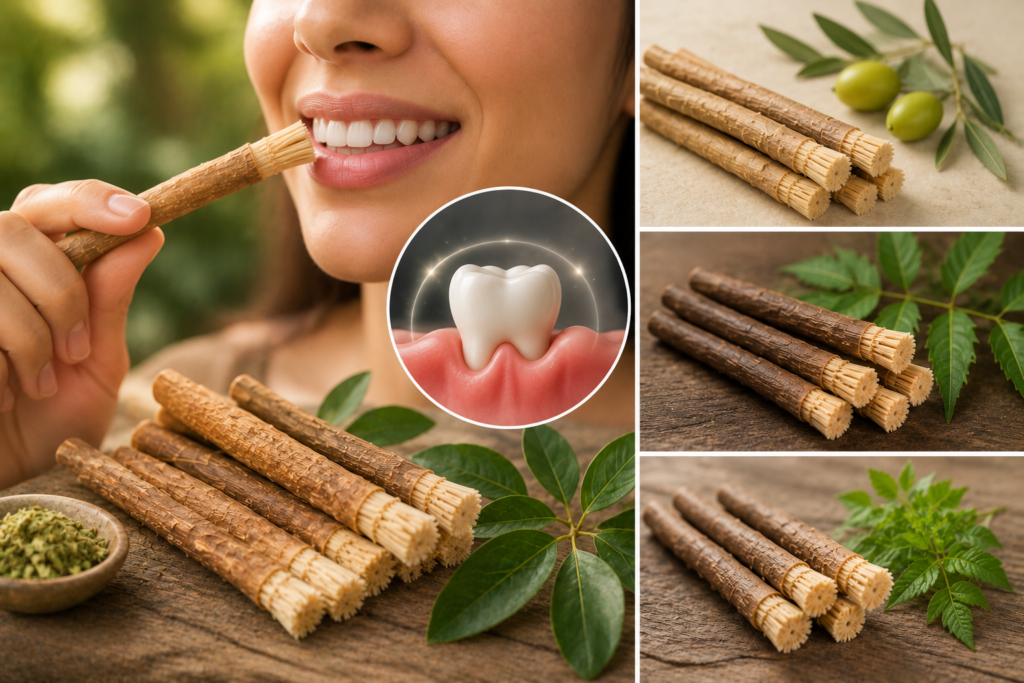
Peelu (Salvadora persica) is the clear choice. Its bristles are the softest of the common miswak types, and it has the strongest research behind its gum benefits. Olive miswak is a reasonable second — slightly firmer, milder taste. If you’re browsing options, most suppliers list peelu alongside arak, neem, and olive varieties — you can see the different miswak types available here to compare.
Skip neem for now. It’s a fine stick with strong antibacterial punch, but its bristles run firmer and its intense bitterness can make you tense up and press harder without realizing it. Save it for after your gums have settled.
When You Should Wait
A bit of honesty here, because “natural” doesn’t mean “right for every situation.” Hold off on miswak — and see a dentist first — if you have:
Gums that bleed heavily or constantly, not just occasionally during brushing. Advanced gum disease (periodontitis) with receding gums or loose teeth. Open sores, ulcers, or recent oral surgery. Pain that has lasted more than two weeks regardless of what you do.
Miswak helps mild-to-moderate gum irritation. It is not a treatment for serious periodontal disease, and pretending otherwise would be doing you a disservice. Get the underlying problem diagnosed, then bring the miswak into your routine once your dentist gives the all-clear.
A Gentle-Start Routine for Sensitive Gums
If you’re ready to try it, ease in rather than diving in:
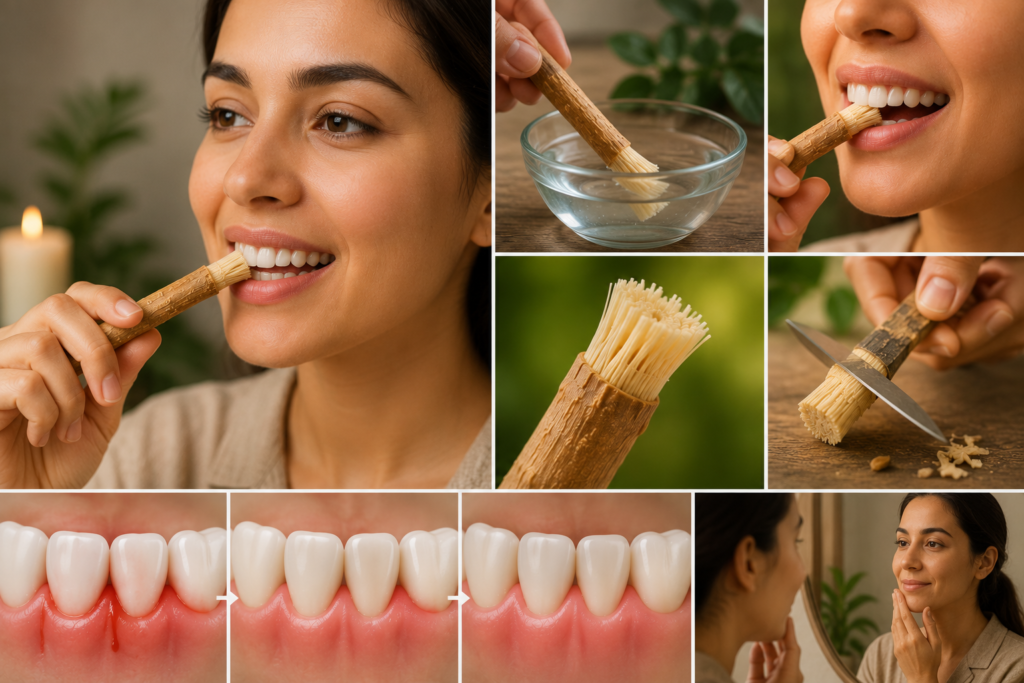
Start with one session a day, in the evening, with a fresh peelu stick. Soak the chewed tip in water for a minute first — it softens the bristles further. Use feather-light pressure; let the bristles do the work. After a week, if your gums feel fine or better, add a midday session. Trim the tip every two days without fail.
Most people with sensitive gums notice less bleeding within two to three weeks. If things get worse instead of better at any point, stop and get checked — that’s a signal, not a failure.
Frequently Asked Questions
Can miswak make my gums bleed?
A fresh, properly used miswak shouldn’t. If it does, the usual culprits are old hardened bristles, too much pressure, or gums that were already inflamed — in which case light bleeding may occur at first and typically settles within a week or two as gum health improves.
Is miswak softer than a soft toothbrush?
A fresh peelu miswak’s bristles are generally softer and more flexible than soft nylon bristles. A dried-out stick is harsher than a hard toothbrush. Freshness decides everything.
How long until sensitive gums improve with miswak?
Most studies and user reports point to noticeable improvement in bleeding and tenderness within two to four weeks of consistent, correct use.
Can I use miswak alongside a prescribed mouthwash or gum treatment?
Generally yes — miswak complements most gum treatments rather than conflicting with them. But if your dentist has you on a specific regimen, mention the miswak so they have the full picture.
The Bottom Line
Miswak isn’t just safe for sensitive gums — used correctly, it’s one of the better things you can do for them. The tannins calm swelling, the antibacterial compounds attack the root cause, and the soft natural bristles clean without the scraping that makes tender gums worse.
Just remember the three rules: fresh stick, trimmed bristles, and light hand. Get those right and your gums will likely thank you. Ignore them, and you’ll blame the stick for what was really a technique problem — the oldest mistake in oral care, whichever tool you’re holding.