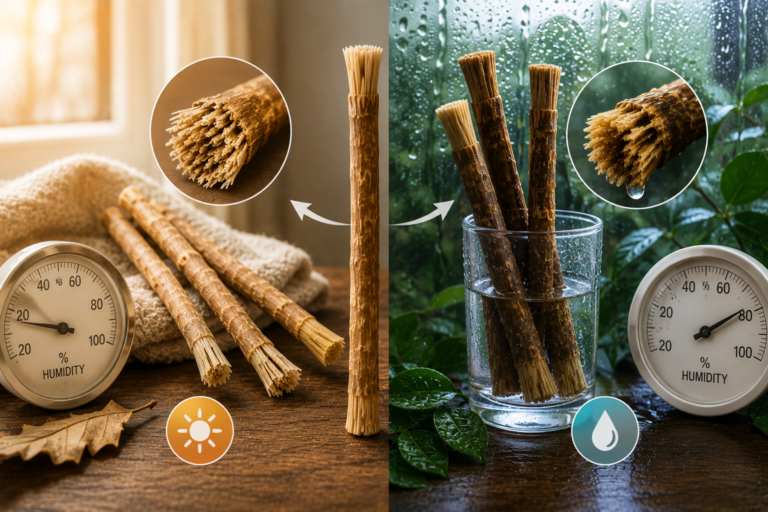
Two people buy the same miswak from the same batch. One lives in Dubai, the other in London. Three weeks later, one stick is as stiff as a pencil, and the other has grown fuzz.
Same stick. Same storage advice. Completely different results.
The missing variable is humidity — the amount of moisture in the air around your stick. It’s the factor almost no storage guide mentions, yet it quietly decides whether the standard advice works for you or fails you. This post explains exactly what humidity does to miswak, how to read your own climate, and how to adjust.
The Quick Answer
Humidity controls how fast a miswak loses or gains moisture. In dry air, sticks stiffen and lose their oils quickly — store them wetter and check them daily. In humid air, sticks stay soft, but mold becomes the main threat — store them drier, with more airflow, and inspect often. The ideal zone is moderate humidity, roughly 40–60%, with a stable temperature. Bathrooms, with their constant humidity swings, are the worst room in the house for miswak.
Now the details.
What Humidity Actually Does to a Miswak
A miswak is wood, and wood breathes. It constantly trades moisture with the air around it, trying to reach balance.
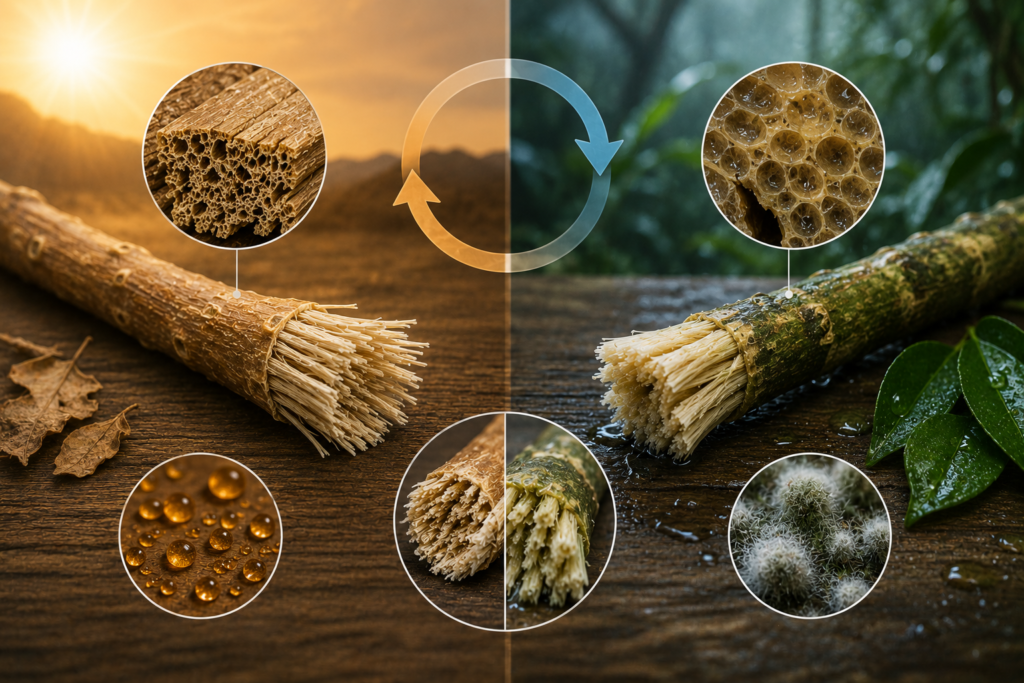
When the air is drier than the stick, the stick loses water to the air. Its fibers shrink and stiffen. The volatile oils — the peppery, antibacterial compounds that make miswak work — evaporate along with the water. This is why a dried-out stick doesn’t just feel harsh; it also tastes flat and cleans worse.
When the air is wetter than the stick, the stick absorbs moisture. That sounds good, and up to a point it is. But past that point, the surface stays permanently damp — and a permanently damp surface with little airflow is exactly what mold spores are waiting for.
So humidity isn’t good or bad for miswak. It’s a dial. Your job is knowing which way your climate turns it, and compensating.
If You Live in a Dry Climate
Desert regions, high altitudes, and — this surprises people — any home with heating running in winter or air conditioning in summer. Indoor air in a heated apartment in January can be drier than many deserts.
What happens to your miswak? Everything speeds up. A stick that lasts two weeks on an open shelf in mild conditions can stiffen in four or five days. A cup of water evaporates overnight. Damp wraps dry out by morning.
How to adjust — lean wetter:
Check the water cup every single day; top it up before it runs dry. Re-dampen cloth wraps daily, not “every few days.” Consider wrapping even your daily stick between uses instead of leaving it in an open cup. Move spares to the fridge sooner — the fridge’s enclosed air protects them from the dry room. And keep sticks well away from radiators, heating vents, and sunny windowsills, which multiply the drying effect.
The warning sign to watch: stiffness arriving early. If a stick fails the bend test within its first week, your air is drier than your storage method assumes.
If You Live in a Humid Climate
Coastal cities, tropical regions, monsoon season — anywhere the air feels heavy, and towels take forever to dry.
What happens to your miswak: drying out stops being the problem. Sticks stay soft with almost no effort. But the moisture that helps the fibers now works against you: wraps never dry, surfaces stay damp, and mold gets its perfect conditions. In high humidity, a sealed bag with a damp stick inside can grow fuzz in two or three days.
How to adjust — lean drier and airier:
Use lighter wraps, or skip the wrap entirely for your daily stick — the air itself is doing half that job. Prioritize ventilation over moisture: open cups, holders with air holes, bags left unsealed. Inspect more often — twice a week minimum, ideally a quick daily glance. Shake sticks properly dry after rinsing before they go anywhere enclosed. And rely more on the fridge for spares; its cool, stable air beats a warm, muggy room.
The warning sign to watch: any musty smell, however faint. In humid climates, smell is your early-warning system — it shows up before visible fuzz does.
The Bathroom Problem
Most people store their miswak in the bathroom, next to the toothbrush. It’s the most convenient spot in the house — and the worst.
A bathroom isn’t a dry room or a humid room. It’s both, several times a day. Bone dry at dawn, sauna-level after a hot shower, and dry again by noon. These constant swings stress the wood far more than any single steady condition would. The stick expands, contracts, and expands again — and each cycle weakens the fibers and pumps oils out.
Add the hygiene issue (open toothbrush cups near a toilet are their own topic), and the answer is simple: store miswak in a bedroom or kitchen cupboard with a stable climate, and just carry it to the sink when you brush. It’s a ten-second inconvenience for a stick that lasts noticeably longer.
Seasons Change — Your Storage Should Too
The same home swings between climates over a year, and your storage should swing with it:
Winter (heating on): treat your home as a dry climate, even if you live somewhere rainy. Lean wetter. Summer (AC on): also drying, though gentler than heating. Check cups and wraps more often. Monsoon or muggy summer (no AC): treat it as a humid climate. Lean airier; inspect often. Mild spring and autumn: standard advice works as written. Enjoy it.
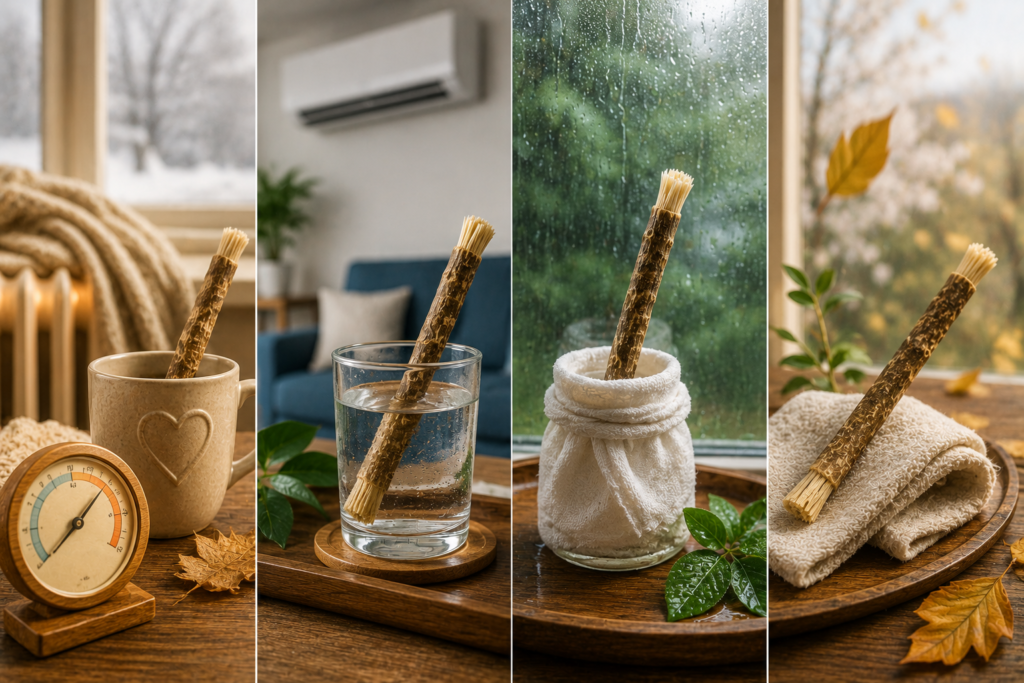
The people whose miswak “suddenly started going bad in December” didn’t get unlucky. Their radiators came on, and their storage routine didn’t change with it.
The Ideal Conditions, in Numbers
If you like targets, miswak stores best at 40–60% relative humidity and a stable, cool room temperature of roughly 15–22°C (60–72°F), out of direct sunlight.
You don’t need a hygrometer to hit this — the adjustments above get you there by feel. But if you already own one (many people do, for houseplants or instruments), those are the numbers to aim for. Below 40%, dryness accelerates. Above 60%, mold risk climbs. Wild daily swings are worse than either steady extreme.
The One Storage Method Humidity Can’t Touch
There’s a single exception to everything above: the unopened vacuum-sealed stick.
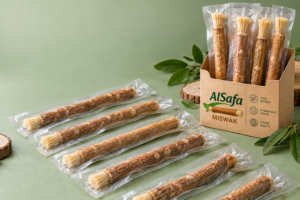
A sealed miswak carries its own sealed atmosphere. Desert air, monsoon air — it doesn’t matter, because the outside air never reaches the wood. This is precisely why professional sealing at the point of harvest matters so much and why sealed sticks are the smart buy in any extreme climate. Your local humidity only becomes a factor the moment you break the seal — so break one seal at a time, and let your reserves sit untouched.
For everything after the seal is broken, the climate rules in this post apply — alongside the general system in our full guide on how to store miswak properly, and the warning signs that tell you a stick is failing so you catch problems early whichever climate you’re in.
Frequently Asked Questions
Does humidity affect miswak quality? Significantly. Dry air stiffens sticks and evaporates their active oils within days; humid air keeps them soft but sharply raises mold risk. Storage methods should be adjusted to local conditions.
What is the ideal humidity for storing miswak? Roughly 40–60% relative humidity, with a stable cool temperature and no direct sun. Stability matters as much as the number — repeated swings damage the wood faster than a steady extreme.
Why does my miswak get moldy in summer? Warm, humid air keeps the stick’s surface permanently damp, and mold thrives on damp surfaces without airflow. Switch to lighter wraps, more ventilation, and more frequent checks during muggy months.
Why does my miswak dry out so fast in winter? Indoor heating strips moisture from the air, and the stick gives up its own moisture to compensate. Re-dampen wraps daily, refill cups before they empty, and keep sticks away from radiators and vents.
Is the bathroom a good place to store miswak? No — it’s the worst room in the house. The repeated dry-humid-dry cycle from showers stresses the wood more than any steady climate. A bedroom or kitchen cupboard is far better.
Does humidity matter for sealed miswak sticks? No. An unopened vacuum-sealed stick is protected from outside air entirely. Humidity only starts to matter once the seal is broken.
The Bottom Line
Humidity is the invisible hand behind most miswak-storage failures. Dry air steals moisture and oils; humid air invites mold; bathroom swings do both in turn. Read your climate, turn the moisture dial the opposite way — wetter storage in dry air, airier storage in damp air — and keep reserves sealed until needed.
Get that one adjustment right, and the same storage advice that failed the person in Dubai and the person in London starts working for both.