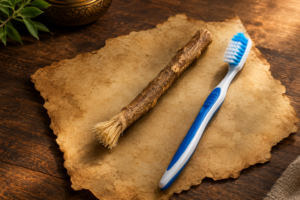
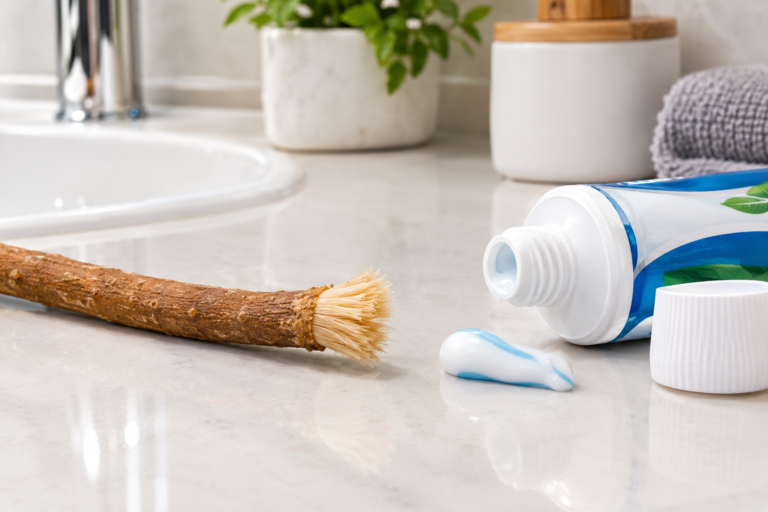
It is one of the first things people try. You buy a miswak, chew the tip, and look at it in the mirror, and it feels incomplete. No foam, no mint, no paste. So you reach for the tube and squeeze a bit onto the fibers.
Nothing bad happens. But you also gain very little, and you lose a few things that are not obvious until someone points them out. Here is the practical answer and a better way to get both benefits.
The Short Answer
Yes, you can, and it is safe. But there is not much reason to, and most people get better results using the two separately rather than together.
A miswak is already a complete cleaning tool. Adding paste does not make it clean better. It mostly just makes it messier and harder to control. If you want fluoride, the cleaner solution is to keep one proper brush-and-paste session a day and use the miswak to dry the rest of the time.
Why Miswak Does Not Need Toothpaste
A toothbrush is half a product. The bristles move the plaque around, and everything else comes out of the tube: the abrasive, the fluoride, the antibacterial agent, the foam, and the flavor. Take the paste away and you are left with plastic bristles and water.
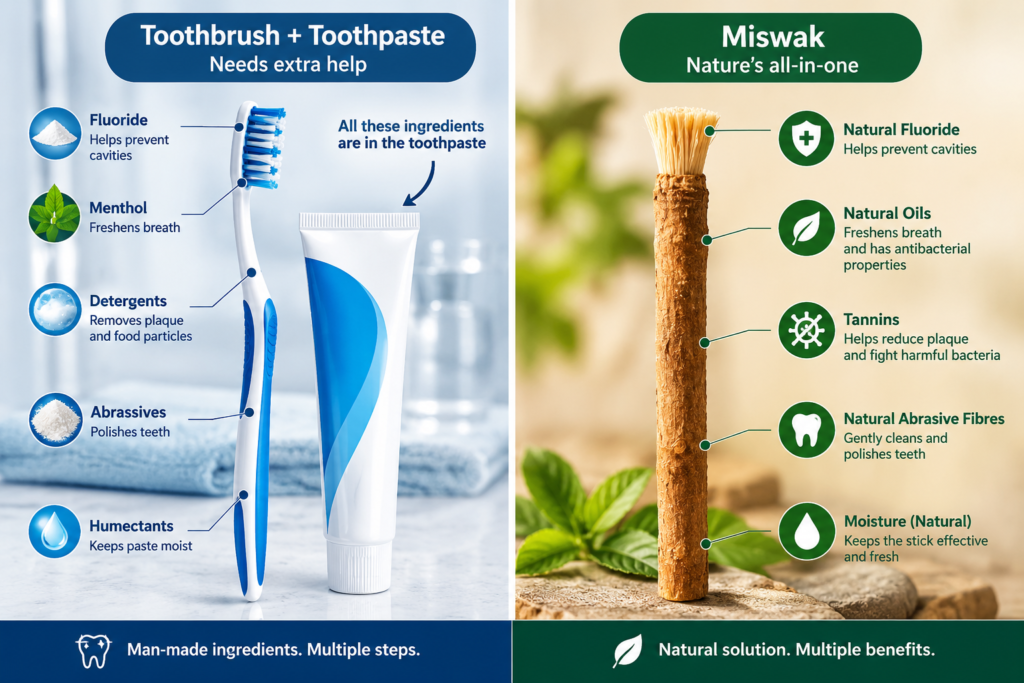
Miswak is not built that way. The wood carries its own versions of most of those ingredients:
- Silica gives it a natural mild abrasive, the same job as the polishing agents in paste.
- Antibacterial compounds come out of the wood as you chew and brush, so you get the antiseptic function built in. We covered which bacteria they target in how miswak fights oral bacteria.
- Saponins produce a light natural foaming, which is the detergent role SLS plays in commercial paste.
- Tannins act as an astringent on gum tissue.
- Aromatic oils handle the freshening, though they taste peppery rather than minty.
So the tube is largely duplicating what the twig already brings. The one genuine gap is fluoride, and that gap is real. We go through it properly in miswak vs toothpaste.
What Actually Happens If You Put Paste on a Miswak
Four practical effects. None of them are dangerous. All of them are mildly annoying.
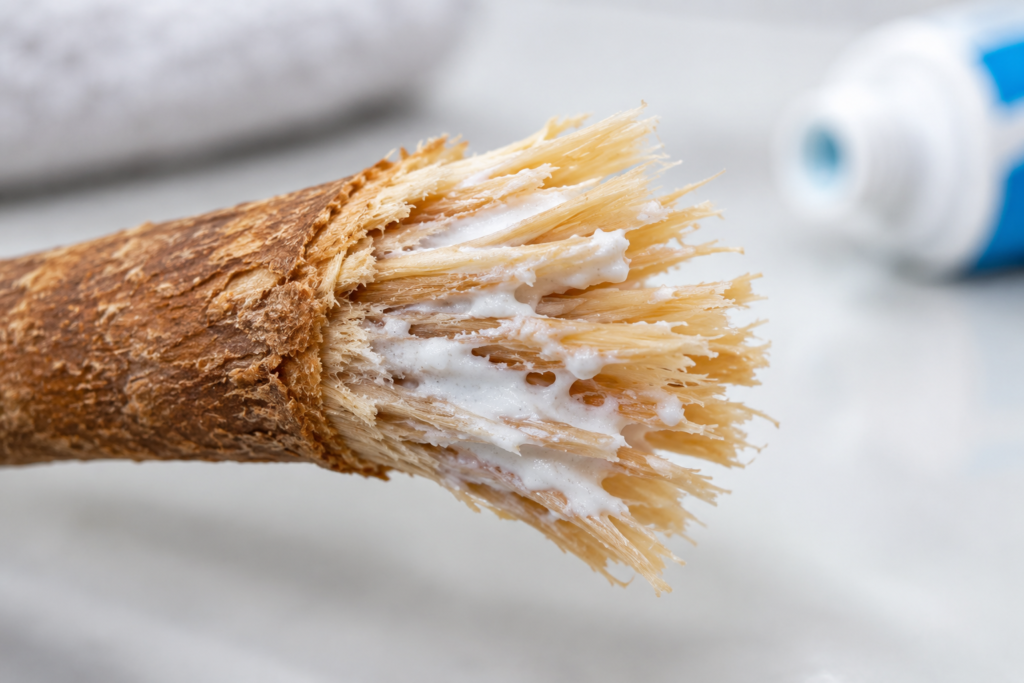
1. The foam hides what you are doing
This is the one that matters most. Using a miswak well depends on feel. You need to sense where the fibers are sitting and how hard you are pressing, because light pressure is the single most important habit for avoiding gum recession.
Fill your mouth with foam, and that feedback disappears. People press harder without realizing it. Given that gum recession is the most commonly reported problem among long-term miswak users, losing your sense of pressure is a genuine downside. More on that risk in miswak stick side effects.
2. Paste clogs the fibers.
Miswak fibres are thicker and softer than nylon bristles. Paste works into them and does not rinse out easily, so you end up with a gummy tip that has to be rinsed thoroughly after every session. Miss a spot and the residue dries into the wood.
3. It makes storage worse.
A miswak needs to dry out between uses. A tip carrying paste residue stays damp longer and holds material that bacteria and mold can grow on. You are adding a hygiene problem to a tool whose main advantage is that it does not have one. Storage guidance is in how to store miswak properly.
4. You waste the wood.
The active compounds come out of freshly exposed wood as you brush. Coat that surface in paste, and you are partly sealing it off. You have paid for a miswak and are then using it as a fairly awkward toothbrush handle.
The Abrasion Question Worth Thinking About
This one rarely gets raised and deserves a mention.
Miswak cleans partly through natural silica, which is a mild abrasive. Toothpaste cleans partly through its own abrasive system, measured on a scale called RDA. Whitening pastes in particular sit high on that scale.
Use both at once, and you are stacking two abrasive systems on the same tooth surface in the same session. Neither is harsh on its own. Together, over years, on someone who already brushes hard, it is a reasonable thing to be cautious about.
To be fair about the evidence: no study has specifically measured combined miswak and toothpaste abrasion, so this is mechanical reasoning rather than a proven finding. It is not a reason to panic. It is a reason to skip the whitening paste if you are going to combine them and to keep the pressure light either way.
The Better Approach: Separate Them
Rather than combining the two in one session, split them across the day. You get the fluoride and the miswak chemistry without either interfering with the other.
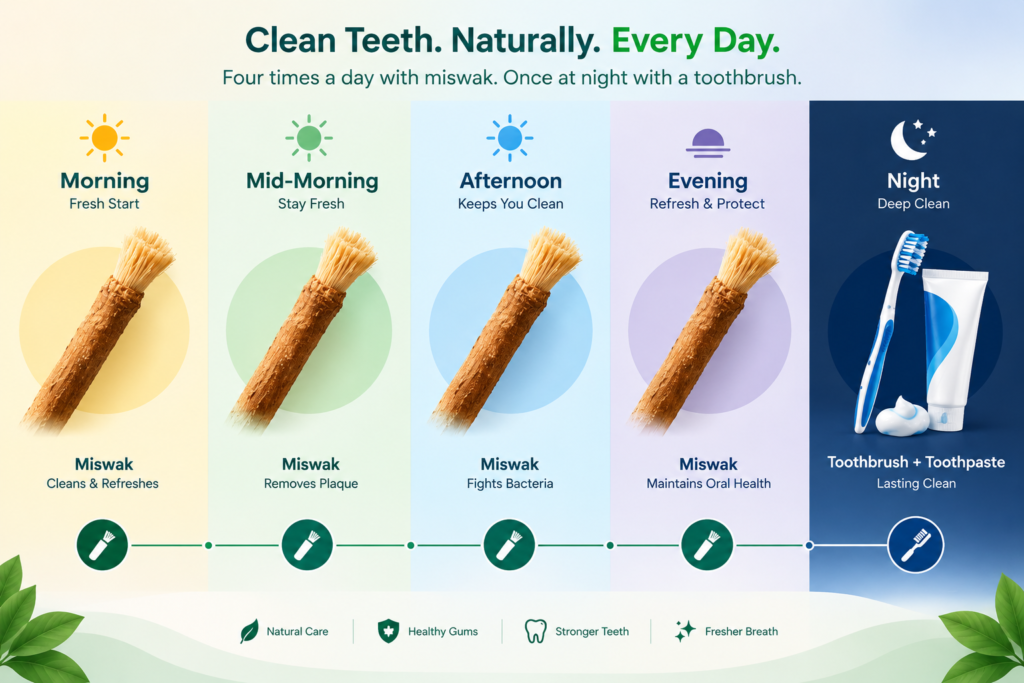
| When | What to use | Why |
|---|---|---|
| On waking | Miswak, dry | Clears the overnight bacterial build-up. Nothing to rinse, nothing to set up |
| After breakfast | Miswak, dry | Wait 30 minutes if you had juice or fruit. Acid softens enamel temporarily. |
| Midday | Miswak, dry | The easiest session to add, since it needs no sink |
| Late afternoon | Miswak, dry (optional) | Useful if you drink tea or coffee through the day |
| Before bed | Toothbrush with fluoride toothpaste | Saliva flow drops overnight, so this is when enamel needs fluoride most. |
One paste session, four dry miswak sessions. This is also the arrangement the research supports most strongly, since the strongest measured results show up when miswak is used alongside brushing rather than instead of it. Frequency detail is in how often to use miswak, and the evidence summary is in does miswak actually work.
A Third Option: Miswak-Based Toothpaste
There is a middle path people forget about. Several manufacturers make toothpaste containing Salvadora persica extract, and it has been studied. Trials on miswak-containing toothpaste have found reductions in plaque accumulation, and in at least one laboratory test, a Salvadora persica extract paste removed more stain than a commercial whitening paste.
That gives you the wood’s compounds and fluoride in one product, with none of the clogging or foam problems. It is not the same as using a real stick, since you lose the chewing action and the saliva stimulation that comes with it. But as a nighttime paste, it makes more sense than smearing regular paste onto a twig.
When Combining Them Does Make Sense
A few situations where putting paste on a miswak is a reasonable call.
- You have no toothbrush. Travelling, camping, a brush that broke. A miswak with a little paste is better than skipping fluoride entirely.
- You are transitioning. Some people find the peppery taste of fresh arak hard to get used to. A small amount of paste for the first week or two makes the switch easier. Drop it once you have adjusted.
- High cavity risk, and you want fluoride more often. If your dentist has told you that you need fluoride more than once a day, adding it to the miswak for one extra session is a practical workaround. Ask them first.
- Getting a child started. A familiar mint flavor can help. Though for children a normal brush and paste should stay the main tool. See can children use miswak.
How to Do It Properly If You Are Going To
Five things to get right.
- Use a pea-sized amount at most. Less than you would put on a brush. The fibers hold more than you expect and too much just creates foam you cannot see through.
- Skip whitening pastes. Those are the high-abrasion formulas. A standard fluoride paste is the sensible choice here.
- Press even more lightly than usual. You have lost your tactile feedback, so compensate deliberately. The correct grip and stroke are covered in our guide to how to use a miswak stick correctly.
- Rinse the tip thoroughly afterwards. Under running water, working the fibres with your fingers until no residue remains. Then shake it dry.
- Trim the tip more often. Paste residue that dries into the wood is not something you want to keep brushing with. Cut back to clean wood daily rather than every two or three days. See signs your miswak needs replacing.
If your gums are already tender, be extra careful with this combination, since the loss of pressure feedback matters more for you than for most people. There is specific guidance in miswak for sensitive gums and in our safe and effective miswak usage tips.
Frequently Asked Questions
Is it harmful to use toothpaste with miswak?
No. There is no harmful reaction between the two. The drawbacks are practical rather than medical: lost pressure feedback, clogged fibers, harder cleanup, and a slightly worse storage situation.
Does toothpaste cancel out the miswak compounds?
There is no evidence that it does. Coating the freshly exposed wood probably reduces how much comes out during that session, but nobody has measured it. Treat this as an unknown rather than a settled fact.
Do I need water when using a miswak?
No. That is one of its main advantages. You can use it anywhere with nothing else at hand. Soaking a stiff tip beforehand helps, but the brushing itself needs nothing.
Can I use mouthwash after a miswak?
You can, though alcohol-based rinses dry the mouth, which works against one of the things miswak does well. Reduced saliva means reduced natural defense. We compared them in miswak vs mouthwash.
If miswak works alone, why keep toothpaste at all?
Fluoride. Commercial paste carries 1,000 to 1,450 parts per million, and that concentration hardens enamel against acid and reverses very early decay. The fluoride in arak wood is present but in trace amounts. This is the one job miswak genuinely cannot do.
Should I brush first and then use the miswak, or the other way round?
Neither, in the same session. Space them out. Brush with fluoride paste at night and use the miswak through the day. Doing both back-to-back is just two abrasive cleanings in a row on the same surface.
The Bottom Line
You can use toothpaste with a miswak. It is safe. It is just not the best use of either one.
The twig already contains its own abrasive, antibacterial, and foaming agents, so the paste mostly duplicates what is there while costing you the tactile control that keeps your technique gentle. The only thing it genuinely adds is fluoride, and fluoride is easier to get from a proper brush at night.
Keep them separate. One fluoride brushing before bed, miswak dry through the day. Simple, and it plays to what each tool is actually good at.
Buying in volume? Al Safaa Miswak supplies fresh, vacuum-sealed Salvadora persica sticks to distributors, retailers, and oral care brands worldwide, harvested from genuine arak trees and processed to export-grade hygiene standards. Browse our products, see our miswak packaging solutions, or contact us for wholesale pricing.