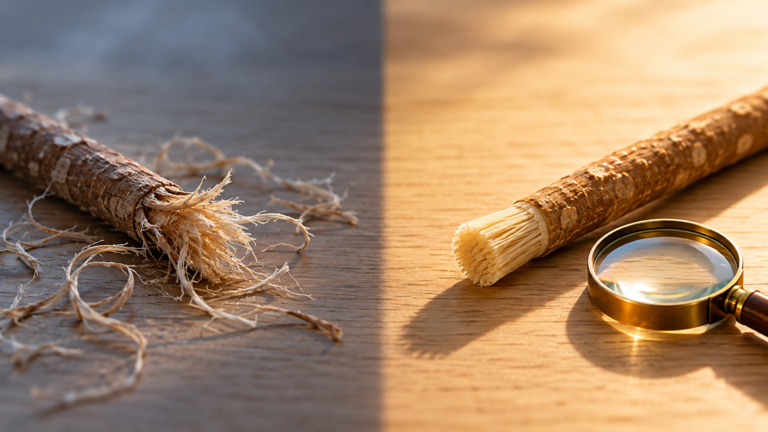
Miswak is one of the oldest teeth-cleaning tools in the world, and it really does work. But a lot of what people say about it isn’t quite true. Some myths make miswak sound like a miracle, others make it sound risky or old-fashioned. The truth sits in the middle: miswak is a natural, effective cleaning stick that works best when you use it properly and alongside good daily habits.
Below are the 12 most common myths we hear, with the simple facts behind each one.
Miswak Myths and Facts at a Glance
| Myth | Fact |
|---|---|
| Miswak is only for Muslims. | Anyone can use it. |
| It has been used for exactly 7,000 years. | Nobody knows the exact age. |
| It can fully replace fluoride toothpaste. | It works best alongside it. |
| Any stick from any tree is a miswak. | Real miswak comes from the Arak tree. |
| Scrubbing harder cleans better. | Light pressure works best. |
| A miswak lasts as long as you keep trimming it. | Most sticks last three to four weeks. |
| A sealed plastic bag keeps it fresh. | Trapped moisture causes mould. |
| A spicy taste means something is wrong. | The bite is a sign of freshness. |
| Miswak bleaches your teeth white. | It removes surface stains only. |
| Natural means it can’t cause problems. | Poor technique can still hurt gums. |
| It kills every germ in your mouth. | It targets harmful bacteria more selectively. |
| You can’t use miswak with braces. | Most people can, with care. |
Myth 1: Miswak Is Only for Muslims
The fact: Anyone can use miswak.
Miswak is very important in Islam, and many Muslims use it daily as a Sunnah. But the stick itself is a teeth-cleaning tool, not a religious object. Chewing sticks were used long before Islam and are still part of many cultures today, from neem twigs in India to chewing sticks across Africa. If you’re curious, here’s a simple guide on whether non-Muslims can use miswak.
Myth 2: Miswak Has Been Used for Exactly 7,000 Years
The fact: Nobody knows the exact age.
You’ll see “7,000 years” repeated almost everywhere, but it’s usually copied from one website to the next with no source. Other sites say 5,000 or 4,000. Wood doesn’t survive well over thousands of years, so exact dating is very hard. What we can say for sure is that chewing sticks are ancient and were used across many early civilisations. Our honest look at the history of miswak explains where these numbers come from.
Myth 3: Miswak Can Fully Replace Fluoride Toothpaste
The fact: Miswak works best alongside fluoride toothpaste, not instead of it.
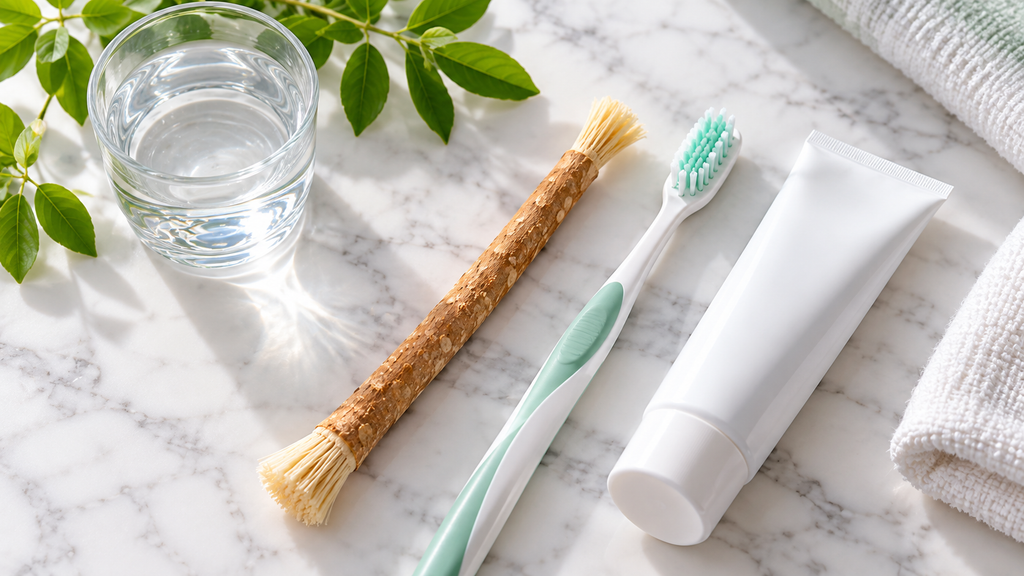
Miswak cleans well and fights harmful bacteria. It also contains small amounts of natural fluoride, but far less than toothpaste. Fluoride toothpaste is proven to protect against cavities, and that’s the one area where a stick can’t match it. Many people get the best of both by brushing with fluoride toothpaste morning and night and using miswak during the day. Here’s how miswak and toothpaste compare.
Myth 4: Any Stick From Any Tree Is a Miswak
The fact: Real miswak comes from the Salvadora persica tree, also called the Arak tree.
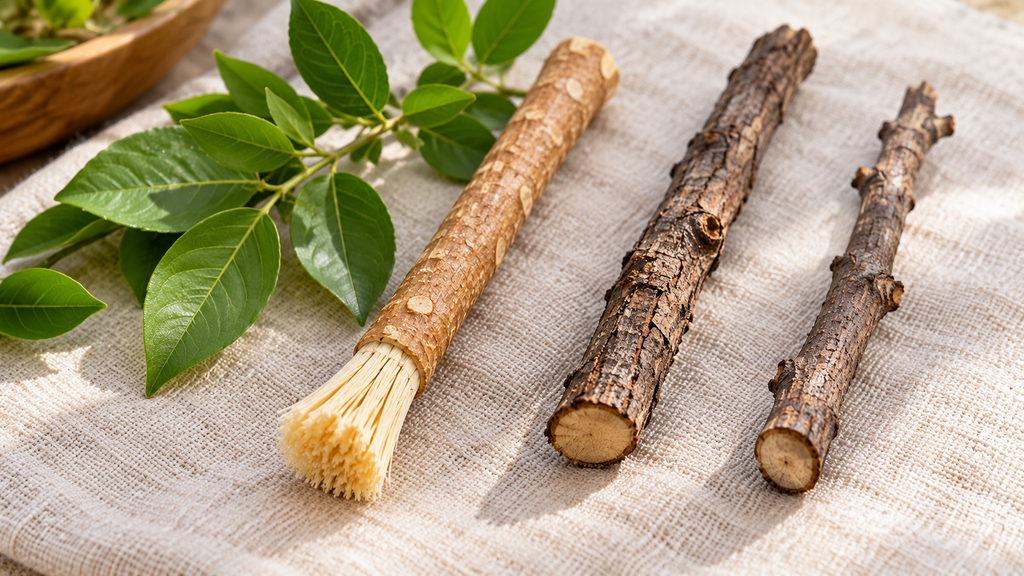
People have used twigs from many trees to clean their teeth, such as neem, olive and walnut. They can all scrub, but the special antibacterial compounds that miswak is known for come from Salvadora persica. Some cheap sticks sold as “miswak” are cut from other woods and don’t offer the same benefits. Learn more about the Arak tree and why it matters.
Myth 5: Scrubbing Harder Cleans Better
The fact: Light, gentle strokes clean just as well and protect your gums.
Pressing hard doesn’t remove more plaque. It only wears down your enamel and can make your gums pull back over time. The fibres and natural compounds in miswak do the cleaning, so all you need is a soft, fresh tip and a light touch. Most problems people blame on miswak actually come from heavy scrubbing, as our guide to miswak side effects explains.
Myth 6: A Miswak Lasts as Long as You Keep Trimming It
The fact: Most sticks last about three to four weeks once opened.
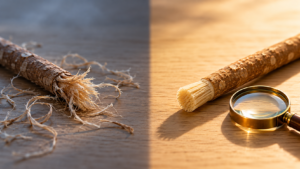
Trimming the tip every day or two keeps the bristles fresh, but the stick still gets shorter and its natural oils slowly run out. Once it’s too short to hold comfortably, or it snaps instead of bending, it’s time for a new one. Watch for these signs a miswak needs replacing.
Myth 7: Keeping It in a Sealed Plastic Bag Keeps It Fresh
The fact: Sealing a damp miswak in plastic is one of the fastest ways to make it go mouldy.
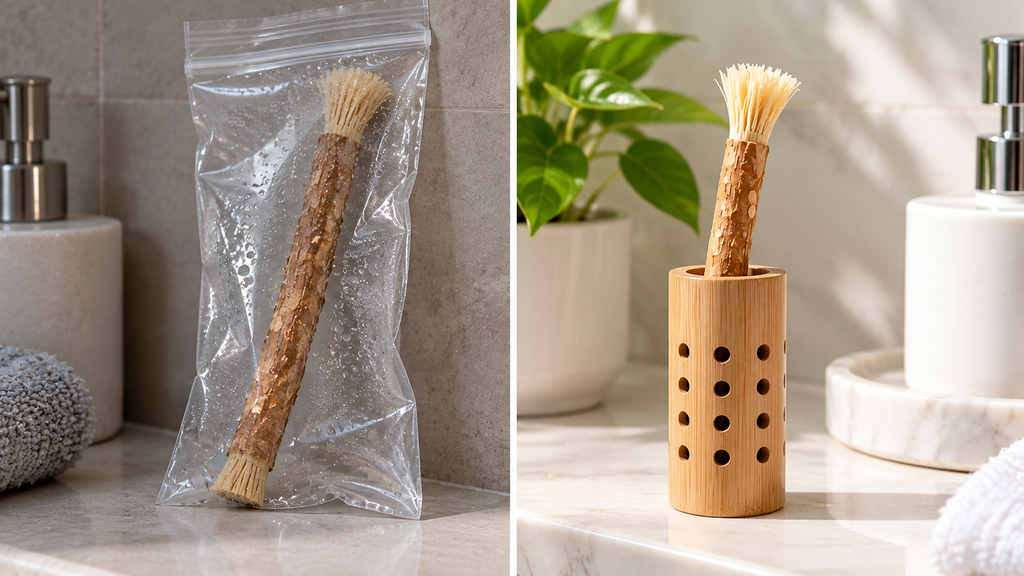
A used miswak is moist. Trapped in a sealed bag or a closed pocket with no air, it becomes a breeding ground for mould and bacteria. A ventilated holder works much better, and an unopened, factory-sealed stick is a different matter because it’s dry and clean. Our guide on storing miswak the right way covers the simple dos and don’ts.
Myth 8: A Spicy Taste Means Something Is Wrong
The fact: A peppery, slightly bitter taste is a good sign.
That bite comes from natural compounds in the wood, the same ones linked to miswak’s antibacterial action. A fresh stick tastes lively and warm. A stick that tastes like plain wet wood has lost most of its active compounds. Only a sour or musty taste is a warning sign. Here’s why miswak tastes spicy or bitter.
Myth 9: Miswak Bleaches Your Teeth White
The fact: Miswak removes surface stains. It doesn’t bleach your teeth.
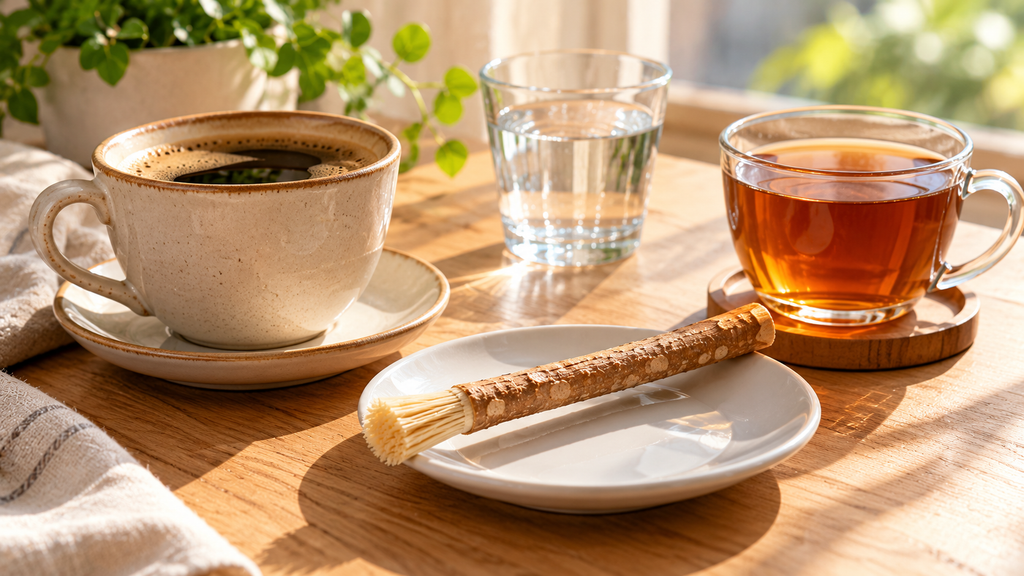
Studies show miswak can help lift and prevent stains from coffee, tea and food on the outside of your teeth. That can make your smile look brighter. But it doesn’t change the natural colour of your teeth the way professional whitening does. The research on miswak and teeth whitening explains what it can and can’t do.
Myth 10: Natural Means It Can’t Cause Any Problems
The fact: Miswak is safe for most people, but poor use can still cause problems.
“Natural” doesn’t mean risk-free. A dry, hard tip can scratch your gums. An old or badly stored stick can carry bacteria. And a very small number of people react to the natural oils in the wood. Using a fresh, soft tip with good technique avoids almost all of this. If you have sensitive teeth, it’s worth reading whether miswak is gentle enough for sensitive teeth.
Myth 11: Miswak Kills Every Germ in Your Mouth
The fact: Miswak works more selectively, targeting many of the harmful bacteria.
Some mouthwashes claim to kill 99.9% of germs, but your mouth also needs helpful bacteria. Research suggests miswak acts more selectively, working against many of the germs linked to cavities, gum disease and bad breath. It’s not a sterilising product, and that’s a good thing. Here’s the science behind how miswak fights harmful bacteria.
Myth 12: You Can’t Use Miswak If You Have Braces
The fact: Most people with braces can use miswak, with a little extra care.
You need a soft, well-soaked tip, gentle strokes around the brackets (not across them), and a toothbrush for the areas miswak can’t reach. Used this way, miswak can be a helpful extra clean during treatment. Our guide on using miswak with dental braces walks you through it step by step.
Why Do These Myths Spread?
Most miswak myths come from good intentions. People who love miswak want to share it, and over time small claims grow into big ones. Others come from the opposite direction, from people who see a stick and assume it must be old-fashioned or unhygienic.
The best way to cut through it is to look at what the research says and how miswak is actually used. When you do, it turns out miswak doesn’t need exaggerating. It’s a simple, natural tool that works well when you use it properly. If you’re just starting out, our easy guide to using miswak is the best place to begin.
Frequently Asked Questions
Is miswak really effective?
Yes. Studies show miswak can clean teeth and reduce plaque and gum problems about as well as a toothbrush when used properly. It works best alongside fluoride toothpaste.
Does miswak contain fluoride?
It contains small amounts of natural fluoride, but much less than fluoride toothpaste. That’s why most dentists suggest using both.
Can miswak whiten teeth?
It can help remove surface stains from coffee, tea and food, which makes teeth look brighter. It doesn’t bleach or change the natural colour of your teeth.
Is miswak safe to use every day?
Yes, for most people. Use a soft, fresh tip, brush gently, trim it regularly and replace the stick every few weeks.
Is any wooden stick as good as miswak?
No. Other twigs can scrub your teeth, but the antibacterial compounds miswak is known for come from the Salvadora persica tree.
Why does miswak taste bitter?
The bitter, peppery taste comes from natural compounds in the wood. It’s normal and usually means the stick is fresh.
The Bottom Line
Miswak doesn’t need myths to be worth using. It’s a natural, eco-friendly cleaning stick that fights harmful bacteria and keeps your mouth fresh. Use a genuine stick, keep the tip soft, brush gently, store it with airflow, and pair it with fluoride toothpaste. That’s the real secret behind miswak, and it’s simpler than any myth.