Quick answer: Yes, for most people with sensitive teeth, miswak is gentle enough. The catch is preparation. A fully softened tip, light pressure, and short up-and-down strokes are what keep it comfortable. A dry, stiff stick scrubbed side to side is what makes it sting. Miswak can support a sensitive mouth, but it does not treat sensitivity, so keep a desensitizing fluoride toothpaste in your routine.
If a sip of cold water makes you wince, you get cautious about anything new going near your teeth. That makes sense. A twig doesn’t sound like the softest thing to brush with.
Here’s the thing, though. The stick itself is rarely the problem. How it’s prepared and how it’s used decide almost everything. This guide covers why teeth get sensitive, what the small amount of research actually says, and a routine you can follow if your teeth are on the tender side.
Why Do Teeth Become Sensitive?
Under your enamel sits a softer layer called dentin. It’s full of tiny channels, called tubules, that run toward the nerve. When enamel wears thin or gums pull back and expose the root, those channels open up. Cold, heat, sugar, or even a breath of cold air then reaches the nerve, and you feel that sharp, quick zing.
Common causes include:
- Brushing too hard, with any tool
- Gum recession that exposes the root surface
- Acid wear from fizzy drinks, citrus, or reflux
- Grinding or clenching at night
- A recent whitening treatment, filling, or cracked tooth
Notice that the first two are about technique. That matters a lot for miswak users, as you’ll see below.
Can Miswak Make Sensitive Teeth Worse?
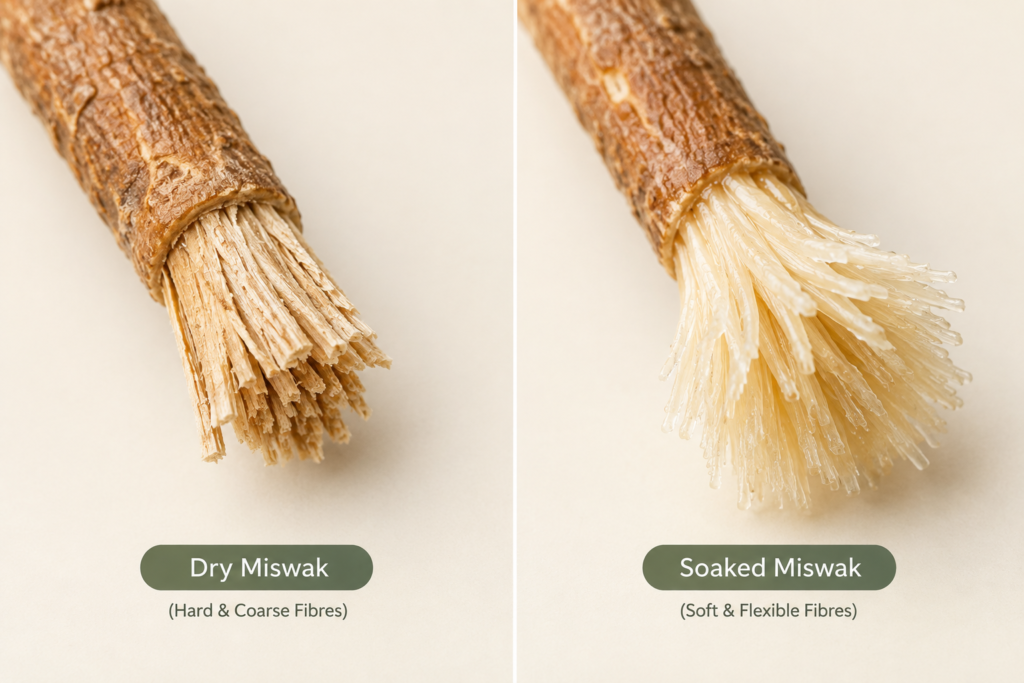
It can, but only when it’s used badly. A bone-dry stick has stiff, scratchy fibres. Push that against the gum line in a sawing motion every day and, over months, you encourage the exact wear and recession that cause sensitivity.
Researchers have noticed this too. A registered clinical trial on miswak and gum disease notes that improper use over a long period has been linked with attachment loss and injury to oral tissues. Put simply: the habit hurts, not the wood. We go through every risk like this in our complete guide to miswak side effects and precautions.
Used properly, a well-chewed miswak tip is soft and flexible. Many long-term users with tender teeth find it more comfortable than a medium nylon brush, partly because you naturally use less force with it.
What Does the Research Say About Miswak and Sensitive Dentin?
The honest answer is: early signs look promising, but there isn’t much clinical proof yet.
The most interesting finding comes from a lab study published in 2020. Researchers treated root dentin samples with a 20% miswak extract and then looked at them under a scanning electron microscope. The miswak-treated samples showed the dentinal tubules fully blocked, while the untreated samples had open or partly open tubules. Blocking those channels is exactly how most sensitivity toothpastes work.
There’s a big caveat. That study used bovine (cow) teeth in a lab, not people brushing at home. A chewed stick also isn’t the same as a concentrated extract. Clinical work is starting, including a registered trial comparing miswak extract toothpaste with potassium nitrate, the standard desensitizing ingredient, but we can’t claim miswak treats sensitivity until results like these are in.
| Question | What we know | What we don’t know yet |
| Does miswak block dentin tubules? | Lab studies with miswak extract show tubule blocking. | Whether chewing a stick does the same in a real mouth. |
| Is it gentle on enamel? | A soft, fresh tip used lightly is low risk. | Long-term abrasion data compared with soft brushes. |
| Can it replace sensitivity toothpaste? | No proof it can. | How it compares head to head in large human trials. |
If you like digging into the studies, our write-up on the evidence behind miswak and stain removal takes the same plain-English approach to a different claim.
How to Use Miswak Gently If Your Teeth Are Sensitive
This is where comfort is won or lost. Follow these steps for the first couple of weeks, then adjust to what feels right.
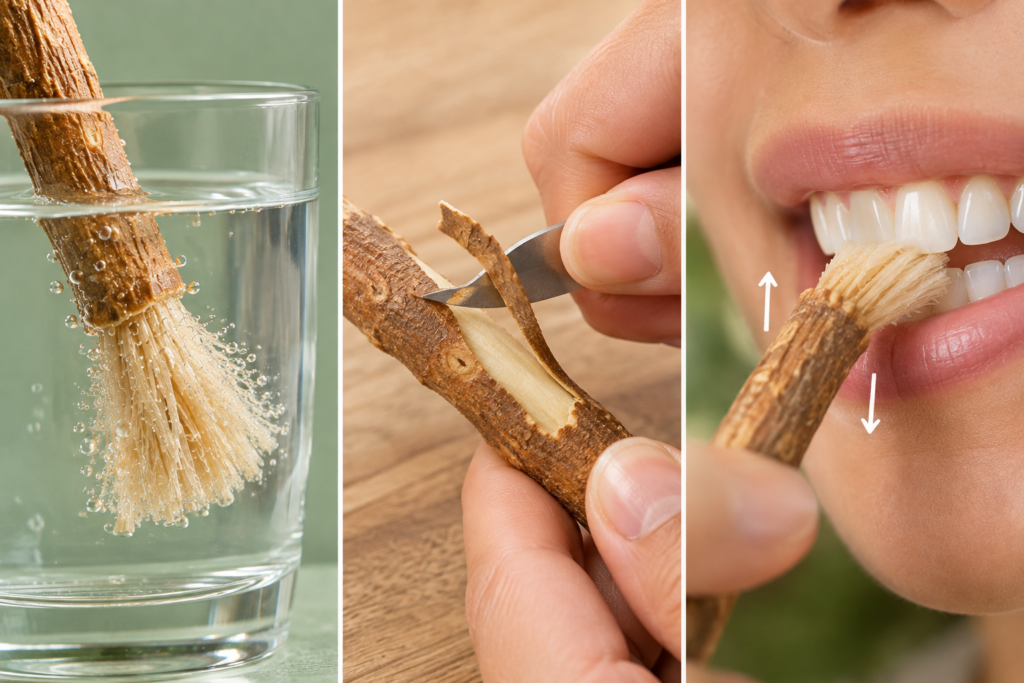
- Soak longer than usual. Leave the tip in clean, room-temperature water for six to eight hours, or overnight. The fibres should bend easily between your fingers.
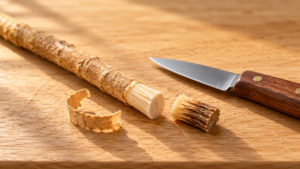
- Trim the bark, then chew gently. Peel back about a centimetre of bark and chew the end slowly until it splays into a soft brush. Don’t bite down hard.
- Keep the bristle head short. A short, dense tip gives you more control and less flicking against sore spots.
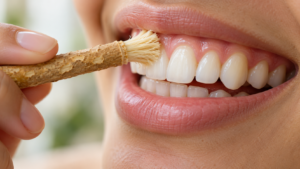
- Brush up and down, away from the gums. Short vertical strokes, never horizontal sawing along the gum line.
- Use feather-light pressure. If the stick bends a lot, you’re pressing too hard.
- Go around, not over, the sore tooth. Clean the painful area last and briefly. Let the fibres do the work.
- Rinse with lukewarm water. Cold rinses are often what set off the zing, not the brushing.
For the full everyday routine, including session length and storage, see our practical tips for safe daily miswak use.
Choosing a Miswak That’s Kind to Sensitive Teeth
Not every stick feels the same in the mouth. A few things make a real difference:
- Freshness. A fresh stick flexes like a green twig. Old stock goes stiff and loses its natural oils.
- Diameter. A slimmer stick is easier to angle and control around tender teeth.
- Genuine source. Real miswak comes from the Salvadora persica tree. Cheaper look-alikes from other woods can be coarser. Here’s where authentic miswak comes from and why it matters.
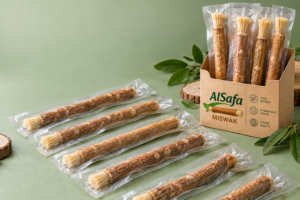
- Hygienic packing. Vacuum-sealed sticks stay moist and clean until you open them.
Even a good stick won’t stay gentle forever. If the fibres feel scratchy or the tip won’t soften after soaking, check these signs it’s time to replace your miswak.
Sensitive Teeth or Sensitive Gums: How to Tell the Difference
People often mix these up, but they need slightly different care.
- Sensitive teeth: a sharp, short pain from cold, heat or sweet food, usually in one spot. It fades within seconds.
- Sensitive gums: soreness, tenderness, or bleeding when you brush, often with some redness or puffiness.
If it’s mainly your gums that react, our separate guide on whether miswak suits tender gums covers that side in detail.
Should Miswak Replace Your Sensitivity Toothpaste?
No. The smart move is to use both. Desensitizing toothpastes with potassium nitrate or stannous fluoride have solid evidence behind them. Miswak brings gentle mechanical cleaning and natural antibacterial compounds, plus the convenience of cleaning your teeth anywhere without water or a sink.
A routine that works well for many people: miswak after meals and during the day, then a soft brush with sensitivity toothpaste before bed. We compare the two approaches properly in miswak vs toothpaste.
When to See a Dentist
Mild sensitivity that settles with gentler brushing is usually nothing to worry about. Book a check-up if you notice any of these:
- Pain that lingers for more than a few seconds after the trigger
- Sensitivity in one tooth that’s getting worse
- Pain when biting down
- Swelling, bleeding, or a bad taste that won’t go away
These can point to decay, a crack or gum disease, and no brushing tool will fix those. It’s also worth telling your dentist you use miswak so they can check your technique.
Frequently Asked Questions
Is miswak safe for sensitive teeth?
Yes, for most people. Soften the tip fully, use light pressure, and brush with short vertical strokes. Pain usually comes from a dry stick or heavy scrubbing rather than the miswak itself.
Can miswak cure tooth sensitivity?
No. Lab research suggests miswak extract can block the tiny channels in dentin that cause sensitivity, but there is no strong human evidence that using a miswak stick cures it. Keep using a desensitizing toothpaste.
Why does miswak hurt my teeth?
The most common reason is a stick that is too dry or stiff. Soak the tip for several hours, trim to fresh wood, and brush more gently. If pain continues, see a dentist.
How long should I soak miswak if my teeth are sensitive?
Six to eight hours, or overnight, in clean room-temperature water. The fibres should flex easily before you use it.
Can I use a miswak after teeth whitening?
Teeth are often extra sensitive for a few days after whitening. Use a very soft, well-soaked tip with minimal pressure, or ask your dentist how long to wait.
Is miswak better than a soft toothbrush for sensitive teeth?
Both can be gentle when used correctly. Many people find a softened miswak comfortable because it encourages lighter pressure, but a soft toothbrush with sensitivity toothpaste remains the best-proven option. Using both works well.
Buying Miswak for Your Store
Sensitive-mouth customers are some of the most loyal buyers, as long as the stick they get is fresh and soft. Al Safaa supplies hygienically packed Salvadora persica miswak in bulk for retailers, pharmacies and distributors worldwide. New to stocking it? Start with our overview of what miswak is and how it works, then contact us for wholesale pricing.