
Most people don’t actually get miswak wrong on purpose. They just pick up a stick, chew the end, and start scrubbing the way they’d use a toothbrush — and that small habit is where most of the trouble starts.
Here’s the thing worth remembering: miswak is one of the few oral care tools where how you use it matters just as much as whether you use it. A fresh stick used gently outperforms a neglected one used roughly every single time. This guide walks through the full routine — prep, technique, timing, storage, and the mistakes that quietly cancel out all the benefits. If you’d like the bigger-picture safety context first — the risks, precautions, and who needs to be extra careful — start with our main guide on miswak stick side effects. This post is the practical companion to it: less about what can go wrong, more about doing it right
The 30-Second Version
If you only remember five things:
1. Soften the tip before you start.
2. Use light pressure and short vertical strokes.
3. Brush away from the gum line, not into it.
4. Trim the tip daily and store the stick dry.
5. Give it three to five minutes, twice a day. Everything below is just these five rules explained properly.
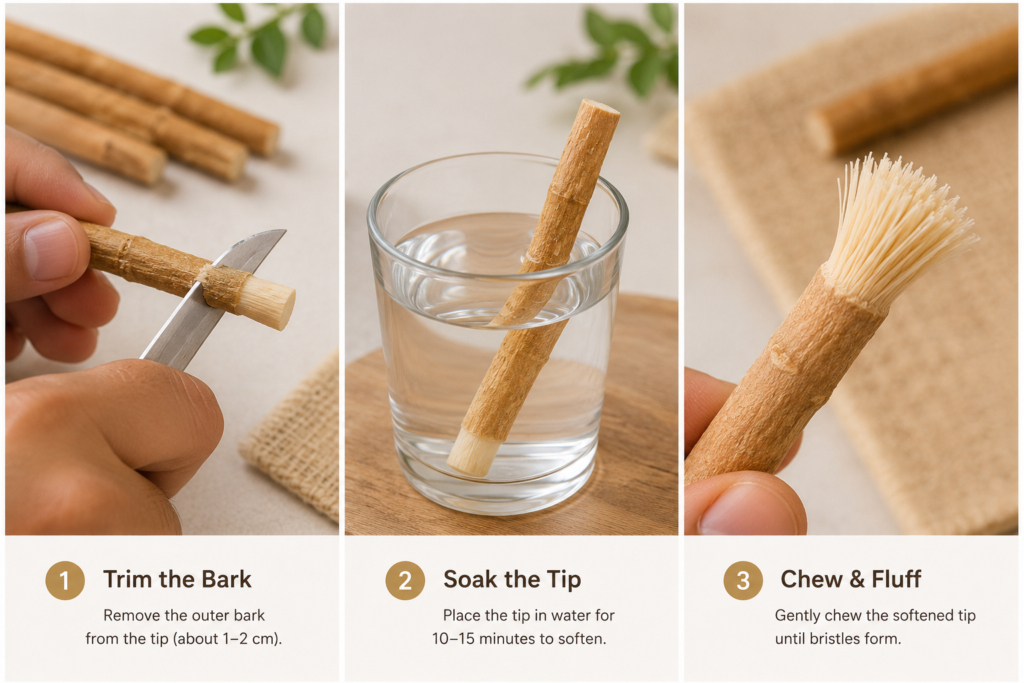
Step 1: Prepare the Stick Properly
A miswak isn’t ready to use straight out of the packaging. The very tip needs to become a soft, flexible brush head before it touches your teeth — a dry, hard tip is exactly what wears enamel and irritates gums.
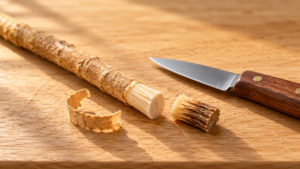
- Trim the bark. Shave off about a centimeter of the outer bark from one end to expose the fresh inner wood.
- Soften the fibers. Either chew the exposed tip gently for a minute or soak it in clean water for a few hours until the fibers separate and flex like bristles.
- Fluff it out. Once soft, work the tip until it splays into a small brush. That’s your bristle head — and it’s coated in the wood’s natural cleaning compounds.
Never force a bone-dry stick against your teeth to “break it in.” If it won’t soften, soak it longer or trim to fresher wood. We explain why moisture matters so much to performance in our post on how humidity affects miswak quality.
Step 2: Hold and Angle It Right
Grip matters more than people think. Hold the miswak in a comfortable pen-style grip, not a tight fist — a fist encourages heavy pressure, which is the enemy here.
- Angle the bristles toward the gum line at roughly 45 degrees, the same angle a dentist recommends for a toothbrush.
- Keep the pressure feather-light. If your knuckles are white or your hand aches afterwards, you were pressing far too hard.
- Let the compounds do the chemical work while the fibers do the mechanical work. Force adds damage, not cleaning.
Step 3: Use the Correct Stroke
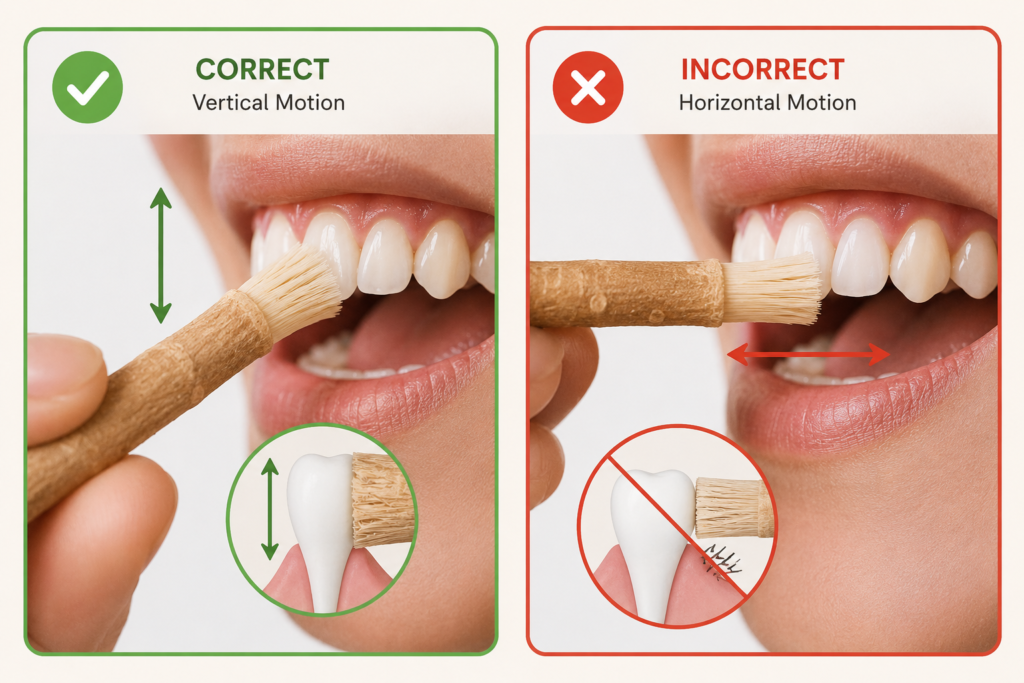
This is the single most important technique point, and it’s where most long-term damage comes from. The gum tissue is delicate — drag a stiff fibre horizontally across it thousands of times, and it slowly recedes.
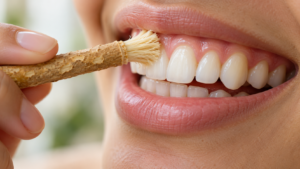
Use short, gentle, vertical strokes — brushing away from the gums, from gum to tooth tip. Think of sweeping crumbs off a table, not sawing through wood. Cover the outer surfaces, the inner surfaces, and the chewing surfaces. Don’t neglect the back teeth just because they’re harder to reach — that’s where plaque loves to hide.
For a fuller, illustrated breakdown of the motion, our dedicated post on how to use a miswak stick correctly walks through it surface by surface.
Step 4: Get the Timing and Frequency Right
A rushed twenty-second brush does very little. To get the benefit the research points to, treat it like a proper session:
- Three to five minutes per session, moving methodically around the mouth.
- Twice a day at minimum — morning and night. The antibacterial effect builds up with consistency; it isn’t a one-time hit.
- A midday session is a bonus and one of miswak’s best features: no water, no paste, and no sink required. Keep one in your bag or at your desk.
- Re-fluff the tip if it flattens halfway through — a splayed, active head cleans; a matted one just smears.
Step 5: Clean, Trim, and Store It Correctly
What you do after brushing decides whether your next session is hygienic or counterproductive. A miswak is organic — kept damp and sealed, it grows the very bacteria you’re trying to remove.
- Rinse the tip under clean running water to clear away loosened debris.
- Trim the used bristles off daily so you always start on a fresh, active layer of wood.
- Air-dry it upright — never seal a wet stick inside a closed pocket or plastic bag.
- Store it somewhere ventilated and cool, away from direct heat that dries it out too fast.
We’ve written full guides on both sides of this: how to store miswak properly and the best ways to keep miswak fresh. And when a stick is past its best, our post on the signs your miswak needs replacing tells you exactly when to swap it out.
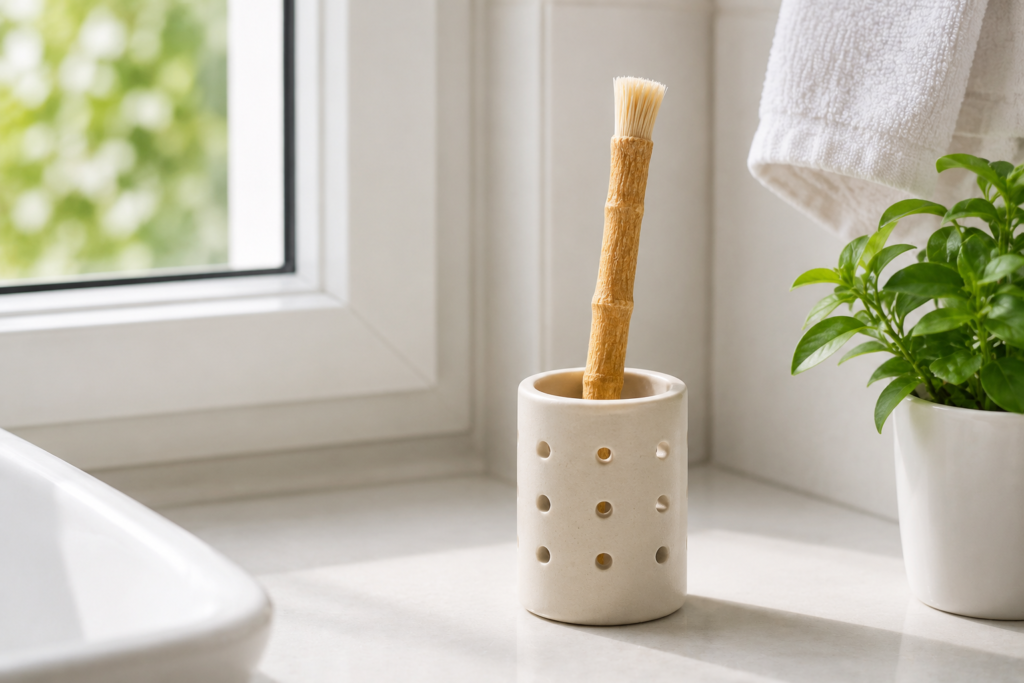
Common Mistakes — and the Easy Fix
Almost every miswak problem traces back to one of these six habits. Fix them, and you’ve removed most of the risk on your own:
| Common Mistake | Do This Instead |
| Scrubbing hard, side to side | Light pressure, short vertical strokes away from the gums |
| Using a dry, stiff stick | Soak or chew the tip until the bristles flex softly |
| Keeping the same tip for days | Trim back to fresh wood every day |
| Storing it sealed and damp | Rinse, air-dry, and keep it in a ventilated cover |
| Brushing for 20 rushed seconds | Give it three to five unhurried minutes |
| Sharing a stick with family | One stick per person — always |
Extra Care for Sensitive Situations
Some mouths need a gentler approach. Adjust the routine if any of these apply to you:
- Sensitive teeth or gums: use a well-soaked, extra-soft tip and shorter sessions. Our guide on whether miswak is safe for sensitive gums goes deeper.
- Braces, crowns, or recent dental work: check with your dentist first, and be careful around brackets and edges.
- Children: only under supervision, and never let a small child walk around with a stick in their mouth.
- New to miswak: a mild peppery taste in the first few days is normal as your mouth adjusts. Persistent burning or swelling isn’t — stop and check with a dentist.
All of these precautions, and the reasons behind them, are covered in full in the pillar guide on miswak side effects, risks and precautions.
The One Factor You Can’t Fix With Technique
You can perfect every step above and still get poor results if the stick itself is wrong. Chemically treated wood, an unknown tree species, or a stale stick that lost its compounds months ago — no technique rescues that.
Genuine Salvadora persica (Arak), harvested fresh and processed hygienically, is the version that actually delivers. If you’re unsure which variety suits you, our breakdown of the types of miswak compares the options honestly. And if you want to understand the benefits you’re aiming for in the first place, the miswak benefits page lays them out.
Frequently Asked Questions
How many times a day should I use miswak?
At least twice — morning and night — with an optional midday session. Consistency matters more than any single long brush, because the antibacterial effect is cumulative.
How long does one miswak stick last?
With daily trimming, a stick typically lasts a couple of weeks. Once it dries out, frays badly, or loses its fresh taste and smell, it’s time for a new one.
Do I need toothpaste with miswak?
No — miswak carries its own natural cleaning and antibacterial compounds, so it works dry. Many people, though, get the best results using both. We compare them in miswak vs toothpaste.
Can I use miswak instead of a toothbrush completely?
You can, and plenty of people do. The evidence suggests it’s most effective used alongside brushing, though. Our post on miswak vs toothbrush breaks down the trade-offs.
Why does my miswak feel rough on my teeth?
Almost always because the tip is too dry and stiff. Soak it longer until the fibres soften into a proper brush, and ease off the pressure. A soft tip should never feel scratchy.
Final Word
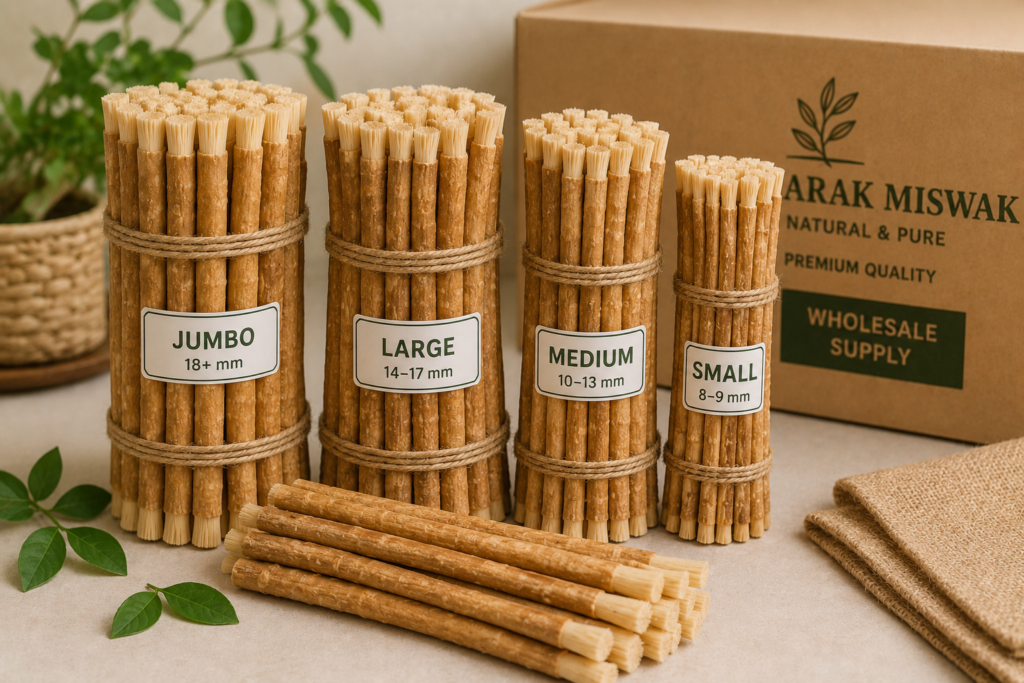
Miswak isn’t complicated — but it does reward a little care. Prepare the tip, brush gently in the right direction, give it a few honest minutes, and keep it clean between uses. Get those basics right and you’ve unlocked most of what makes this a tool people have trusted for over a thousand years. And remember: the whole routine only works if you’re starting with a genuine, fresh stick. If you’re a retailer, distributor, or wholesale buyer looking for authentic, hygienically processed Salvadora persica miswak in bulk, explore our miswak product range or get in touch with our team — we’ll help you source miswak your customers can use safely and confidently.