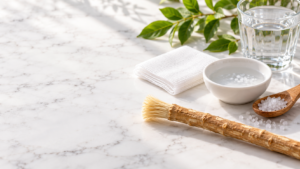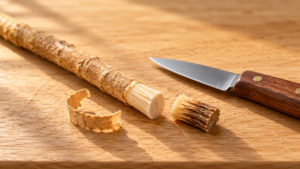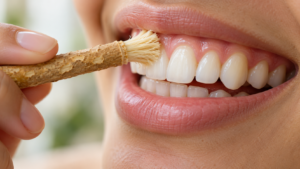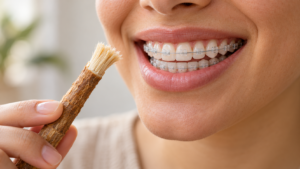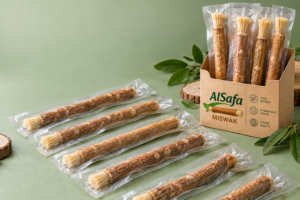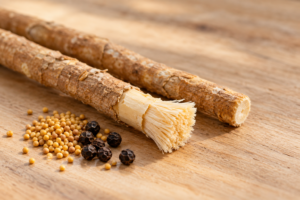
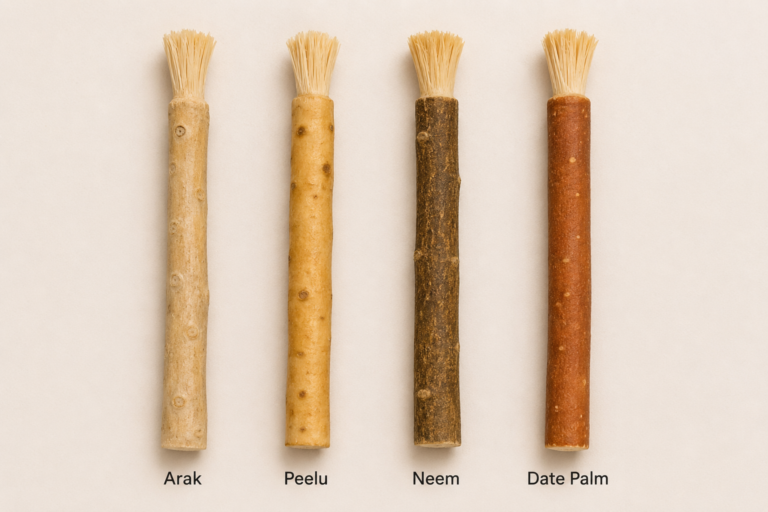
Ask for a miswak and you would think you are buying one simple thing — a twig for cleaning your teeth. But browse a serious supplier and you will quickly meet four very different names: Arak, Peelu, Neem and Date Palm. They look similar in the packet, yet they come from different trees, taste completely different, and vary a lot in how soft they feel and how hard they clean.
If you are brand new to all of this, it helps to first understand what a miswak actually is and where it comes from. Once you know the basics, choosing the right type becomes the thing that decides whether you enjoy using it every day — or leave it forgotten in a drawer. This guide breaks down all four so you can pick with confidence.
For most people, Arak (Salvadora persica) is the best all-round miswak — it is the traditional, most-researched type, with soft bristles and naturally high levels of antibacterial compounds. Peelu is essentially the same plant sourced from South Asia and a great-value choice. Neem is the most antibacterial but noticeably bitter and firmer. Date Palm is the mildest and gentlest, best for sensitive users and beginners.
What actually makes miswak types different?
Four things separate one miswak from another, and every choice below comes down to these:
1. The tree it comes from
Arak and Peelu come from the same botanical family (the Salvadora tree), while Neem and Date Palm come from entirely different plants. Different plant, different chemistry — which is why the taste and cleaning feel change so much.
2. Taste
This is the deal-breaker most beginners underestimate. Arak is warm and peppery, Peelu is milder, Neem is genuinely bitter, and Date Palm is almost flavour-neutral. If you dislike the taste, you simply will not keep using it.
3. Softness of the bristles
When you chew the tip, it splays into natural fibres. Some woods soften into fine, gentle bristles; others stay firm and coarse. Softer is kinder on the gums, firmer scrubs harder.
4. Cleaning and antibacterial strength
Every miswak cleans mechanically, but the plant's natural compounds are what set it apart from a plain twig. The active ingredients behind that effect — silica, tannins and natural antibacterial agents — are the same ones we cover in our guide to the natural compounds that give miswak its cleaning power. Several clinical reviews of Salvadora persica have linked these compounds to reduced plaque and healthier gums.
Arak miswak — the classic (Salvadora persica)
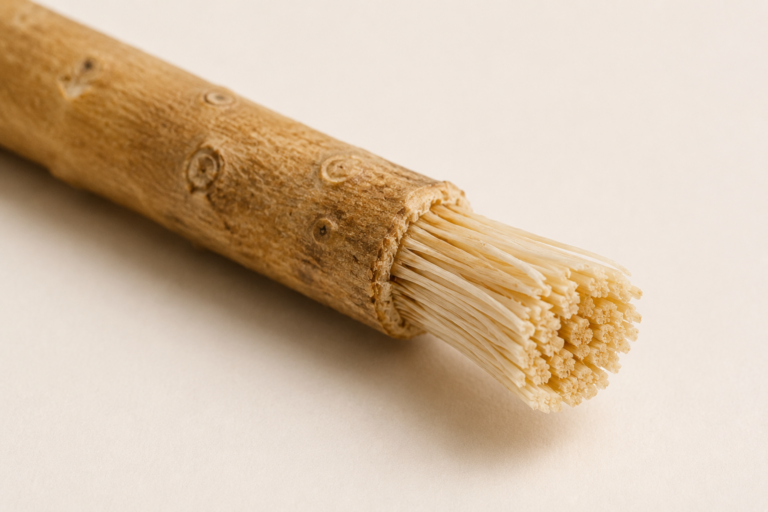
Arak is the original and most prized miswak. It comes from Salvadora persica, the tree so closely tied to tooth cleaning that it is literally nicknamed the "toothbrush tree." When people picture the traditional Sunnah miswak, this is the one.
Chew the end and it opens into soft, fine bristles that are gentle on the gums yet clean thoroughly. The taste is warm and slightly peppery — most daily users grow to love it. Arak is also the most studied type: a recent systematic review of miswak found it can reduce plaque and gum inflammation, which is a big part of why it remains the benchmark every other stick is measured against.
Best for
Anyone who wants the authentic experience and the best all-round balance of softness, flavour and cleaning strength. If you only try one type, make it this one.
Peelu miswak — the South Asian favourite
Here is a point that confuses a lot of buyers: Peelu and Arak are essentially the same plant. "Peelu" (also written Pilu or Pelu) is simply the South Asian name for the Salvadora tree, and the name shows up across regional languages of the subcontinent — you will even see "Pelu" and "Pilu" listed among its documented local names for Salvadora persica.
So what is the real difference a buyer notices? Mostly source, freshness and feel. Peelu sticks are typically harvested and sold across Pakistan, India and the wider region, and many users find them a touch milder in taste and slightly softer than Middle Eastern Arak. The benefits are near-identical, which makes Peelu an excellent everyday, great-value pick.
Best for
Daily users in South Asia, and anyone who wants Arak-level benefits at a friendly price. It is also the variety most retailers stock in volume — if you are sourcing for a shop, our wholesale miswak supply for retailers and distributors covers bulk options.
Neem miswak — the strongest and most bitter
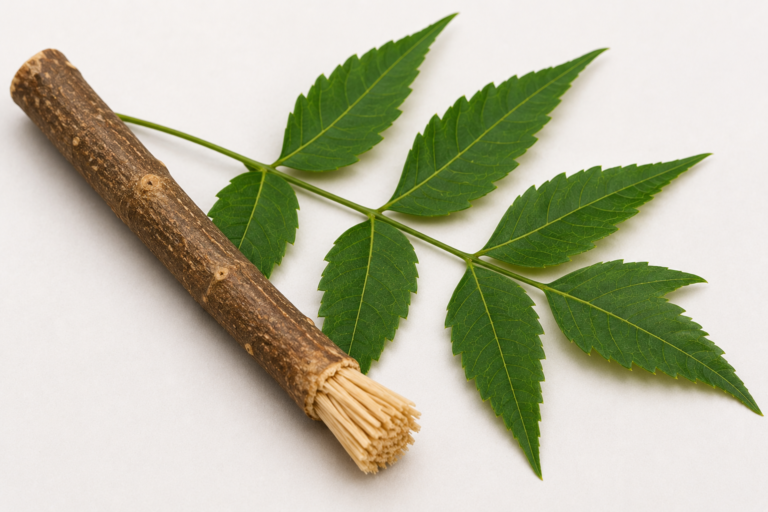
Neem comes from a completely different tree — Azadirachta indica, the neem tree famous across Ayurvedic tradition. Neem has one headline quality: it is powerfully antibacterial and antifungal. If your priority is maximum antimicrobial punch and gum defence, neem delivers.
The trade-off is taste and texture. Neem is genuinely bitter — that is the whole reputation of the plant — and the stick tends to be firmer and more fibrous than Arak. Some people love the clean, sharp feeling it leaves; others cannot get past the bitterness. If you have tender gums, ease in slowly, and read our notes on choosing a stick that is gentle enough for sensitive gums first.
Best for
Experienced users who want the strongest antibacterial action and do not mind a bitter, firmer stick.
Date palm miswak — the gentle option
Date palm miswak is made from the stem or midrib of the date palm (Phoenix dactylifera). Of the four, it is the softest and mildest: light in flavour, easy on the gums, and undemanding to use. Historically it was the go-to chewing stick in regions where Arak was scarce.
The honest trade-off is potency. Date palm is lower in the strong antibacterial compounds that make Arak and Neem stand out, so it leans more on gentle mechanical cleaning than on a medicinal effect. That makes it a lovely entry point rather than a heavy-duty cleaner.
Best for
Absolute beginners, children easing into the habit under supervision, and anyone with very sensitive gums who finds Arak or Neem too intense.
Arak vs Peelu vs Neem vs Date Palm: side-by-side
Here is the whole comparison in one view. On a phone, each type stacks into its own easy-to-read card.
| Type | Comes from | Taste | Texture | Cleaning strength | Best for |
|---|---|---|---|---|---|
| Arak | Salvadora persica (toothbrush tree) | Warm, peppery | Soft, fine bristles | Excellent — the benchmark | The best all-round daily stick |
| Peelu | Salvadora tree (South Asian) | Mild, gentle | Soft | Excellent — near-identical to Arak | Great value everyday use |
| Neem | Azadirachta indica (neem tree) | Strongly bitter | Firm, fibrous | Very strong antibacterial action | Experienced users wanting max potency |
| Date Palm | Phoenix dactylifera (date palm) | Very mild, near-neutral | Softest, gentlest | Gentle, mainly mechanical | Beginners and sensitive gums |
So which miswak is best for you?
There is no single winner — the “best” type depends on what you value most. Match yourself to one of these and you will land on the right stick:
Best overall: Arak. Best value / everyday: Peelu. Strongest antibacterial: Neem (if you tolerate bitterness). Gentlest for beginners and sensitive gums: Date Palm.
Choose Arak if…
You want the authentic, most-researched miswak with the best balance of softness and cleaning. It is the safest first purchase.
Choose Peelu if…
You want Arak-level results with a milder taste and better price — ideal for daily use and for retailers buying in volume.
Choose Neem if…
Antibacterial strength is your top priority and a bitter, firmer stick does not bother you.
Choose Date Palm if…
You are just starting out, buying for a child, or have sensitive gums and want the gentlest option.
Whichever you pick, the type is only half the story — freshness matters just as much. A premium Arak stick that has dried out on a shelf will underperform a well-kept lesser one. If you are choosing between suppliers, our guide on where to buy fresh miswak sticks is worth a read, and once yours arrives, a few minutes on storing it properly to keep it fresh pays off for weeks.
New to the routine itself? Our walkthrough on how to prepare and use a miswak stick covers trimming, chewing and technique, and if you are weighing it against your current brush, see how a miswak compares to a plastic toothbrush.
Frequently asked questions
Which type of miswak is best for daily use?
Arak (Salvadora persica) is the best all-round choice for daily use thanks to its soft bristles, pleasant peppery taste and high level of natural antibacterial compounds. Peelu is a near-identical, great-value alternative if you want the same benefits at a lower price.
Are Peelu and Arak the same thing?
Botanically, yes — Peelu is the South Asian name for the same Salvadora tree that produces Arak. The differences buyers notice are mostly source, freshness and feel: Peelu is often slightly milder in taste and a touch softer, while the oral-care benefits are almost identical.
Is neem miswak better than Arak?
Neem is more strongly antibacterial, but it is also much more bitter and has a firmer, coarser texture. It is not "better" for everyone — it is better only if maximum antimicrobial action is your top priority and you do not mind the taste. Most people find Arak more comfortable for everyday use.
Which miswak is best for sensitive gums?
Date palm miswak is the gentlest and softest option, making it a good starting point for sensitive gums. Arak is also soft and well tolerated. Neem, being firmer and more intense, is usually the least suitable for very sensitive users.
Does the type of miswak change how long it lasts?
The type has some effect on firmness, but freshness and storage matter far more. Any miswak lasts longer and cleans better when kept fresh and trimmed regularly, regardless of whether it is Arak, Peelu, Neem or date palm.
Ready to try the right miswak for you?
Explore fresh, hand-selected Arak, Peelu, Neem and date palm sticks — retail and wholesale.
Buying for a shop or in bulk? Get in touch for wholesale pricing.