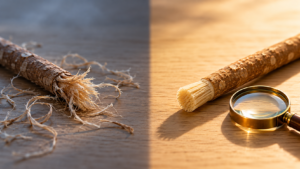

If you use miswak every day for 30 days, the first thing you’ll likely notice is fresher breath, often from day one. In the first week, your mouth gets used to the peppery taste. By weeks two and three, many people find their teeth feel smoother and cleaner, and gums that bled easily often settle down. By the end of the month, using miswak usually feels like a natural habit, and you’ll probably be on your second stick.
Everyone’s mouth is different, so your results may not match anyone else’s exactly. But most people who stick with it for a month notice a real difference. Here’s what a typical 30 days looks like, week by week.
Your 30 Days With Miswak at a Glance
| When | What you may notice |
|---|---|
| Day 1 | Fresher breath and a peppery, slightly bitter taste |
| Days 2 to 7 | The taste feels normal, and you get better at the technique |
| Week 2 | Teeth feel smoother, and any early gum bleeding starts to ease |
| Week 3 | Less plaque build-up and a cleaner feel through the day |
| Week 4 | Lighter surface stains and a steady daily habit |
| Around day 21 to 30 | Your first stick is ready to be replaced |
Before You Start: Set Yourself Up for Success
A good start makes the whole month easier. You’ll need a fresh stick, a small cup of water to soak the tip, and a simple plan for when you’ll use it.
Most people use miswak at least twice a day, in the morning and at night, and many add a quick clean after lunch. Keep brushing with fluoride toothpaste too. Miswak works best as part of your routine, not as a replacement for everything else. If you’re new to it, our step-by-step guide to using miswak shows you the basics in a few minutes.
Week 1: Getting Used to It
Day 1: Fresh breath straight away
The very first time you use a miswak, you’ll probably notice your mouth feels fresh. That’s partly the cleaning action of the fibres and partly the natural compounds in the wood.
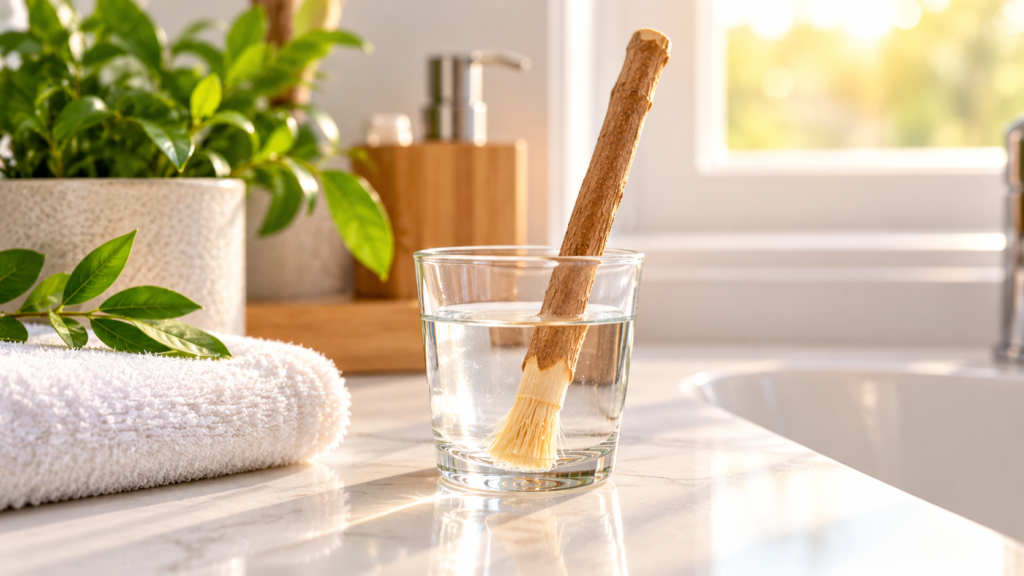
You’ll also notice the taste. It’s peppery, a little bitter and sometimes slightly tingly. This surprises a lot of people, but it’s completely normal and actually a sign the stick is fresh. Here’s why miswak tastes spicy at first.
Days 2 to 7: Finding your rhythm
Over the first week, the taste stops feeling strange. Most people barely notice it after a few days.
You’ll also get better at using the stick. At first it can feel awkward to reach your back teeth, and you might chew more than you brush. By the end of the week, the movements start to feel natural.
What to watch for: If your gums bleed a little in the first few days, don’t panic. Gums that were already a bit inflamed often bleed when you start cleaning them properly, and this usually eases as they get healthier. If your teeth feel sensitive, use a softer, well-soaked tip and lighter pressure. Our guide on using miswak with sensitive teeth has more help.
Week 2: Your Teeth Start to Feel Different
By the second week, many people notice their teeth feel smoother when they run their tongue over them. That’s because regular cleaning is stopping plaque from building up the way it used to.
If you had a little bleeding in week one, it often starts to settle around now. Your gums may look slightly firmer and pinker.
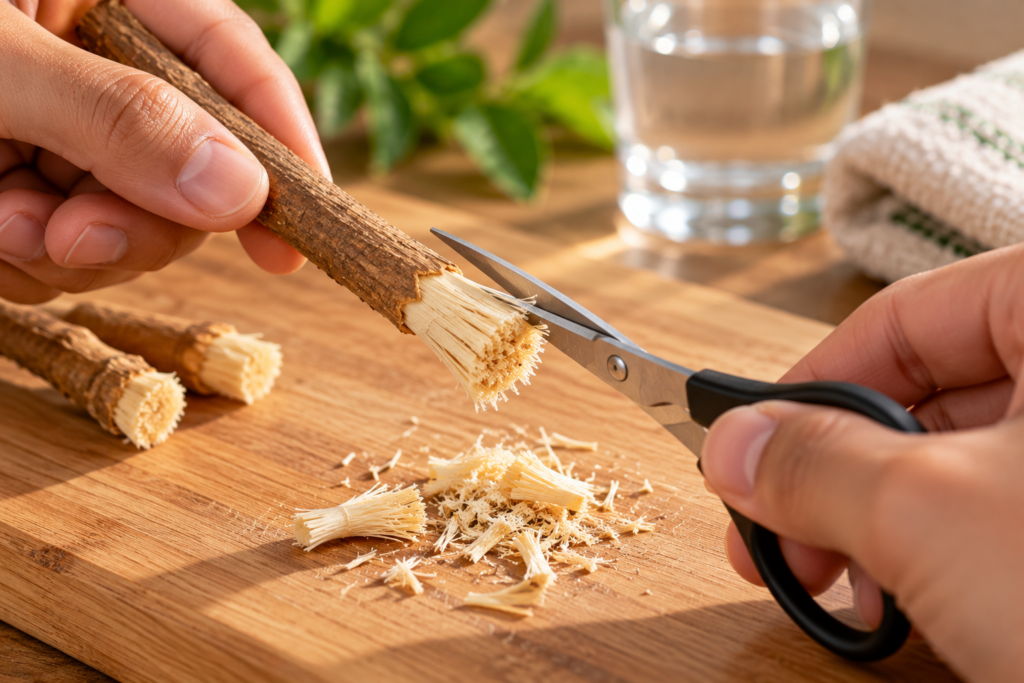
This is also when trimming becomes part of your routine. The tip wears out after a day or two of use, so you’ll cut off the old bristles and make a fresh brush head. It only takes a minute, and our guide on trimming your miswak tip shows you exactly how much to cut.
Week 3: The Results Become Clearer
Week three is often when people say, “Okay, this actually works.”
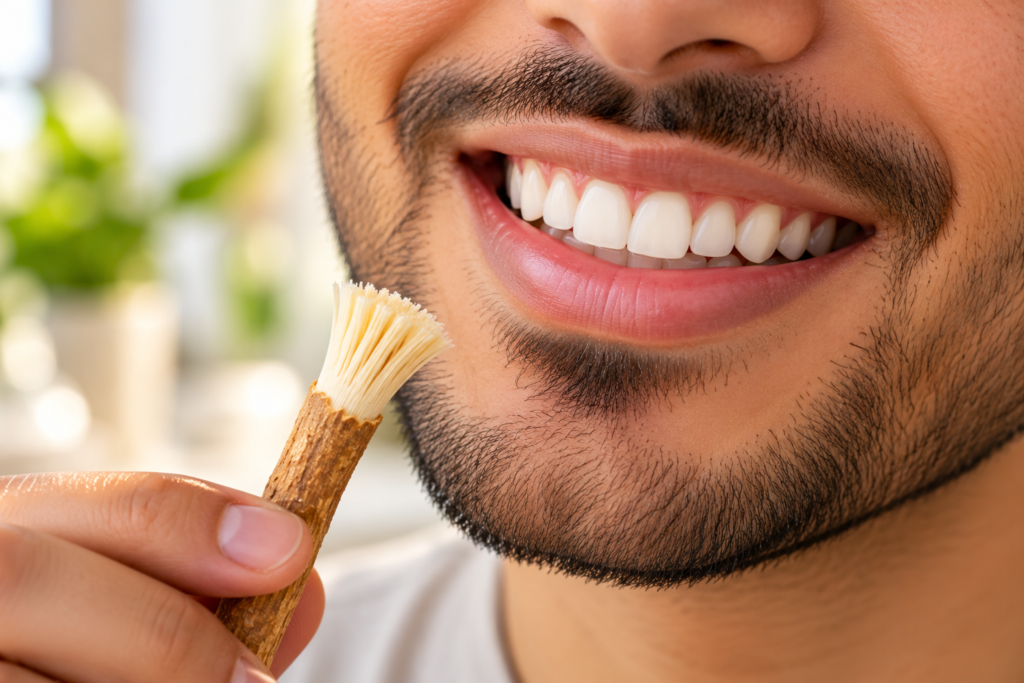
Your mouth may feel clean for longer through the day. If you use miswak after meals, you’ll probably notice less of that sticky, furry feeling on your teeth by the evening.
There’s a good reason for this. In studies, measurable changes in mouth bacteria and gum health usually show up after two to four weeks of regular use. The effect builds up over time, so consistency matters more than any single session. You can read more about how miswak lowers harmful bacteria over time.
Week 4: A Brighter Smile and a New Habit
Lighter surface stains
If you drink tea or coffee, you might notice by week four that surface stains look a little lighter. Miswak helps remove stains on the outside of your teeth gradually. It won’t bleach your teeth or change their natural colour, but many people find their smile looks cleaner and brighter. The research on miswak and stain removal explains what to expect.
Time for a new stick
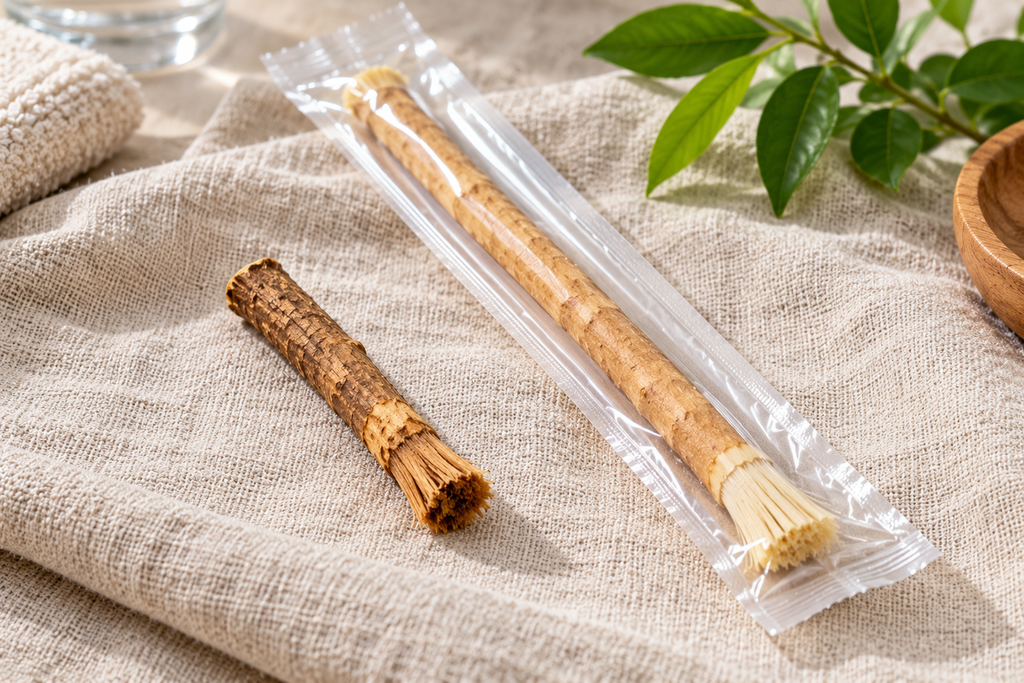
Around weeks three to four, your first stick will probably be getting short. It may also feel stiffer, or taste like plain wood instead of that peppery bite. That’s your sign to start a new one. Here are the signs it’s time to replace your miswak.
It becomes second nature
By day 30, most people don’t have to think about using their miswak any more. It’s in their bag, at their desk or by the sink, and reaching for it feels as natural as reaching for a toothbrush.
What Miswak Won’t Do in 30 Days
It’s worth being honest about this, so you know what to expect:
- It won’t fix cavities you already have. Only a dentist can treat tooth decay.
- It won’t bleach your teeth. It removes surface stains, not the natural colour of your teeth.
- It won’t replace fluoride toothpaste. Fluoride gives cavity protection that miswak can’t fully match, which is why using both works best. Here’s why miswak and toothpaste make a good team.
- It won’t undo gum recession. Gums that have already pulled back don’t grow back on their own.
If you have ongoing pain, bleeding that lasts beyond two weeks, or loose teeth, see a dentist. Those are signs of a problem that needs proper care.
Tips to Get the Best Results in Your First Month
- Use it at the same times every day. Linking it to something you already do, like waking up or finishing lunch, makes the habit stick.
- Keep the tip soft. A dry, hard tip is uncomfortable and harder on your gums. Soak it if it feels stiff.
- Go gently. Light, short strokes clean better than hard scrubbing.
- Trim every day or two. Fresh bristles clean better and taste better.
- Keep a spare. Having a second stick at work or in your bag means you never skip a session.
- Keep brushing too. Use fluoride toothpaste morning and night alongside your miswak.
Frequently Asked Questions
How long does it take to see results from miswak?
Most people notice fresher breath on the first day. Smoother teeth and calmer gums often show up in two to three weeks, and lighter surface stains around the end of the first month.
Is it okay to use miswak every day?
Yes. Daily use is how miswak is meant to be used. Just use light pressure, keep the tip soft, and trim it regularly.
Why do my gums bleed when I start using miswak?
Gums that are already slightly inflamed often bleed when you start cleaning them properly. This usually settles within one to two weeks. If it doesn’t, see a dentist.
Will miswak make my teeth whiter in 30 days?
It can make surface stains from tea, coffee and food look lighter, so your smile may look brighter. It won’t bleach your teeth or change their natural colour.
How many miswak sticks will I need for 30 days?
Usually one or two. Most sticks last about three to four weeks with daily use and regular trimming.
Can I stop using toothpaste after 30 days of miswak?
It’s best not to. Fluoride toothpaste protects against cavities in a way miswak can’t fully match. Using both gives the best results.
The Bottom Line
Thirty days of daily miswak use is enough for most people to feel a clear difference. Expect fresher breath from day one, a strange taste that quickly becomes normal, smoother teeth and calmer gums by weeks two and three, and lighter surface stains by the end of the month. Keep the tip soft, use a gentle touch, trim it regularly, and keep brushing with fluoride toothpaste. By day 30, you’ll have a simple, natural habit that’s easy to keep for life.