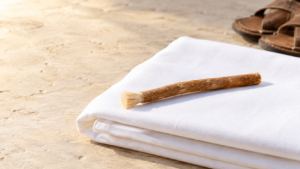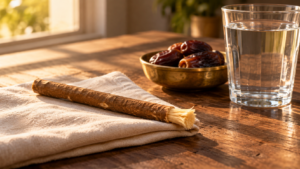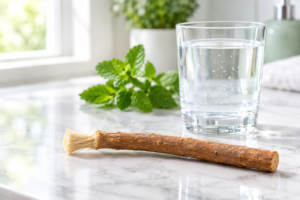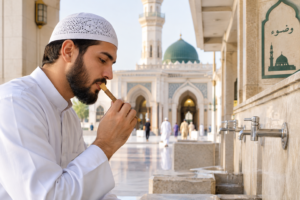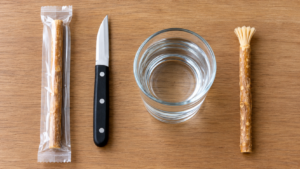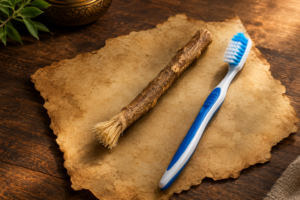
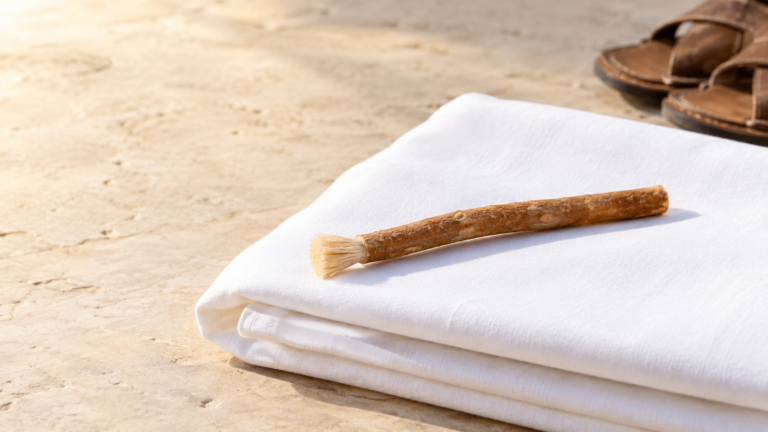
Quick answer: Yes. Using a plain, unscented miswak in ihram is permitted by all four schools and carries no penalty. The one genuine restriction is scent — a miswak soaked in mint, lemon, or any added fragrance falls under the perfume prohibition, so stick to untreated Salvadora persica.
You’re standing at the miqat, about to make your intention, and you realize you have no idea whether the stick in your bag is going to cost you a fidyah.
It’s a small worry, but it’s the kind that nags at pilgrims, because almost everything about ihram is defined by what you’re not allowed to do. No perfume. No cutting hair. No trimming nails. Once you’re in that headspace, every ordinary habit starts to look suspicious — and oral hygiene is the one people ask about most, right after soap.
Here’s the relief: a miswak is one of the few things that stays entirely open to you. In fact, it becomes more useful in ihram than it is at home, precisely because the alternatives get complicated.
Does using miswak break ihram?
No. Miswak does not violate the state of ihram, and there is no scholarly disagreement worth calling a disagreement here.
The prohibitions of ihram are specific: perfume, sexual relations, hunting, cutting hair and nails, wearing sewn garments for men, covering the face and hands for women, and contracting marriage. Cleaning your teeth appears nowhere on that list.
Miswak is a cleaning tool, not an adornment and not a fragrance. A pilgrim can use it before every prayer in the Haram, after waking in Mina, before Tawaf, or at any point during the ten days of Dhul Hijjah. Nothing about it touches an ihram restriction.
The general encouragement toward siwak was never suspended for pilgrims, and the Prophet ﷺ performed Hajj without any narration suggesting he set the practice aside during it. If the basic tool is new to you, our overview of what miswak is and where it comes from covers the ground before the rulings.
The one real restriction: scent
This is where the question actually has teeth.
A muhrim may not apply perfume, and scholars extend that to anything used as a fragrance. Flavoured miswak — the sticks sold soaked in mint, lemon, cinnamon, or strawberry — introduces an added scent that wasn’t in the wood. Many scholars treat deliberate use of these in ihram as falling under the perfume prohibition, with fidyah potentially due.
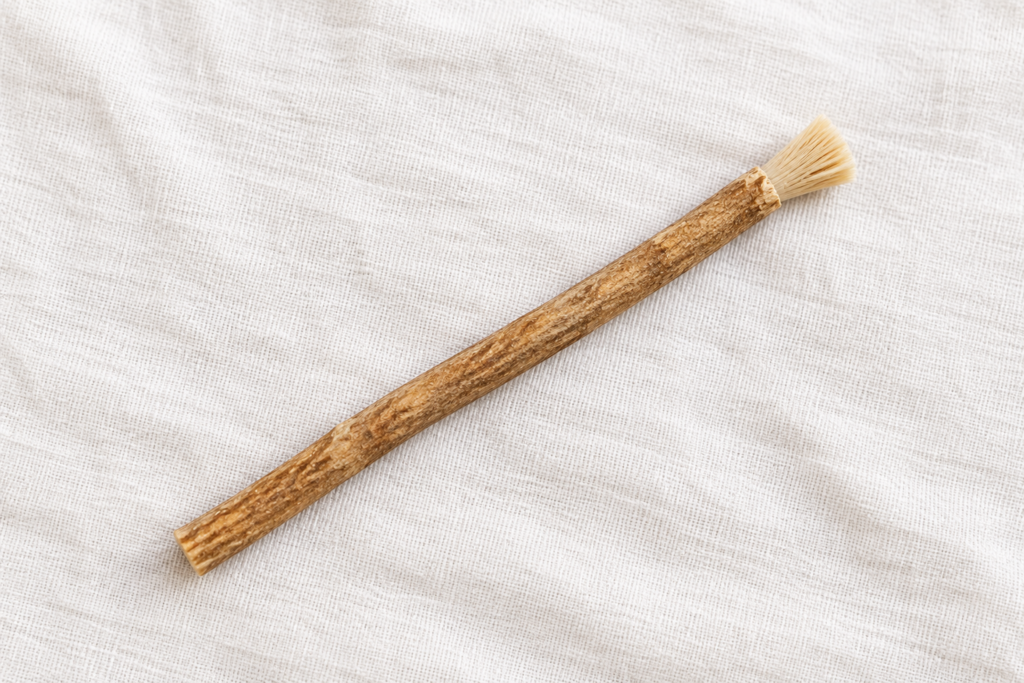
Plain miswak is a different case entirely. The natural, slightly peppery aroma of Salvadora persica is the inherent smell of a plant, not an applied fragrance. Jurists have long distinguished between the two: things with a natural scent that people don’t use as perfume — fruit, plain wood, herbs in food — are not classed as tib. Nobody dabs miswak behind their ears.
So the rule is simple enough to remember at the miqat. Untreated stick: fine. Flavored stick: leave it in the hotel.
If you’re unsure what you’re holding, check the packaging for added flavoring, and buy from a source that states plainly what’s in the product. Knowing which tree genuine miswak comes from is the easiest defence against a “miswak” that’s really a flavoured novelty stick.
What about toothpaste in ihram?
This is the question hiding behind the miswak question, and it’s why so many pilgrims pack a stick.
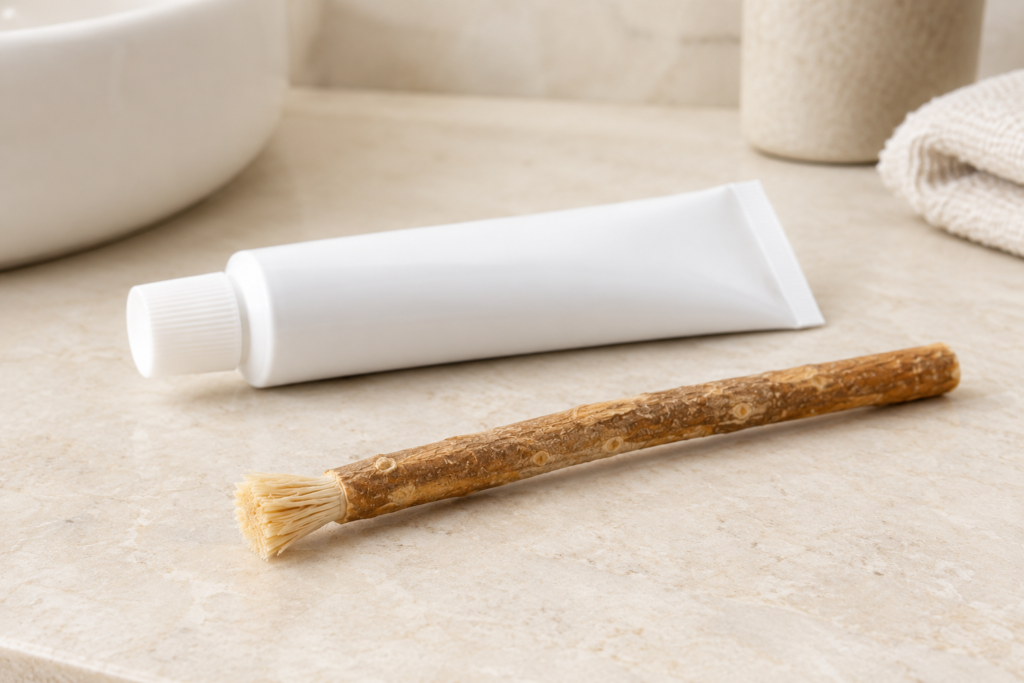
Nearly all toothpaste is mint-scented. Most contemporary scholars permit it in ihram on the grounds that toothpaste isn’t used as a perfume and the scent isn’t applied to the body for adornment. But a sizeable number of pilgrims are advised — or simply prefer — to avoid it, and scent-free toothpaste is not easy to find on a Hajj group tour.
Miswak resolves the whole thing. No paste, no scent, no ruling to weigh at six in the morning in a crowded Mina bathroom. It’s the reason miswak sellers do brisk business in Makkah and Madinah during the season, and why you’ll see sticks in the hands of pilgrims from every country in the Haram.
Mouthwash raises a sharper version of the same problem, since most formulations combine strong mint with alcohol. Our comparison of miswak and mouthwash covers the daily-use side of that choice, and the calculus only tilts further toward the stick when you’re in ihram.
What if my gums bleed?
Bleeding does not affect ihram, and it doesn’t affect your fast either if you’re performing Umrah in Ramadan.
Blood leaving the body isn’t one of the prohibitions, and the schools don’t require anything of you for it. The only concern is practical: gums that bleed during Hajj are gums that were already inflamed before you left, and pilgrimage is a poor time to discover that.
Ihram makes the risk higher in a quiet way. You’re likely dehydrated, sleeping badly, and using the stick more often than at home because of the five daily prayers in congregation. That combination invites heavy-handed scrubbing. Go gentler than your normal routine, not harder — the risks that come with aggressive miswak technique don’t take a holiday during Dhul Hijjah.
What if a beard hair falls out while using it?
A genuinely common worry, and the answer is reassuring.
Hair that falls naturally — during wudu, while using miswak, when adjusting your ihram — carries no sin and no fidyah according to the majority of scholars, because the prohibition concerns deliberately removing hair. Ibn Abbas is reported to have made light of exactly this kind of anxiety.
The prohibition is on the act of removal, not on the existence of loose hair. Use your miswak normally, and if a hair comes away on the fibres, brush it off and carry on.
Miswak before entering ihram
There’s a positive recommendation here, not just a permission.
Before making the intention at the miqat, it is sunnah to perform ghusl, trim the nails, remove unwanted hair and generally present yourself clean — all the grooming you won’t be able to do once you’ve entered the state. Cleaning the mouth belongs squarely in that preparation.
A practical sequence for the miqat:
- Trim nails and tidy hair while still permitted.
- Perform ghusl with unscented soap.
- Use your miswak thoroughly — this is your most unhurried session for a while.
- Change into ihram garments.
- Pray two rak’ahs where permitted, then make your intention and begin the talbiyah.
After that point, the miswak keeps working for you, but the grooming stops. Many pilgrims apply this same logic to their Ramadan routine, front-loading the thorough clean — the reasoning runs closely parallel to using miswak through a fasting day.
Packing miswak for Hajj and Umrah
Four things specific to pilgrimage that ordinary travel advice won’t tell you.
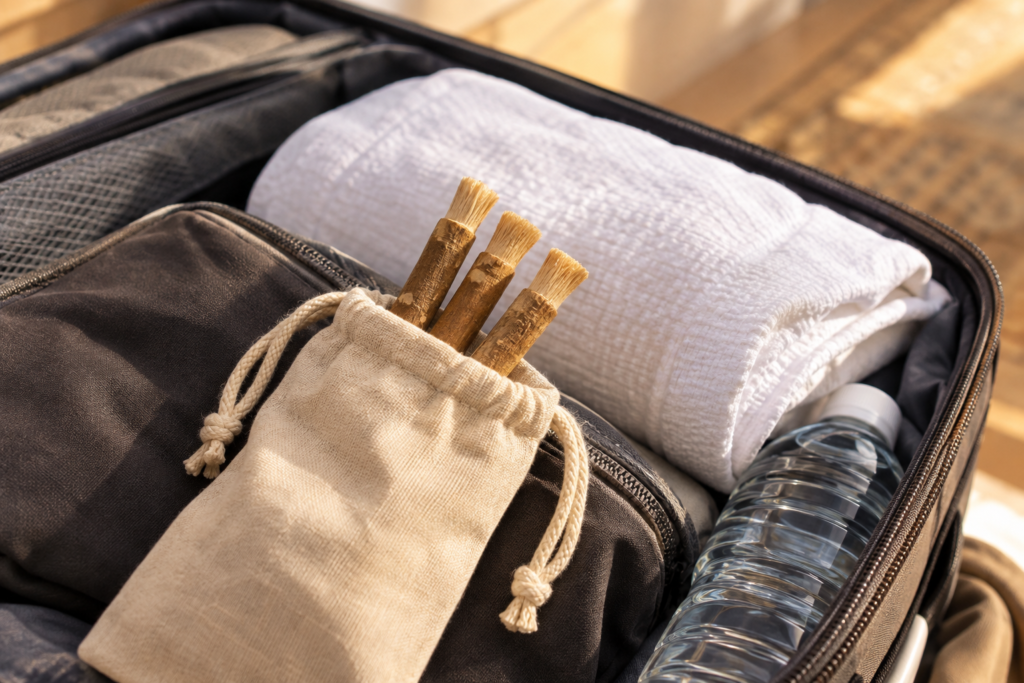
Customs is not an issue. Miswak is sold openly across Makkah, Madinah, and Saudi airports. Wooden sticks in hand luggage are routinely fine, though a very long unsawn stick occasionally attracts a second look at security — pack trimmed lengths and you’ll walk through.
Bring more than one. Hajj runs long, conditions are hot and dry, and a single stick used five or more times a day will not survive the whole trip in good condition. Two or three per person is sensible. Know the signs that tell you a stick is finished so you swap on time rather than pushing a splintered one.
The tent is the hard part. Mina in Dhul Hijjah is brutal on plant material. Keep sticks sealed and out of direct sun rather than loose in a bag, and don’t leave a damp one in a closed pouch in that heat. The broader principles in our guide to keeping miswak fresh in storage apply, just compressed into harsher conditions.
Mind the adab in the Haram. Don’t discard used sticks or trimmed fibres on the floor of the mataf or in the mosque. Carry a small bag, take them out with you, and dispose of them respectfully.
Frequently asked questions
Is a miswak allowed in ihram?
Yes. A plain, unscented miswak is permitted throughout Hajj and Umrah by all four schools, with no fidyah and no restriction on how often you use it.
Does a flavored miswak break ihram?
Deliberately using a mint, lemon, or otherwise scented stick falls under the perfume prohibition, and scholars may require fidyah for it. Use untreated Salvadora persica instead.
Can I use miswak during Tawaf and Sa’i?
Yes. There is no prohibition, and using it beforehand as part of your preparation for prayer is recommended.
Does bleeding from the gums affect ihram or fidyah?
No. Bleeding is not among the prohibitions of ihram and requires nothing of you. Use a gentle technique to avoid it regardless.
What if a hair falls out while I am using a miswak?
Hair that falls naturally carries no sin and no penalty according to the majority. The prohibition applies to deliberately removing hair.
Is toothpaste allowed in the ihram?
Most contemporary scholars permit it, since toothpaste is not used as a perfume. Many pilgrims prefer miswak anyway to avoid the question entirely.
Can women use miswak in ihram?
Yes. The ruling is identical for men and women, and the recommendation applies to both.
How many miswak sticks should I take for Hajj?
Two or three per person. Heat, dry air and heavy daily use wear a stick down faster than at home.
The short version
Pack a plain miswak and use it freely. It’s permitted in ihram, it sidesteps the toothpaste question altogether, it needs no water or sink in a Mina tent, and it keeps a Sunnah alive during the days when you’re most focused on following one.
Check the stick, not the ruling. If there’s nothing on it but Salvadora persica, you have nothing to think about. For anything specific to your own situation — particularly if you’ve already used a scented product in ihram — ask a scholar with your group rather than relying on a general article.