There’s an easy thing to forget about miswak: it’s a natural, organic twig that goes into your mouth twice a day, and organic material behaves very differently from a plastic toothbrush. Treat it carelessly and it can quietly become a home for the exact bacteria you’re brushing to remove.
The good news is that miswak hygiene takes almost no effort — it’s a handful of small habits, done consistently. Get them right and your stick stays fresh, clean, and genuinely good for your teeth. Get them wrong, and even the best-quality miswak works against you.
This is a hygiene-focused companion to our main guide on miswak stick side effects, where we cover the full range of risks and precautions. Here, we’re zooming in on one of them: keeping the stick itself clean.
Why Miswak Hygiene Matters More Than People Think
A toothbrush is made of synthetic bristles that dry quickly and resist decay. A miswak is plant fibre — porous, moist, and full of natural nutrients. That’s wonderful for cleaning your teeth, but it also means that if the stick stays damp and dirty, bacteria and mould find it a comfortable place to grow.
Studies looking at old, poorly kept chewing sticks have found significant microbial build-up on the used bristles. The lesson isn’t that miswak is unhygienic — it’s that a neglected miswak is. A rinsed, trimmed, air-dried stick is clean. A forgotten one left damp in a bag is not. The difference is entirely in your hands.
The golden rule:
A miswak should always go into your mouth fresh, moist with clean water, and cut to a new layer of wood. If it’s dry, dirty, or smells off — don’t use it. Trim it or replace it.
Before You Brush: Clean Start
Hygiene begins before the stick even touches your teeth. Three quick checks:
- Wash your hands first. You’re about to handle something going straight into your mouth — clean hands keep everyday germs off the stick.
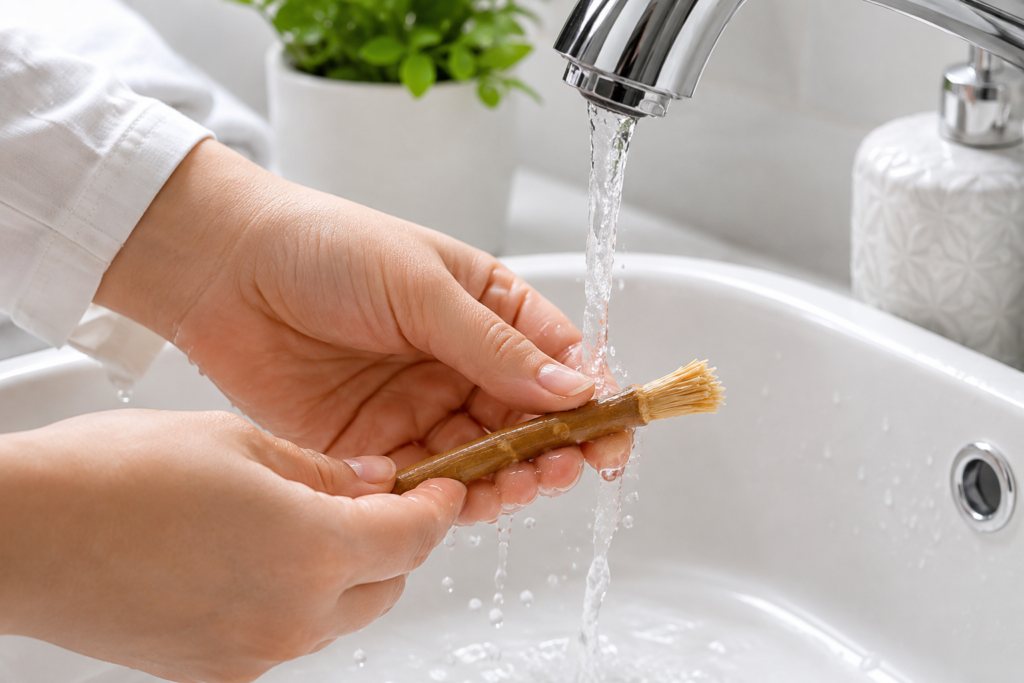
- Rinse the tip. A quick rinse under clean running water clears dust and anything the tip picked up in storage.
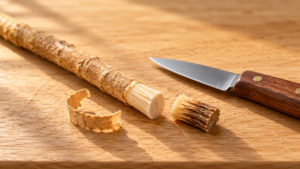
- Cut to fresh wood. Trim off the previously used bristles so you start on a clean, active layer. This is a hygiene step as much as a performance one.
Use clean water — this part is underrated
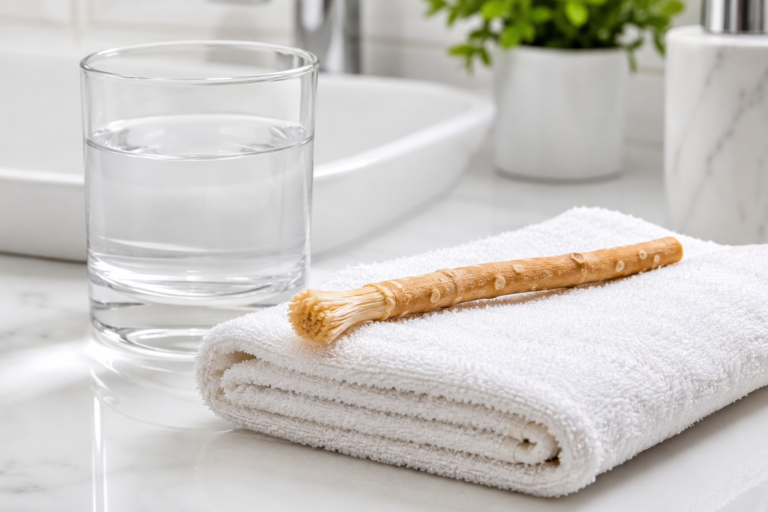
If you soften your miswak by soaking it, the water quality matters. Soaking a stick in questionable water leaves whatever was in that water sitting on the fibers you’re about to chew. Use clean, drinkable water only — the same standard you’d apply to anything you put in your mouth. Because miswak absorbs moisture readily, its condition is closely tied to its surroundings; we explain that link in our post on how humidity affects miswak quality.
While You Brush: Keep It Off Contaminated Surfaces
Simple but important: during a session, don’t rest the wet tip on the edge of a sink, a countertop, or any surface where it can pick up germs. If you set it down, place the tip on a clean tissue, not bare bathroom surfaces.
And never let the tip touch the floor and go back in your mouth “because it was only a second.” A wet fiber tip picks up contamination instantly. If it drops, rinse and trim before continuing.
The Golden Rule: One Stick, One Person
This deserves its own section because people break it constantly with family. A miswak is as personal as a toothbrush. Sharing one transfers saliva and bacteria directly from one mouth to another — exactly the kind of cross-contamination that spreads oral infections and, potentially, illness.
Every member of the household should have their own clearly identifiable stick. If you keep several in one place, mark or separate them so nobody grabs the wrong one. No exceptions, no “just this once.”
After You Brush: The Steps That Prevent Build-Up
What happens after brushing decides whether your next session starts clean or dirty. This is where most hygiene failures happen — the stick gets shoved away wet and forgotten.
- Rinse thoroughly. Run the tip under clean water to wash off loosened plaque and food particles.
- Trim the used bristles. Cutting off the spent tip removes the layer that’s been in your mouth and exposes fresh, clean wood for next time.
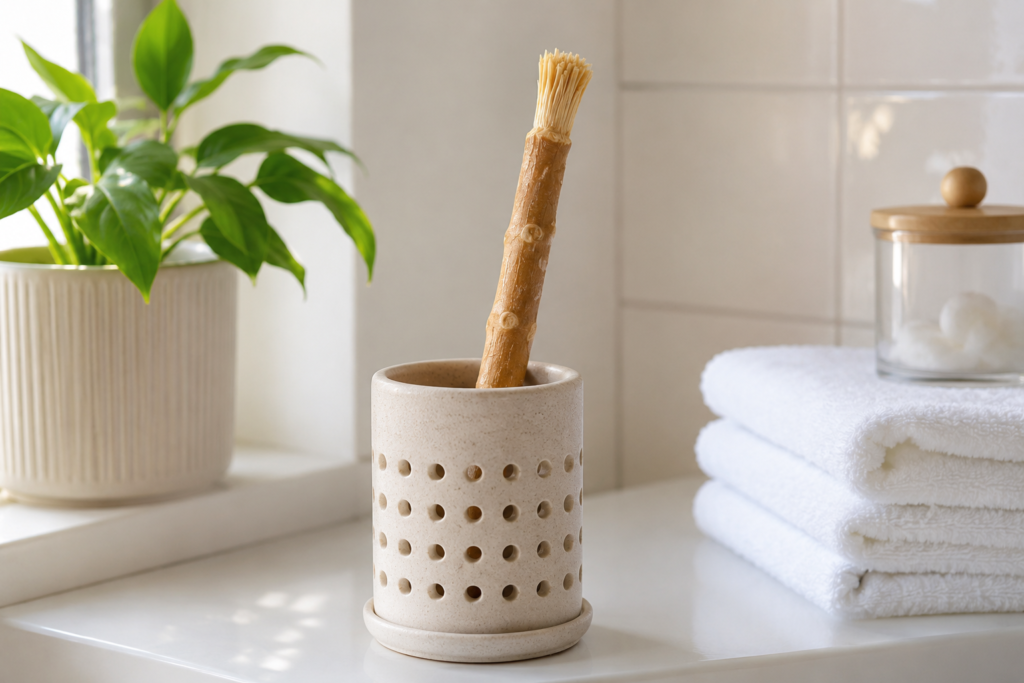
- Air-dry it — this is the big one. A dry miswak can’t grow bacteria. Stand it upright in an open, ventilated spot and let it breathe. Never seal a damp stick in a closed container, pocket, or plastic bag, where moisture and warmth become a breeding ground.
For the full method and the best storage setups, see our guides on how to store miswak properly and the best ways to keep miswak fresh.
Hygiene Do’s and Don’ts at a Glance
Everything above boiled down to a quick reference you can screenshot:
| Hygienic Habit ✓ | Avoid This ✗ |
|---|---|
| Rinse the tip before and after every use. | Use it straight after it touched a surface. |
| Soak in clean, drinkable water only. | Soak in tap water you wouldn’t drink. |
| Keep one stick strictly per person. | Share a stick with family or guests. |
| Air-dry upright in open air. | Seal a damp stick in a pocket or plastic. |
| Trim to a fresh layer daily. | Keep chewing the same old tip for a week. |
| Replace it at the first musty smell. | Wait until it visibly molds or splinters. |
Staying Hygienic on the Go
One of miswak’s best features is portability — no water or paste needed. But travel is exactly where hygiene tends to slip. A few habits keep it clean away from home:
- Carry it in a breathable case, not a sealed plastic sleeve. A small ventilated holder or a clean cloth pouch lets it dry between uses.
- Never toss a wet stick loose in a bag with keys, coins, and everything else. That’s instant contamination.
- Rinse before use if you can. If clean water isn’t available, at least trim to a fresh tip before brushing.
- Pack a spare. If your stick gets dropped or dirty on the road, you can retire it without going without.
Signs Your Miswak Has Become a Hygiene Risk
Even with good habits, every stick reaches the end of its safe life. Stop using it — and replace it — the moment you notice any of these:
- A musty, sour, or off smell — the clearest sign of microbial growth.
- Any visible discoloration, dark spots, or mold on the wood or fibers.
- A tip that stays slimy or soft even after rinsing and drying.
- Fibres that have gone hard, frayed, and splintered, which can cut gums and trap bacteria.
- A stick that has lost its natural fresh taste entirely — the compounds are gone, and it’s just old wood now.
Our detailed post on the signs your miswak needs replacing covers each of these in more depth. When in doubt, replace it — sticks are inexpensive, and a fresh one is always safer than a questionable one.
Hygiene Starts With Quality
Here’s a point people miss: hygiene doesn’t begin in your bathroom — it begins with how the miswak was harvested, processed, and packed before it ever reached you. A stick processed in unhygienic conditions, or one that’s already stale on arrival, starts you at a disadvantage no amount of home care fully fixes.
Genuine Salvadora persica (Arak), cleaned and packed to proper hygiene standards, gives you a clean starting point. If you want to understand which variety you’re using and how they differ, our guide to the types of miswak helps, and the miswak benefits page explains what a clean, fresh stick actually does for your mouth.
Frequently Asked Questions
Do I need to disinfect my miswak?
No harsh disinfectants or chemicals are needed — and they’re not advisable, since you’d be putting them in your mouth. Rinsing with clean water, trimming to fresh wood daily, and thorough air-drying are enough to keep a miswak hygienic.
Can I store my miswak in the fridge?
Some people do, to slow drying in hot climates, but the key is that it must be dry on the surface and kept in a breathable wrap — not sealed wet, which encourages mould. Our storage guide covers the safe way to do it.
How often should I replace my miswak for hygiene reasons?
With daily trimming and proper drying, a stick usually lasts a couple of weeks. Replace it sooner the moment it smells off, discolours, stays slimy, or loses its taste.
Is it safe to use a miswak with sensitive gums?
Yes, with a gentle, well-soaked, clean tip and light pressure. We cover this fully in our post on whether miswak is safe for sensitive gums.
What happens if I accidentally use a dirty miswak?
A one-off isn’t cause for panic — rinse your mouth well and switch to a clean stick going forward. If you notice any irritation, soreness, or unusual symptoms that persist, see a dentist.
The Bottom Line
Miswak hygiene comes down to a rhythm you’ll barely notice once it’s a habit: clean hands and clean water before, a clean surface during, and rinse-trim-dry after — with your own personal stick, replaced the moment it feels or smells off. That’s the whole thing.
And it all rests on starting with a genuinely clean, fresh product. If you’re a retailer, distributor, or wholesale buyer looking for authentic Salvadora persica miswak processed and packed to proper hygiene standards, explore our miswak product range or contact our team — we’ll help you source miswak your customers can trust from the very first use.