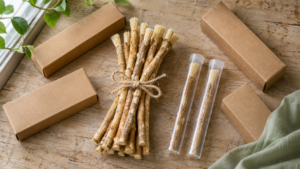
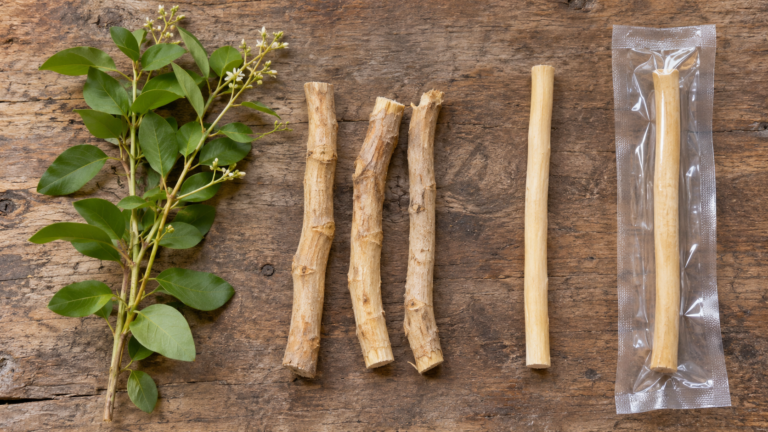
Miswak is made in six steps. The wood is cut from the arak tree, sorted, cut to length, washed, cured until the moisture is right, then sealed. The whole thing takes a few days.
Nothing gets added to the stick along the way. No glue, no chemicals, no coating. But every step still changes how well that stick cleans your teeth, and a lot of weak miswak on the market went wrong at one of them.
Here is what happens, step by step.
What is a miswak made from?
Wood. That is the whole list.
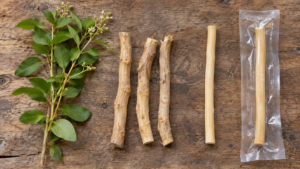
A miswak is a cut piece of branch or root from the arak tree. You may also see it called Salvadora persica or the peelu tree. We wrote about the tree itself and where it grows if you want the background.
There is no handle to attach and no bristles to add. The bristles are the wood. You chew one end, and the fibers split apart on their own. That is why making miswak is more about protecting the wood than changing it.
Step 1: Cutting the wood from the tree
The first choice happens at the tree, and it matters more than anything that comes after.
Cutters look for young, healthy wood about as thick as a pencil. Thinner than that, and the stick is too soft to hold up. It is thicker, and it is hard to chew. They want straight pieces with no cracks, no insect holes, and no dead patches.
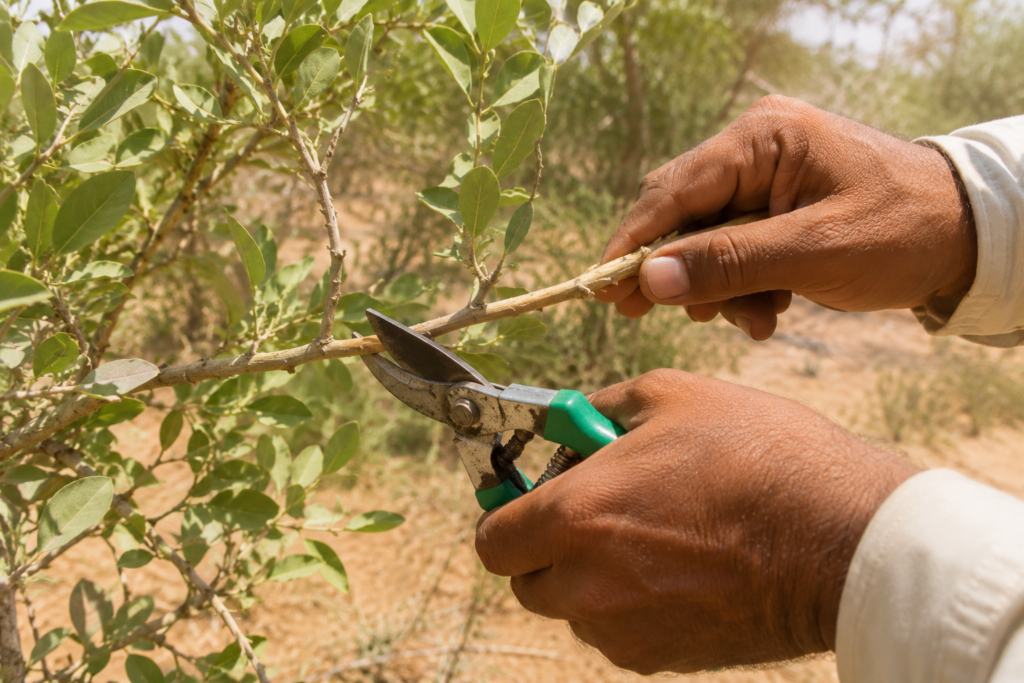
Old wood is skipped. It has already lost most of its moisture, and that moisture is where the useful compounds live. A stick cut from dry old wood will never be good, no matter how well it is packed later.
Cutting branches does not kill the tree. Arak trees grow back after a cut, the same way a hedge does.
Step 2: Sorting the wood
Back at the workshop, the cut wood gets sorted.
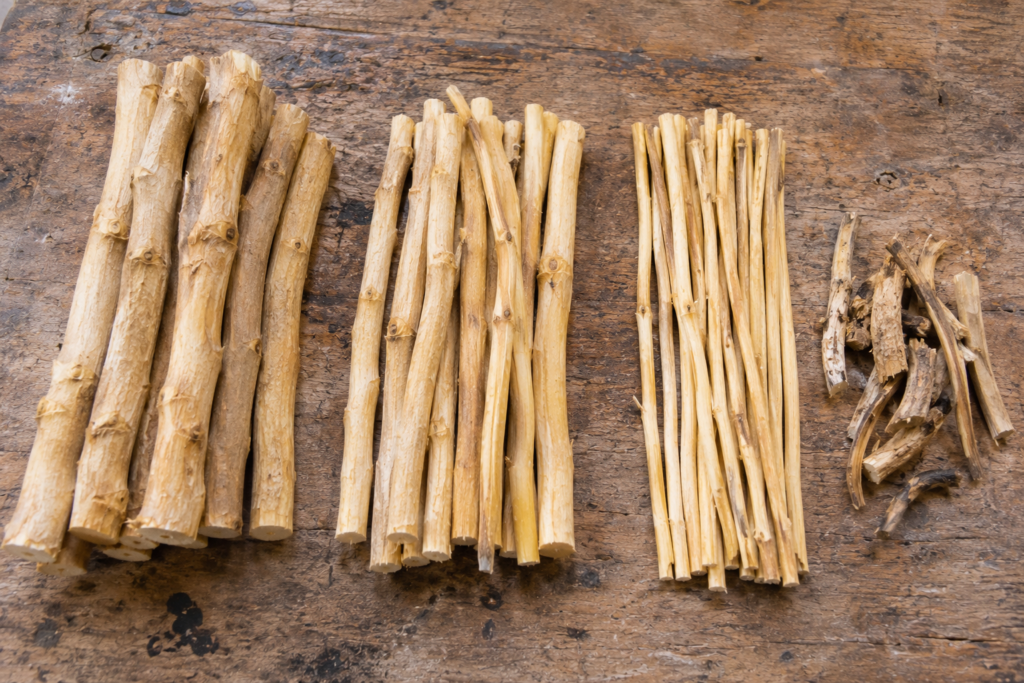
- By thickness, so one pack holds sticks of a similar size
- By straightness, since bent sticks are awkward to use and awkward to pack
- By part of the tree, keeping root wood and branch wood apart
- By condition, throwing out anything cracked, mouldy, or damaged
That third point is the one buyers ask about most. Root and branch sticks are not the same product. Root wood is softer and tastes stronger; branch wood is firmer and lasts a little longer. Our guide to the different kinds of miswak sold explains how to tell them apart.
Step 3: Cutting to length
Next, the wood is cut into sticks. Most are 15 to 20 cm long, which is about the length of your hand plus a bit.
The cut has to be clean. A crushed or split end lets air into the wood, and the stick starts drying from that point inward. Good workshops use a sharp blade and cut in one go.
Retail sticks are usually shorter than bulk ones because they have to fit in a pack.
Step 4: Cleaning
The sticks are washed to get rid of soil and dust. Clean water, nothing else.
No bleach, no chemicals, no soaking for hours. Chemicals would end up in your mouth, and long soaking swells the wood and invites mold. A short wash and the sticks move on.
The bark stays on. People sometimes think it should be peeled off at the factory, but the bark is what keeps the moisture in. You only peel back the small bit at the tip, at home, just before you use it.
Step 5: Curing (the step that decides everything)
This is where good miswak is separated from bad miswak, and most people have never heard of it.
Curing means letting the wood settle to the right moisture level. Not drying it out. There is a window to hit:
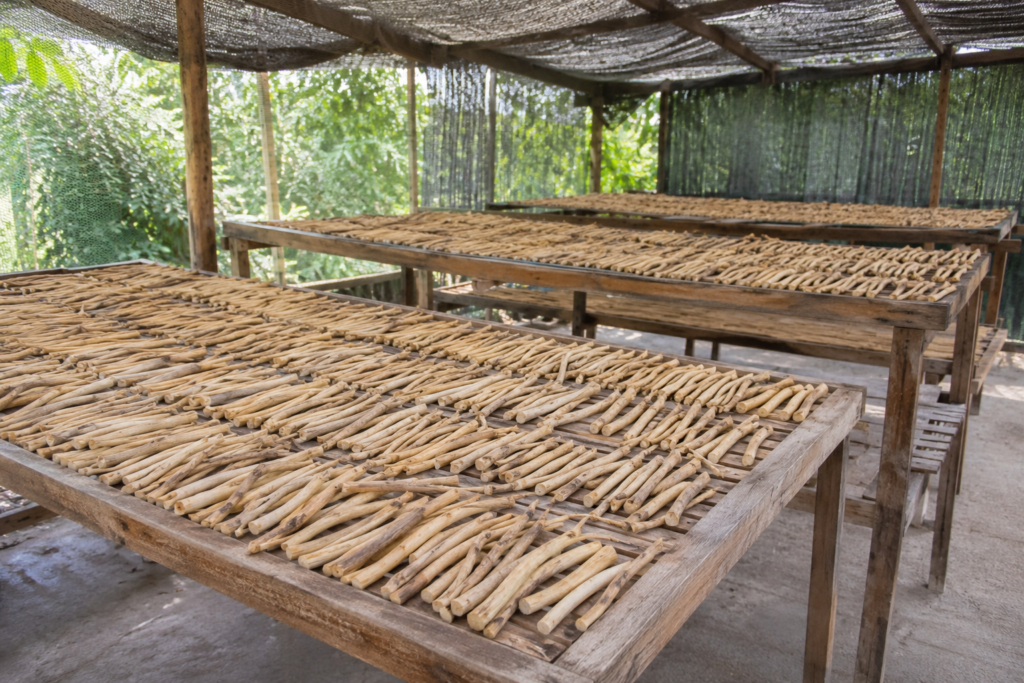
- Too wet, and mold grows inside the pack within weeks
- Too dry, and the compounds that clean your teeth are already gone
Hit the window, and you get a stick that bends instead of snapping, tastes peppery, and still works months later. Miss it, and you get a twig. If you want the science behind why drying matters so much, we covered what happens to a stick as it loses moisture.
Curing is done in shade with air moving around the sticks. Never in direct sun. Sun dries the outside fast while the inside stays damp, which is the worst of both problems at once.
Step 6: Sealing
As soon as the moisture is right, the sticks are sealed. Speed matters here. Every hour a cured stick sits in open air, it loses a little more of what makes it work.
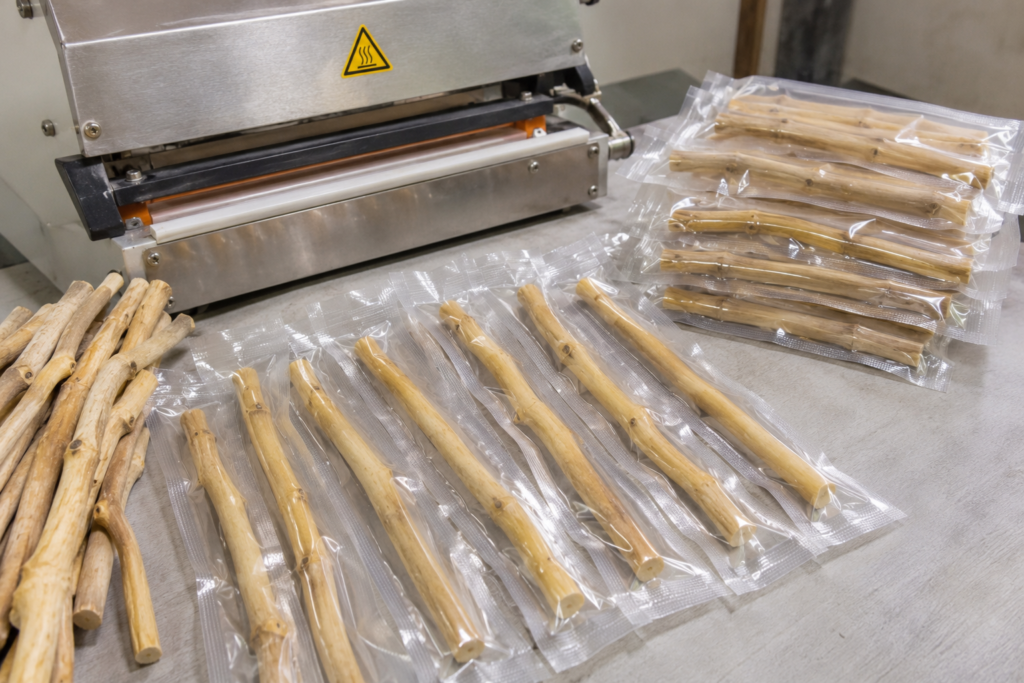
Most sticks are vacuum sealed or wrapped in a sealed sleeve. The seal is not about looking nice. It is the only thing holding the moisture in during months of shipping and shelf time.
After that they go into cartons for shipping. What the outer pack looks like is up to the brand, and we go through the choices in our packaging guide for retailers and brands.
THE SIX STEPS AT A GLANCE
| Step | What happens | Why it matters |
|---|---|---|
| 1. Cutting | Young pencil-thick wood cut from the tree. | Old wood is already dry and never recovers |
| 2. Sorting | Split by size, shape, part of the tree, and condition. | Keeps every stick in a pack consistent. |
| 3. Cutting to size | Cut to 15 to 20 cm with a sharp blade. | A crushed end dries the stick from the inside. |
| 4. Cleaning | Quick wash in plain water; bark left on. | Bark holds the moisture in. |
| 5. Curing | Settled to the right moisture in shade. | Too wet means mold, too dry means no benefit. |
| 6. Sealing | Sealed straight away, then packed. | Holds the moisture through months of shipping. |
How long does the whole thing take?
A few days, usually three to seven, from tree to sealed pack.
Curing takes up most of that time. The rest is quick. A workshop that rushes the curing to ship faster is the main reason sticks arrive mouldy or lifeless, and it is not something a buyer can see from a photo.
How can you tell a stick was made properly?
You can check most of it yourself when the pack arrives.
- It bends a little instead of snapping clean in half
- The smell is fresh and slightly peppery, not musty
- The inside is pale and creamy, not grey or brown
- The bark is still on and sitting tight against the wood
- There are no dark spots, no white fuzz, and no cracks
- The sticks in the pack are a similar size to each other
If all six check out, the stick was made well. From there, it is down to how you look after it, and how long a single stick should last you goes through that.
What should you do with a new stick?
Not much, and that is the point. Peel back about a centimeter of bark at one end, chew it gently until the fibres open up, and start. We walk through it in getting a new miswak ready to use.
Do not boil it, soak it overnight or wash it with soap. The stick already came out of a cleaning process. Anything you add now only takes away from it.
Frequently asked questions
How is miswak made?
Wood is cut from the arak tree, sorted by size and condition, cut into sticks of 15 to 20 cm, washed in plain water, cured in shade until the moisture is right, then sealed straight away.
Are any chemicals used to make miswak?
No. A proper miswak is washed in plain water and nothing else. Bleach or preservatives would end up in your mouth, so good suppliers do not use them.
Is miswak bark removed during production?
No. The bark stays on because it holds moisture inside the wood. You peel back a small piece at the tip yourself, at home, just before using the stick.
Why is miswak sealed in plastic?
The compounds that clean your teeth fade as the wood dries. A seal holds the moisture in during shipping and shelf time. An unsealed stick goes flat within weeks.
How long does it take to make a miswak?
About three to seven days from cutting to sealed pack. Curing takes most of that time, and rushing it is the usual reason sticks arrive mouldy or dried out.
Does cutting miswak harm the arak tree?
Branch cutting does not. Arak trees grow back after being cut, much like a hedge. Root cutting is harder on the tree, which is worth asking a supplier about.
Is handmade miswak better than machine-made?
Most miswak is cut and sorted by hand because people judge wood better than machines do. What matters is the curing and sealing, not whether a machine was involved.
Why do some miswak sticks taste like nothing?
That stick dried out. The peppery taste comes from compounds in moist wood, so no taste usually means it was over-cured, badly sealed, or sat on a shelf too long.
The short version
Making miswak is not complicated, but it is easy to get wrong. Cut young wood, sort it properly, keep the bark on, cure it in shade until the moisture is right, and seal it before it dries. Six steps, a few days, nothing added.
Every weak stick you have ever used failed at one of those six points. Usually the curing.
Buying miswak in bulk?
We handle all six steps ourselves, from the cut to the seal, so we can tell you exactly where your sticks came from and how they were cured. See our bulk miswak supply or ask us for a sample pack before you order.