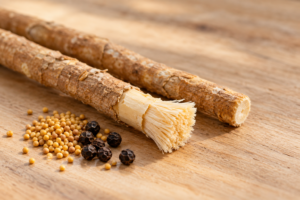
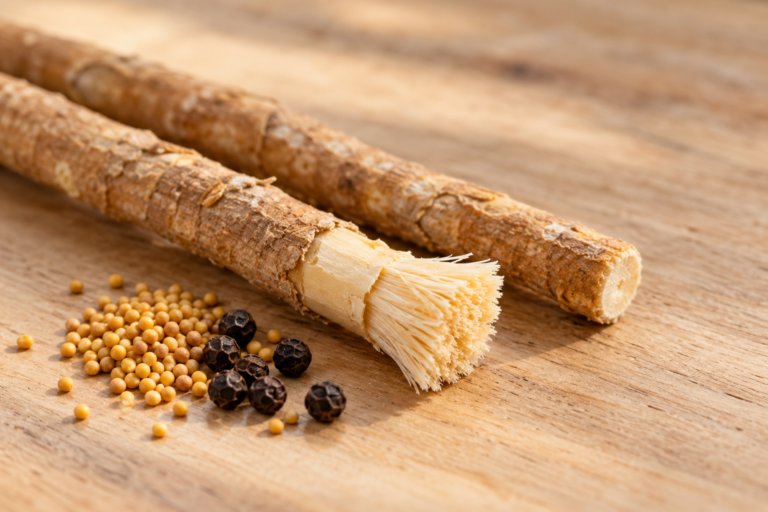
Miswak tastes spicy because of a natural compound called benzyl isothiocyanate. It belongs to the same family of compounds that give mustard, horseradish, and wasabi their bite. The bitterness comes from tannins and plant alkaloids in the wood. Both are normal, and both are signs of a fresh, genuine stick. The same compounds are part of why miswak fights bacteria.
If your first miswak surprised you, you’re not alone. Most people expect a stick of wood to taste like nothing, and instead they get a peppery tingle that spreads across the tongue. This post explains where that taste comes from, why no two sticks taste quite the same, and what it means when yours tastes different from usual. If you’re completely new to this, start with the basics of how miswak works.
What Gives Miswak Its Spicy Taste?
The heat is a chemical reaction that happens in your mouth.
Miswak wood stores a harmless compound, a type of glucosinolate. It also contains an enzyme that is kept separate from it inside the plant cells. When you chew the tip, you crush those cells, the two meet, and the reaction produces benzyl isothiocyanate. That is the sharp, mustard-like compound you taste.
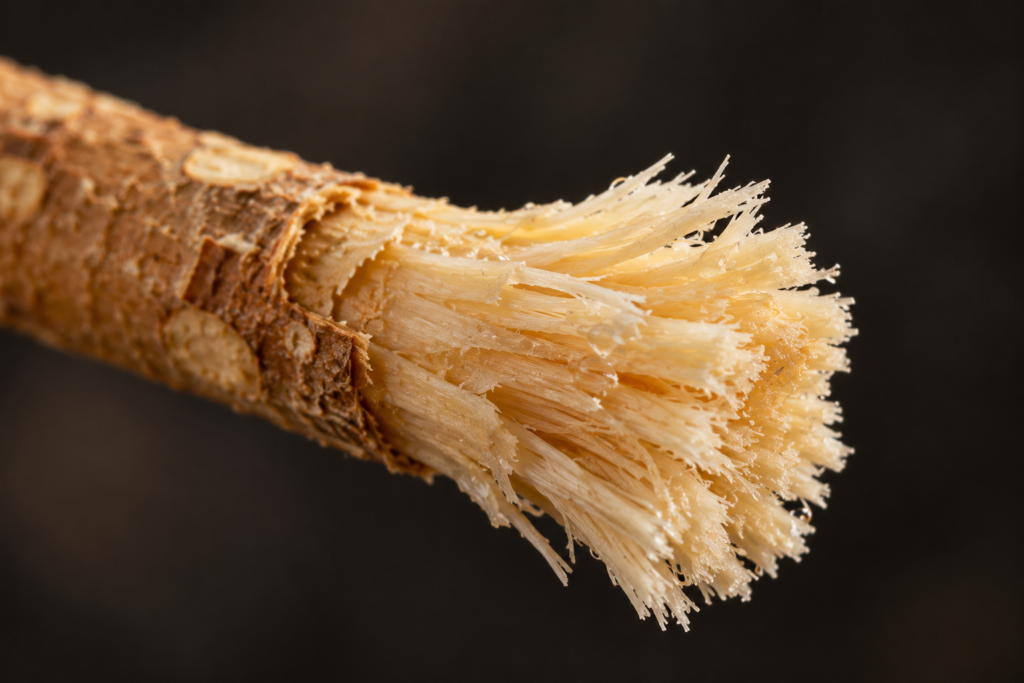
This is why the flavour is strongest in the first few seconds of chewing a fresh tip. It’s also why it fades after a while. You’re releasing it as you chew, and once that section of fibre is worn out, there’s less left to react.
The “burn” isn’t real heat. Isothiocyanates trigger the same nerve receptors in your mouth that respond to wasabi. Your brain reads that signal as warmth, but nothing is damaging your tissue.
Why Is Miswak Bitter?
Bitterness comes from a different set of compounds.
- Tannins. These are the same compounds found in strong tea and red wine. They give a dry, puckering feeling on the gums and a slightly bitter edge.
- Alkaloids. Salvadora persica contains natural alkaloids, and bitterness is a typical taste for this group of plant chemicals.
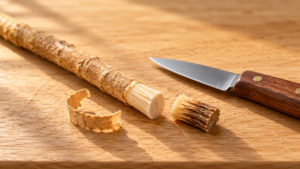
- The bark. The outer layer usually tastes earthier and more bitter than the pale wood underneath. That’s one reason most people peel back about a centimeter of bark before chewing.
Many users also notice a faint saltiness. The Arak tree grows in dry, often salty ground and takes up minerals from it. You can read more about the Arak tree it’s cut from and the harsh places it grows.
Is the Spicy Taste a Good Sign?
Generally, yes. That peppery kick is closely tied to the stick’s antibacterial action. Researchers point to benzyl isothiocyanate as one of the main reasons miswak works against plaque bacteria.
So the taste is a rough freshness gauge. A lively, peppery stick still has plenty of its active compounds. A stick that tastes of plain wood has lost most of them. It will still scrub your teeth, but the extra benefit is mostly gone.
Why Does My Miswak Taste Different Each Time?
No two sticks taste identical, and even one stick can change from week to week. The main reasons are:
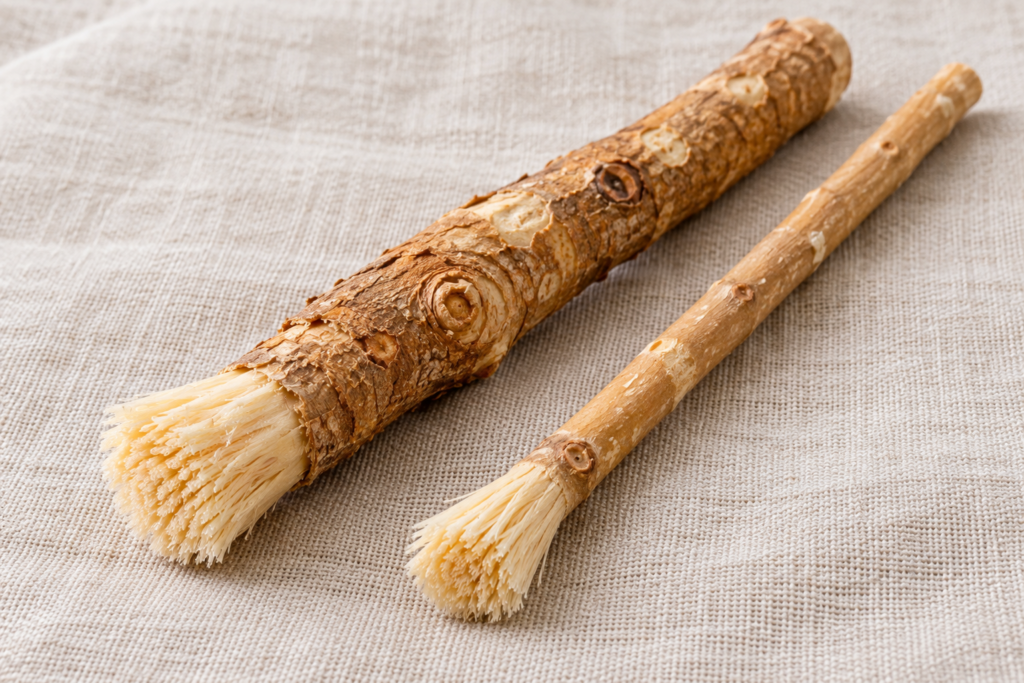
- Root or twig. Root miswak usually tastes stronger and fuller than twig cuts.
- Freshness. A recently harvested stick is sharper. Older stock tastes milder because the compounds slowly escape as the wood dries.
- Moisture. A well-soaked tip tastes gentler than a dry one, because water dilutes the first rush of flavour.
- Region and tree. Soil, climate and the individual tree all affect the balance of compounds, much as they do with tea or coffee.
- How hard you chew. More chewing crushes more cells and releases more of the spicy compound.
Keeping the flavour at its best comes down mostly to storage habits that protect the flavour: a cool place, steady humidity, and no sealing a wet stick in an airtight tub.
What Does Your Miswak’s Taste Tell You?
| Taste | What it usually means | What to do |
|---|---|---|
| Peppery, warm, slightly bitter | Fresh sticks with active compounds | Nothing; this is ideal. |
| Strong, almost harsh | Very fresh stick or a dry tip | Soak the tip longer before use. |
| Mild, faintly woody | Older stock or heavily soaked | Still fine; replace when it goes flat. |
| Plain wet wood, no bite | Compounds mostly used up | Trim to fresh wood or replace. |
| Musty, sour or mouldy | Contamination | Stop using it and throw it away. |
A flat taste is only one warning sign. There are other clues a stick has had its day, such as snapping when you bend it, splintering, or dark spots.
Is It Normal for Miswak to Burn Your Mouth?
A mild tingle is normal, especially in your first week. Your mouth adjusts quickly, and most people stop noticing the heat within a few days.
Some reactions are not normal. These include swelling, a burning feeling that doesn’t fade, a rash around the lips, or mouth ulcers that keep coming back. They suggest a genuine sensitivity, not an unfamiliar taste. Our guide covers when a reaction is more than normal warmth and what to do next.
How Can You Get Used to the Taste?
If the flavour puts you off at first, these small changes help:
- Soak longer. Leave the tip in clean water for a few hours before first use. This softens both the fibres and the taste.
- Peel the bark neatly. Remove about a centimeter from the end, so you’re chewing the milder inner wood.
- Rinse after chewing the brush head. One rinse clears away the strongest first release.
- Start short. Use it for a minute or two at first, then build up to a full session.
- Don’t over-chew. Once the tip has frayed into soft bristles, stop chewing and start brushing.
Getting the preparation right makes a big difference, and it’s worth preparing a new stick the right way before you decide whether you like the taste. Flavored miswak, such as mint or lemon, is also available if you want a gentler start. Plain Arak wood has the strongest natural compounds, though.
Does Quality Affect How Miswak Tastes?
Very much. Genuine, freshly processed Salvadora persica has the clean, peppery taste described above. Sticks from the wrong tree or poorly stored stock can taste harsh, dusty, or oddly sour. Because taste is one of the easiest ways to judge quality, many retailers sample a batch before stocking it. If you’re buying miswak wholesale, ask for a sample and check the taste first.
Frequently Asked Questions
Why does miswak taste like mustard?
Chewing releases benzyl isothiocyanate, which belongs to the same group of compounds that makes mustard, horseradish, and wasabi taste hot. The resemblance comes from the chemistry, not from anything added to the stick.
Is a bitter miswak bad?
No. Mild bitterness comes from natural tannins and alkaloids, and it’s normal in a fresh stick. A sour or musty taste is different and means the stick should be thrown away.
Why has my miswak lost its taste?
The compounds that create the flavour slowly escape as the wood dries and as you chew through the fibres. Trimming to fresh wood often brings some flavour back. If it doesn’t, it’s time for a new stick.
Does root miswak taste stronger than twig miswak?
Usually, yes. Root sticks tend to have a fuller, sharper taste and hold their moisture longer than thin twig cuts.
Will the spicy taste go away?
The taste stays, but you’ll notice it much less after a few days of regular use. Most people end up liking the fresh feeling it leaves in the mouth.
Should miswak taste salty?
A faint saltiness is common. The Arak tree grows in salty soil and absorbs minerals from it.
The Bottom Line
Miswak’s spicy, slightly bitter taste isn’t a flaw. It comes from the natural compounds that make the stick worth using. The peppery heat is released each time you chew; the bitterness comes from tannins and alkaloids, and the strength of both tells you how fresh your stick is. Treat the taste as a quick quality check: lively is good, flat means replace soon, and musty means throw it away.