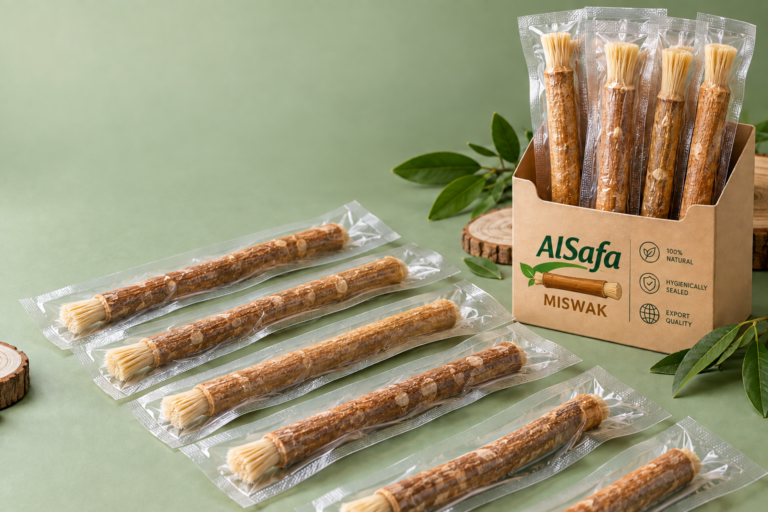
Quick answer: Vacuum-sealed miswak is packed in airtight film with the air drawn out, so the stick keeps its natural moisture, and mould has no oxygen to grow. For retailers and importers, that means longer shelf life, sticks that survive long shipping routes, visible hygiene for customers, and far fewer returns. It costs slightly more per unit, but lower wastage usually covers the difference.
Ask anyone who has opened a carton of loose miswak after six weeks in a shipping container. Some sticks are fine. Some have gone stiff as pencils. A few smell like a damp cellar. The stick was probably good when it left the processing unit. What went wrong was everything in between.
That gap, between harvest and the moment a customer opens the pack, is where most of the money in the miswak trade is lost. Vacuum sealing is the simplest way to close it. Here’s what it actually does, where it pays off, where it doesn’t, and what to check before you place an order.
What Is Vacuum-Sealed Miswak?
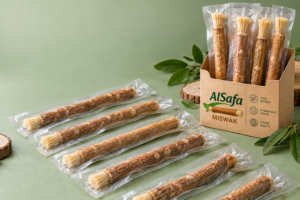
It’s a fresh miswak stick sealed inside food-grade plastic film after the air has been pumped out. Most suppliers seal sticks one by one, though some pack two or three together for multi-packs.
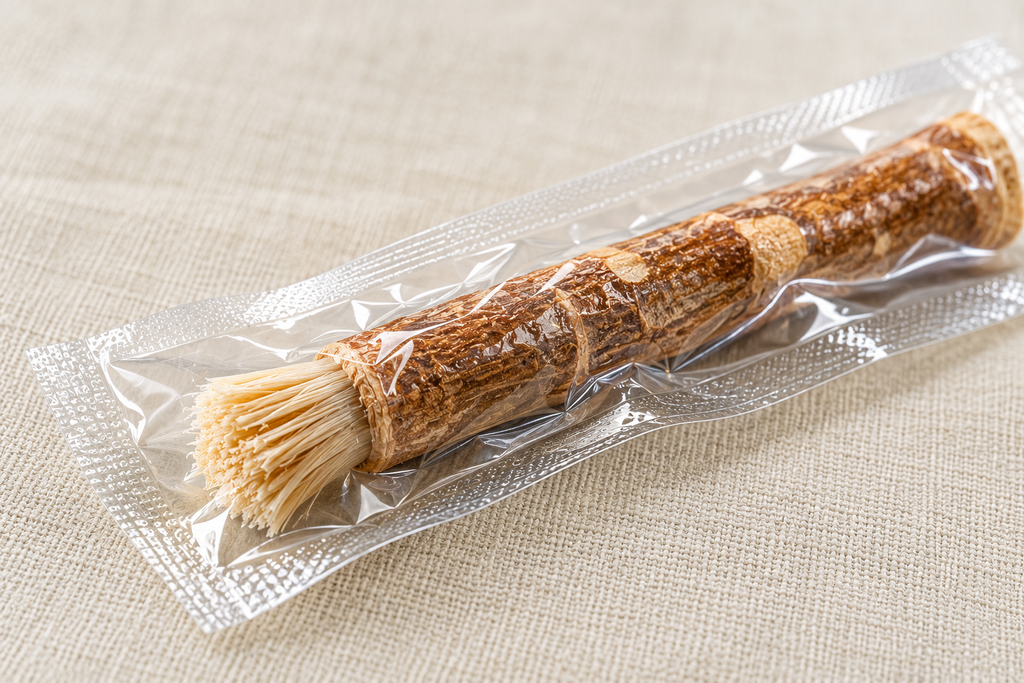
It isn’t dried miswak, and it isn’t wet-packed. The wood keeps the moisture it had at packing, and that moisture is what keeps the fibers flexible and the natural compounds active. Genuine sticks come from the Salvadora persica tree, and it’s that tree’s oily, fibrous wood that makes freshness worth protecting. Our guide to where authentic miswak comes from explains why the source matters as much as the packaging.
Why Does Packaging Decide Miswak Quality in the Trade?
A miswak is plant tissue, not a manufactured product. It keeps changing after it’s cut. In an export supply chain, a single stick might pass through:
- Processing and packing at source
- A warehouse before dispatch
- Weeks at sea or in air cargo holds
- A customs shed, sometimes in summer heat
- Your own warehouse, then a shop shelf, then a customer’s bag
Every stop brings a new temperature and a new humidity level. Loose sticks react to each one, drying out in hot, dry air and absorbing moisture in damp air. The three things that ruin miswak are dryness, heat and trapped damp, and our full miswak storage guide breaks down how each one works. Vacuum sealing takes the stick out of that cycle until the pack is opened.
6 Benefits of Vacuum-Sealed Miswak for Retailers and Importers
1. Longer shelf life and less dead stock
Loose bundles start losing moisture from the day they’re packed. Sealed sticks, kept cool and out of the sun, hold their freshness for many months and often a year or more. That gives you room to buy in larger volumes, stock up ahead of Ramadan and ride out slow months without writing off stock. For the numbers behind this, see our breakdown of how long sealed and opened miswak really lasts.
2. Stock that survives long shipping routes
Sea freight is the hardest test. Containers heat up during the day and cool at night, and moisture can condense inside them. Loose sticks in cardboard absorb that damp. Sealed sticks don’t, because the film keeps outside air away from the wood. If you import from South Asia into Europe, North America, or Australia, this benefit alone often justifies the packaging.
3. Hygiene customers can see
A customer about to put a stick in their mouth wants to know nobody has handled it. An intact seal answers that question without a word. That matters most in pharmacies, supermarkets, and online stores, where buyers can’t smell or bend the stick first. It also protects you from the worst complaint in this trade: mouldy stock. If you train staff on quality checks, our post on the warning signs of a spoiled stick is a useful reference.
4. Smoother border inspections
Miswak is a plant product, so many countries inspect it on arrival, and some require a phytosanitary certificate. Vacuum sealing doesn’t replace any paperwork. Clean, individually sealed, and properly labelled goods are simply easier for inspectors to assess than loose bundles with bark dust and soil in the carton. Always check your own country’s plant import rules before the first shipment.
5. Better shelf presentation and branding
Printed film, a clear window, and a barcode turn a twig into a retail product. Sealed sticks can hang on peg hooks, sit in counter display boxes, or ship inside e-commerce mailers without damage. Many importers use this to launch their own brand. Al Safaa offers private label and bulk packaging for wholesale buyers for exactly this reason.
6. Fewer complaints and more repeat buyers
When a first-time buyer gets a dry, scratchy stick, they don’t blame the packaging. They decide miswak “doesn’t work” and never buy again. A fresh, soft stick on day one is how you turn a curious customer into a monthly one.
Vacuum-Sealed vs Loose Miswak Bundles
| Factor | Loose bundles | Vacuum-sealed |
| Shelf life | Weeks to a few months, depending on storage | Many months, often a year or more, unopened |
| Long-haul shipping | Exposed to heat and damp in transit | Protected until opened |
| Hygiene | Handled, open to dust | Untouched, tamper-evident |
| Unit cost | Lowest | Slightly higher |
| Best for | Fast-selling local shops and mosque stalls | Export, pharmacies, supermarkets, online sales |
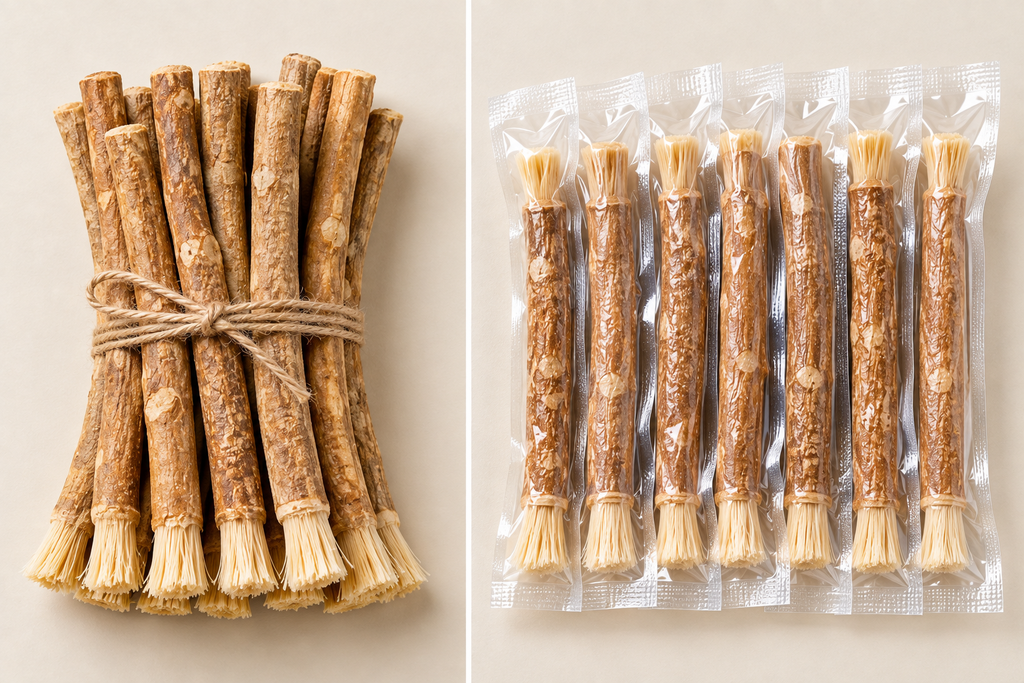
Loose bundles still make sense if you sell through stock within a few weeks and your market is close to the source. For anything that travels far or sits on a shelf, sealed stock is the safer bet.
Are There Any Downsides?
A few, and it’s better to know them before you order.
- Higher unit cost. You pay for film, sealing, and labor. Compare it with your current wastage rate, not with the loose price alone.
- Plastic use. This sits awkwardly with Miswak’s eco-friendly image. Ask your supplier about thinner or recyclable films and plain cardboard outer cartons.
- Punctured packs. A pinhole lets air back in. Pull damaged packs during stock checks rather than selling them.
- Packing moisture matters. A sealed stick that is too wet can still go mouldy inside the film. A good supplier controls moisture before sealing.
It’s also worth remembering that the seal only protects the stick until it’s opened. After that, it ages like any other miswak.
What to Check Before Ordering Vacuum-Sealed Miswak
Order a sample carton first and check it against this list:
- The seal. Film should hug the stick tightly with no loose air pockets.
- Flexibility. Press the stick gently through the film. A fresh one gives a little; a dead one feels rigid.
- Inside the pack. No water droplets, dark spots, or white fuzz.
- Smell on opening. Woody and slightly peppery. Never musty or sour.
- Batch or pack date. Essential for rotating stock and tracing problems.
- Labelling. Check your market’s rules on origin, importer details and product description.
- Documents. Confirm the supplier can provide the export paperwork your country asks for.
If you’re new to the category and need to brief staff or write product listings, our plain-English explainer on what miswak is and how it’s used is a good starting point.
How Should Retailers Store Vacuum-Sealed Stock?
Sealed sticks are forgiving, but not indestructible. Keep cartons cool, dry and out of direct sunlight, and off concrete floors. Avoid shelves near heaters, shop windows or kitchen areas. Rotate by batch date so older stock sells first, and check display boxes every few weeks for punctured or swollen packs.
Frequently Asked Questions
What is vacuum-sealed miswak?
It is a fresh miswak stick sealed in airtight food-grade film with the air removed. This keeps the stick’s natural moisture in and keeps oxygen and contaminants out until it is opened.
How long does vacuum-sealed miswak last?
Unopened and stored somewhere cool and dry, it usually stays fresh for many months and often a year or more. Once opened, it lasts about as long as any fresh stick in daily use.
Is vacuum-sealed miswak still fresh miswak?
Yes. Vacuum sealing is a way of keeping fresh miswak fresh. It is not the same as dried miswak, which has lost most of its moisture.
Does vacuum-sealed miswak need soaking before use?
Usually not. Trim the bark from one end and chew the tip gently. If the stick feels stiff, soak the tip in clean water for a few hours first.
Can I sell vacuum-sealed miswak under my own brand?
Yes. Many suppliers, including Al Safaa, offer private label printing on the film or outer box for wholesale orders.
Does vacuum sealing help with customs clearance?
It does not replace any required documents, such as a phytosanitary certificate where one is needed. Clean, sealed and clearly labelled goods are simply easier to inspect.
Stock Vacuum-Sealed Miswak from Al Safaa
Al Safaa supplies fresh, vacuum-sealed Salvadora persica miswak to retailers, pharmacies, distributors and private label brands worldwide, packed at source to export hygiene standards. Read more about how we source and process our sticks, or get in touch for wholesale pricing and a sample carton.