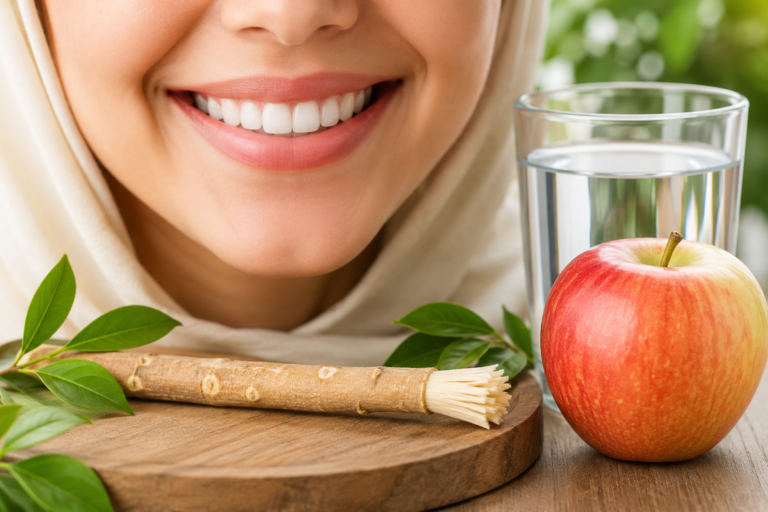
Search “natural teeth whitening” and you’ll drown in advice within minutes. Lemon juice, charcoal, baking soda, oil pulling — everyone swears their trick works.
Here’s the truth most of those posts won’t tell you: some natural methods genuinely help, some do nothing, and a few can permanently damage your teeth. This guide sorts them out honestly, so you can brighten your smile the safe way — without harsh chemicals and without wrecking your enamel.
One of the safest, most effective natural options is miswak, which we cover in full in our guide on whether miswak whitens teeth. This post looks at the wider picture of natural whitening.
Quick Answer: What Actually Whitens Teeth Naturally?
Short answer:
The safe, natural way to whiten teeth is to remove surface stains gently — using miswak, soft brushing, crunchy fruits and vegetables, plenty of water, and cutting back on staining foods. Avoid acidic or abrasive DIY hacks like lemon juice, vinegar, and activated charcoal — they wear away enamel and can make teeth look yellower over time. Natural methods restore your teeth’s natural brightness; they don’t bleach teeth whiter than their natural shade.
First, Understand What “Whitening” Really Means
This one fact clears up almost all the confusion. Your teeth aren’t meant to be pure, snow white. Healthy enamel is naturally a slightly off-white or faintly yellow shade, because the layer underneath — called dentin — is naturally yellowish.
There are two kinds of tooth discolouration:
- Surface stains from coffee, tea, wine, and food. These sit on the outside and can be removed naturally.
- Deep (internal) discolouration from ageing, medicine, or injury. No natural method removes this — only a dentist can help.
Natural whitening works on the first type. It cleans away the stains dulling your teeth so your natural brightness shows through. That’s a realistic, healthy goal — and it’s genuinely achievable.
Natural Methods That Actually Work (and Are Safe)
1. Miswak—nature’s stain remover
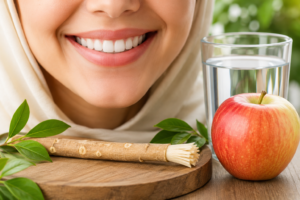
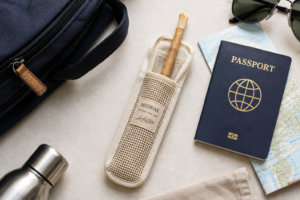
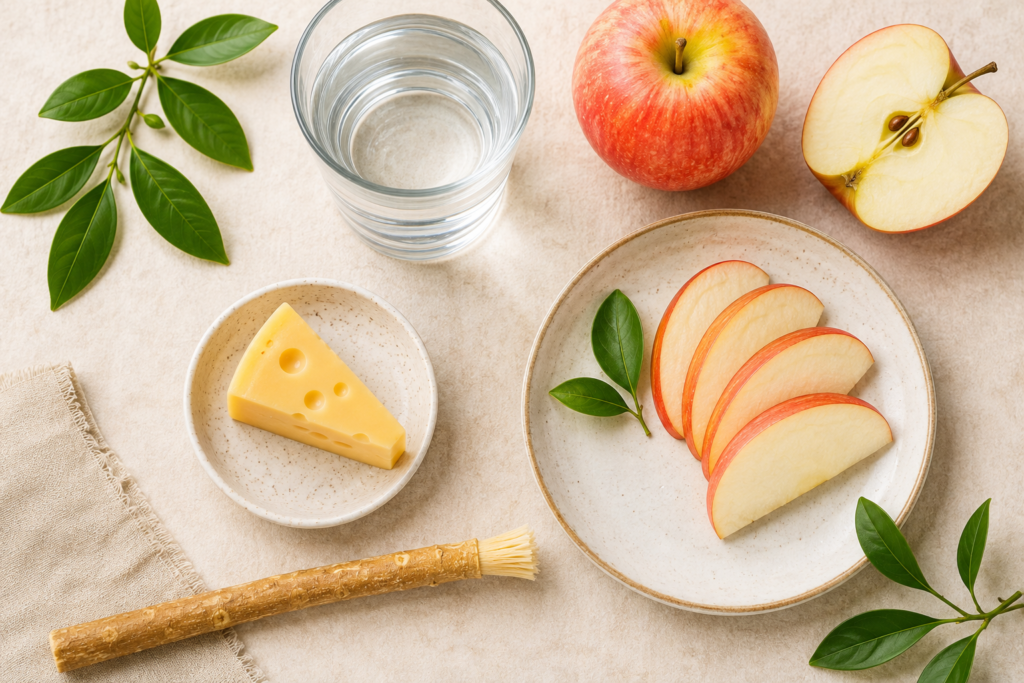
Miswak is one of the best natural tools for a brighter smile. Its natural fibres and gentle mineral content lift away surface stains, while its natural compounds help fight the plaque and bacteria that dull teeth — all without harsh chemicals. Used gently, it’s safe for daily use. A fresh miswak tooth stick is a simple, natural place to start, and our post on miswak sticks for teeth explains how it cleans.
2. Gentle, proper brushing
The simplest whitener of all. Brushing softly twice a day removes the daily film and stains before they set in. The key word is gently — scrubbing hard wears enamel and exposes the yellower layer beneath, which is the opposite of what you want.
3. Crunchy fruits and vegetables
Apples, carrots, celery, and pears act like natural toothbrushes as you chew, gently rubbing away surface film. Eaten normally, they help clean your teeth and boost saliva. (Just don’t mash them onto your teeth as a “paste” — eating them the normal way is what helps.)
4. Cheese and dairy
Cheese, milk, and plain yogurt help neutralize acids in the mouth and support strong enamel. Stronger enamel means a healthier, brighter-looking surface.
5. Water — rinse and hydrate
Sipping water through the day and swishing it after coffee, tea, or curry rinses away staining pigments before they settle. It’s the easiest natural habit on this list, and it keeps saliva flowing to protect your teeth.
“Natural” Methods to Avoid (Even Though They’re Popular)
Here’s the part that separates honest advice from viral hype. “Natural” does not always mean safe — after all, tobacco is natural too. These trending remedies can do real, permanent harm.
The big rule:
Anything acidic or harshly abrasive is a red flag. Enamel does not grow back. Once you wear it away, your teeth become more sensitive and actually look yellower, because more of the yellow dentin shows through.
Lemon juice, vinegar, and other acids
Lemon juice, apple cider vinegar, and citrus are extremely acidic — lemon juice has a pH of around 2.2. Rubbing them on your teeth may seem to lighten them briefly, but the acid steadily eats away the enamel underneath. Dentists strongly advise against it.
Activated charcoal
Trendy, but the evidence isn’t there. Dental authorities note there’s no reliable proof that charcoal safely whitens teeth, and it’s abrasive enough to wear down enamel and even get trapped in tiny cracks. Over time it can make teeth look worse, not better.
Lemon-and-baking-soda pastes
The worst of both worlds: acidic and abrasive together. Baking soda on its own is only mildly abrasive and can be used occasionally and gently with water, but mixing it with lemon creates a paste that erodes enamel fast.
Oil pulling and turmeric
These won’t harm your teeth, but set your expectations: there’s no reliable evidence they actually whiten. Oil pulling may freshen the mouth, and that’s fine — just don’t expect a brighter shade from it.
Natural Whitening at a Glance
Here’s the whole guide in one quick, scannable table:
| Method | Verdict | Why |
|---|---|---|
| Miswak & gentle brushing | Works, safe | Removes surface stains without harming enamel |
| Crunchy fruits & veg | Works, safe | Natural scrubbing as you chew; eat them normally |
| Cheese & dairy | Helpful | Supports enamel and helps neutralise acids |
| Rinsing with water | Helpful | Washes away staining pigments before they set |
| Baking soda (occasional) | Use with care | Mildly abrasive — gentle and occasional only, never daily scrubbing |
| Oil pulling / turmeric | Weak evidence | May freshen, but no reliable proof it whitens |
| Lemon, vinegar, citrus | Avoid | Acidic — erodes enamel and makes teeth look worse |
| Activated charcoal | Avoid | Abrasive, no proven safety, can wear enamel |
Why Miswak Stands Out Among Natural Options
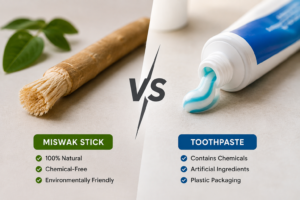
Of all the natural methods, miswak is unusual because it does several jobs safely at once: it removes surface stains, fights plaque-causing bacteria, and freshens breath — without acid and without harsh scrubbing. That’s exactly the balance the risky DIY hacks fail to strike.
It’s also convenient and inexpensive, which is why it’s been trusted for oral care for centuries. If you’d like to try it, our guide on where to buy authentic miswak sticks points you to genuine, quality sticks — and the full whitening breakdown shows what to realistically expect.
When Natural Methods Aren’t Enough
Natural whitening is great for surface stains, but it has limits worth being honest about. If your teeth are discoloured from the inside — ageing, medication, or injury — no natural method will change that.
For deeper discolouration, or if you want teeth several shades lighter than their natural colour, that’s a job for a dentist. Professional whitening uses controlled treatments that natural methods can’t match. There’s no shame in it — natural habits keep your smile at its healthy brightest, and a dentist handles the rest. Always check with a dental professional before trying a new whitening method.
Frequently Asked Questions
What is the best natural way to whiten teeth?
Gently removing surface stains: using miswak, brushing softly twice a day, eating crunchy fruits and vegetables, drinking water, and cutting back on staining foods and tobacco. These are safe, effective, and chemical-free.
Can you whiten teeth naturally without damaging enamel?
Yes — as long as you stick to gentle, non-acidic methods. Avoid lemon, vinegar, and abrasive powders like charcoal, which strip enamel. Miswak and soft brushing clean without harming the tooth surface.
Does lemon or baking soda whiten teeth?
Lemon is far too acidic and erodes enamel — avoid it. Baking soda is mildly abrasive and can be used occasionally and gently, but never mixed with lemon and never as a hard daily scrub.
Is activated charcoal safe for whitening teeth?
Dental experts advise against it. There’s no reliable evidence it safely whitens, and it’s abrasive enough to damage enamel over time, which can make teeth look more yellow.
How long do natural whitening methods take to work?
Most people notice cleaner, brighter teeth over two to four weeks of consistent, gentle daily care. Natural methods work gradually — which is a good thing, because it means they’re being kind to your teeth.
Do natural methods whiten as well as professional treatment?
No. Natural methods remove surface stains and restore your natural shade. Professional treatment lightens the actual tooth colour. For everyday brightness, natural care is often all you need; for a bigger change, see a dentist.
The Bottom Line
You can whiten your teeth naturally, without chemicals — by gently removing the surface stains that dull your smile. Use miswak, brush softly, eat crunchy produce, drink water, and cut back on staining habits. Steer well clear of acidic or abrasive DIY hacks like lemon and charcoal that quietly destroy enamel. And remember: natural methods restore your natural brightness rather than bleaching beyond it.
If miswak is going to be part of your natural routine, use the real thing. For families, shops, and wholesale buyers who want genuine, fresh Salvadora persica miswak, explore our miswak product range or get in touch with our team — a natural, safe path to a brighter smile.