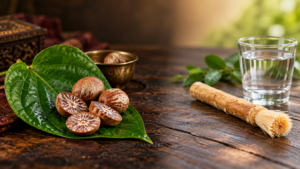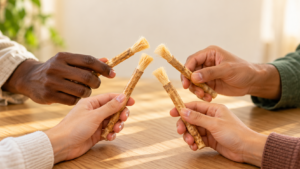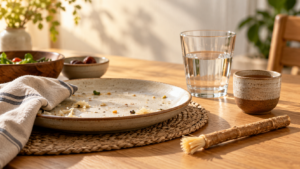
No, it isn’t a good idea to share a miswak. A used miswak holds saliva, food bits, and germs from the person who used it. If someone else uses the same stick, those germs go straight into their mouth. It’s the same reason dentists tell you never to share a toothbrush. The safest rule is simple: one miswak for each person.
Many families keep one miswak by the sink, and lots of people hand theirs to a friend without thinking twice. It feels harmless because miswak is natural. But natural doesn’t mean germ-free. This guide explains what can spread, what Islamic tradition says about sharing, and what to do if you’ve already shared a stick.
Why Isn’t It Safe to Share a Miswak?
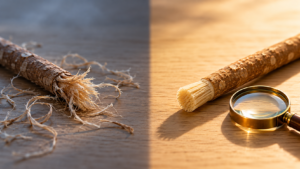
When you use a miswak, the soft bristles soak up saliva and trap tiny bits of food and plaque. Even after rinsing, some of that stays deep in the fibers. A wet, used stick is also a comfortable place for germs to live and grow.
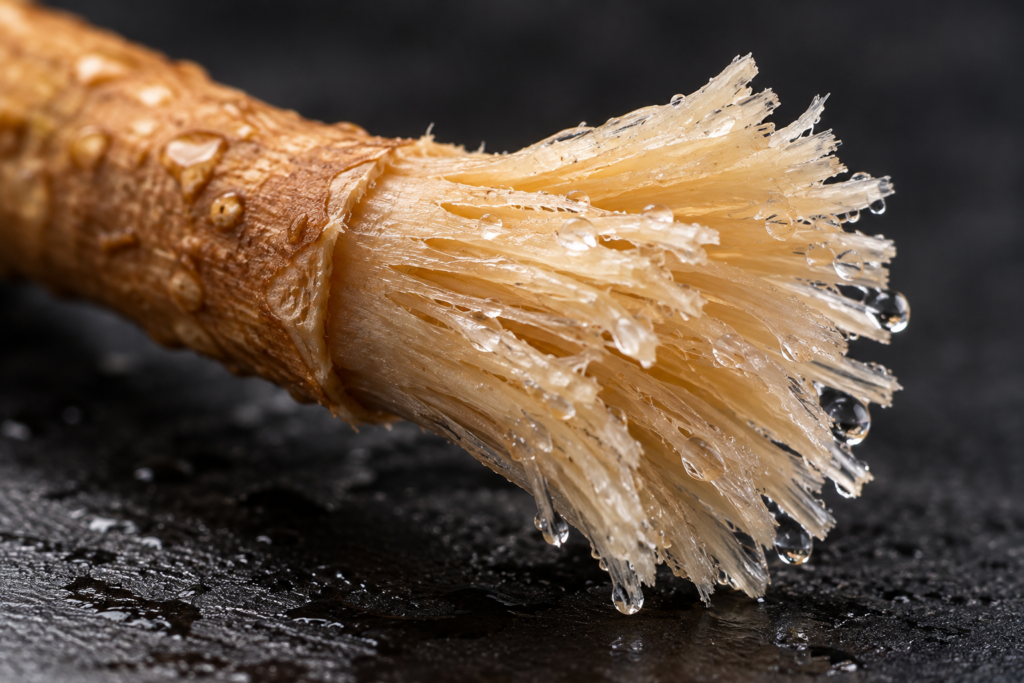
Our side effects guide makes the same point. A shared miswak passes on saliva and bacteria just like a shared toothbrush. You can read more about this and other safety points to know before using miswak.
Miswak does have natural germ-fighting compounds. But they work on the bacteria in your own mouth while you brush. They don’t make a used stick safe for someone else. If you’re curious how those compounds work, here’s how miswak fights bacteria in the mouth.
What Germs Can Spread Through a Shared Miswak?
Sharing a stick can pass on:
- Cold sore virus. The virus behind cold sores spreads easily through saliva, even when no sore is showing.
- Cavity-causing bacteria. The bacteria that cause tooth decay can move from one mouth to another. This is one way parents pass them on to young children.
- Gum disease bacteria. If one person has gum problems, the bacteria behind them can spread to someone else.
- Colds, flu, and other bugs. Any infection carried in saliva can travel on a wet stick.
- Blood-borne infections. Gums sometimes bleed a little during brushing. Tiny amounts of blood on a shared stick carry a small but real risk of infections such as hepatitis.
Most of the time nothing serious will happen. But the risk is easy to avoid, and miswak is cheap, so there’s no good reason to take it.
Does Islamic Tradition Allow Sharing a Miswak?
This is a question many Muslims ask, because there is a well-known narration about it.
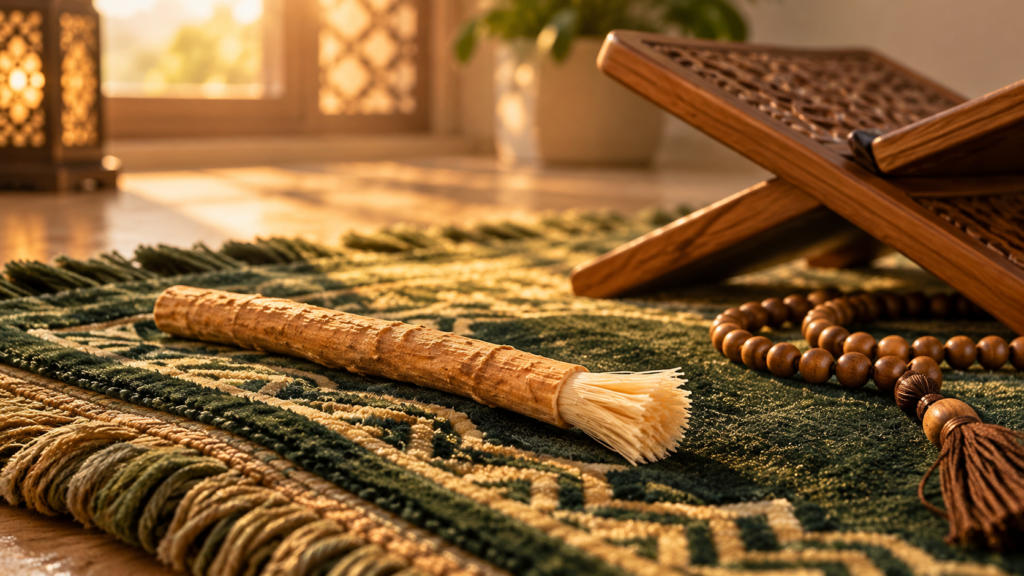
In Sahih al-Bukhari, Aisha (RA) describes the last day of the Prophet’s ﷺ life. Her brother came in holding a fresh miswak. She took it, softened the end by chewing it, and gave it to the Prophet ﷺ, who then used it. Another narration in Sunan Abi Dawud mentions that Aisha (RA) would use his miswak and wash it before giving it back.
These narrations show the closeness between husband and wife, and many people treasure them for that reason. They’re about a married couple in a very close relationship, not a general rule that everyone should share sticks. Islam also puts great weight on cleanliness and on avoiding harm, and keeping your own miswak fits that well.
If you’d like to learn more, our guides cover miswak’s place in the Sunnah and the long history of miswak in oral care. For a religious ruling on your own situation, it’s best to ask a qualified scholar.
Is It Ever Okay to Share?
Here’s a simple guide for common situations:
| Situation | Is it safe? | What to do |
|---|---|---|
| Husband and wife, both healthy | Lower risk, but still not ideal | Better to have one stick each. |
| Parent and young child | Not recommended | Give the child their own small stick. |
| Friends or guests | No | Offer a new, unused stick. |
| Someone has a cold, a cold sore, or bleeding gums. | No | Never share, even once. |
| Hajj, Umrah, or group travel | No | Pack one sealed stick per person. |
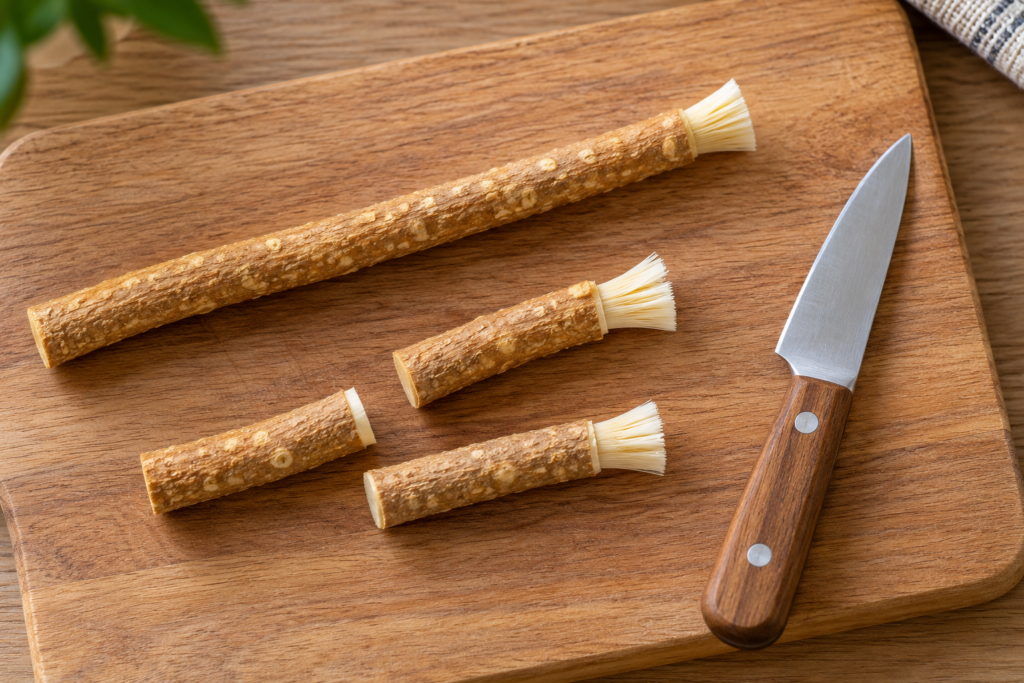
| A brand-new stick nobody has used | Yes | Cut it into pieces so each person gets their own. |
That last point is useful. A long, new stick can be cut into two or three shorter sticks before anyone uses it. Each person then gets a fresh piece of their own.
What Should You Do If You’ve Already Shared a Miswak?
Don’t panic. In most cases, nothing bad happens. Here’s what to do next:
- Stop sharing it from now on. Give each person their own stick.
- Cut off the used part. Trim at least one to two centimeters off the end, past all the used bristles.
- Rinse the stick well. Wash it under clean running water.
- Replace it if you’re unsure. If the other person was unwell or the stick is old, it’s safest to start with a new one.
- Watch for symptoms. If you notice a cold sore, sore gums, or signs of illness in the days after, see a doctor or dentist.
Not sure whether your stick is still good? These signs that a miswak needs replacing will help you decide.
How Can a Family Keep Miswak Clean and Separate?
If everyone at home uses miswak, these habits keep things simple and clean:
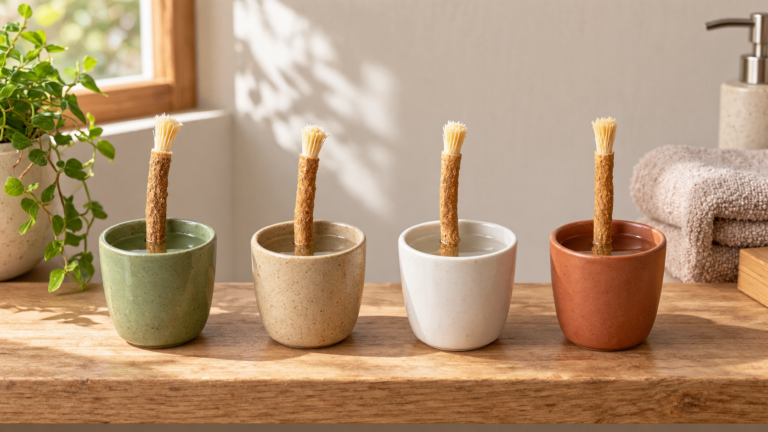
- Give everyone their own stick. Choose different sizes or thicknesses so they’re easy to tell apart.
- Label the holders. Use a name, a color, or a small sticker on each cup or case.
- Store them apart. Don’t let the used ends touch each other in the same cup.
- Rinse after every use. Then let each stick dry upright.
- Teach children early. Show them their own stick and explain why it’s just for them.
Storing each stick properly also stops germs from growing between uses. Our guide on storing miswak so it stays fresh and clean shows the easiest methods. For the basics of brushing itself, see our easy tips for using miswak safely every day.
What About Miswak in Mosques and Group Settings?
Some mosques, madrasas, and travel groups keep miswak for people to use. This is a kind gesture, but a shared box of used sticks isn’t hygienic.
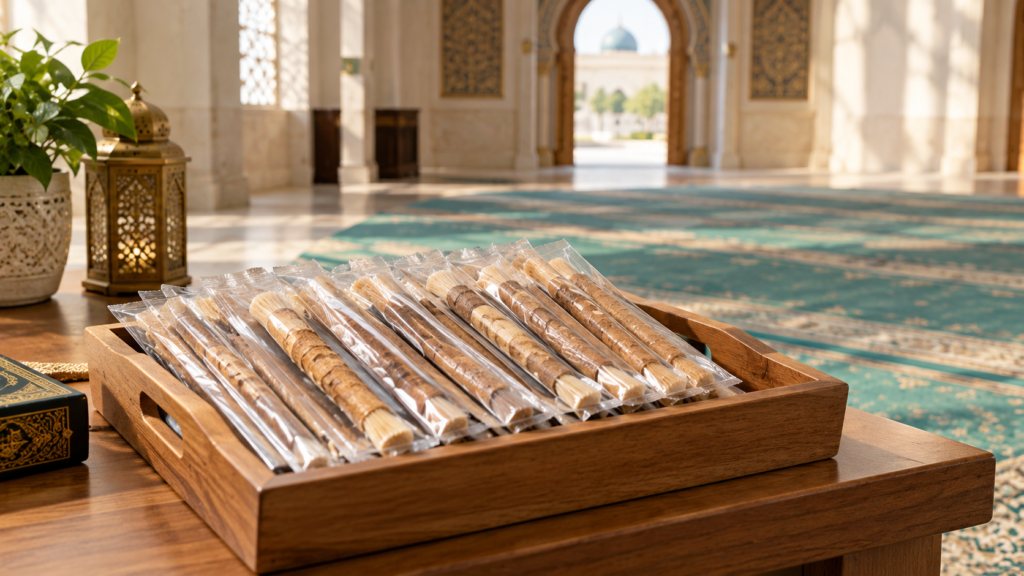
A better approach is to offer new, individually sealed sticks that each person takes and keeps. They’re cheap enough to give away, they stay clean until opened, and nobody uses a stick that’s been in someone else’s mouth. Mosques, Hajj groups, and organizers can buy individually sealed miswak sticks in bulk for exactly this purpose.
Frequently Asked Questions
Can husband and wife share a miswak?
It’s lower risk than sharing with others, especially if both are healthy. But it’s still better for each person to have their own stick, because germs and infections can pass both ways.
Can I share a miswak with my child?
It’s best not to. Cavity-causing bacteria can pass from parent to child through saliva. Give your child their own small, soft stick instead.
Is it Sunnah to share a miswak?
There are narrations of Aisha (RA) softening and sharing a miswak with the Prophet ﷺ. These describe a close married couple, not a general instruction to share. For a ruling on your own situation, ask a qualified scholar.
Does rinsing a miswak make it safe to share?
No. Rinsing removes some surface dirt, but germs stay deep inside the fibres. Cutting off the used end helps, but a separate stick is always safer.
What should I do if someone used my miswak?
Cut off one to two centimeters of the used end and rinse the stick well. If the person was sick, or you’re not sure, replace the stick with a new one.
Can I give a new miswak to a guest?
Yes. A new, unused stick is perfectly safe to give away. You can also cut a long new stick into shorter pieces so each person gets their own.
Can a shared miswak spread cold sores?
Yes. The virus that causes cold sores spreads through saliva, so never share a miswak with someone who has a cold sore.
The Bottom Line
A miswak is a personal item, just like a toothbrush. Sharing one can pass on germs, cold sores, and other infections, even between people who seem healthy. Keep one stick per person, store them apart, and offer guests a fresh, unused stick. If you’ve already shared one, trim off the used end or simply start with a new stick.