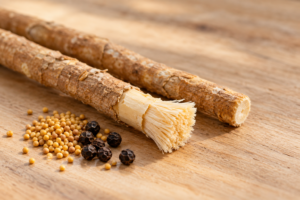
Every miswak has an expiry point. The tricky part? There’s no date printed on it. The stick won’t tell you it’s done, but your mouth will, usually the hard way, with scratched gums or a stale taste.
Here’s the good news. A miswak gives clear warning signs before it goes bad. Once you know them, checking your stick takes about ten seconds. This post covers all seven signs, what each one means, and which ones mean “trim it,” “revive it,” or “throw it away right now.”
The Quick Answer
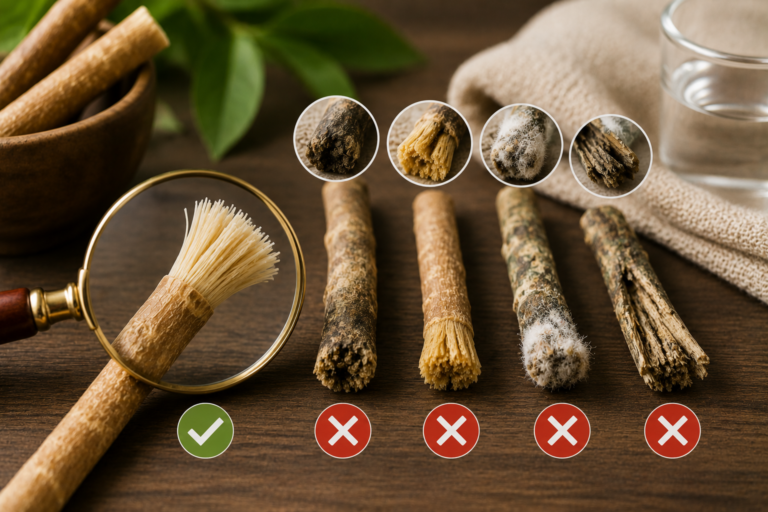
Replace your miswak when it snaps instead of bending, smells musty, shows dark spots or fuzz, splinters instead of forming soft bristles, tastes like plain wet wood, gets too short to grip, or has been in use for more than four weeks. Mold means the bin — always. Dryness can sometimes be fixed.
Now let’s go through each sign properly.
Sign 1: It Snaps Instead of Bending
Hold the stick and bend it gently. A healthy miswak flexes a little, like a green twig. A dead one snaps clean, like a dry branch.
Why it happens: the stick has lost its internal moisture. Dry fibers turn stiff and brittle.
What it means for your mouth: stiff fibers form stiff bristles. Instead of sweeping softly along your gums, they poke and scratch. This is the number one reason beginners think miswak “hurts.”
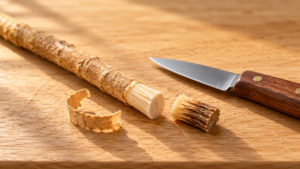
Verdict: fixable, sometimes. Soak the stick in clean water for 4–8 hours, cut off the old tip, and chew a fresh section. It will brush fine again — though some of the natural oils are gone for good.
Sign 2: It Smells Musty or Sour
Fresh miswak has a pleasant smell. Woody. A little peppery. Slightly sweet.
A bad miswak smells like a damp basement. Musty, sour, or moldy.
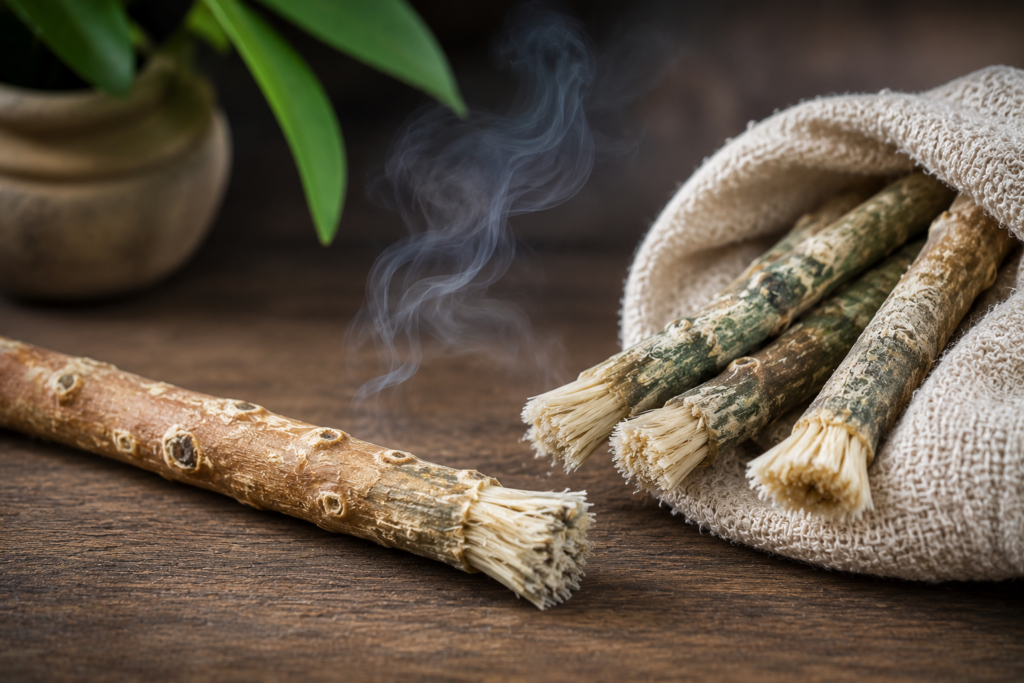
Why it happens: bacteria or mold have moved in. Usually because the stick was stored wet in a sealed container or the wrap was never checked.
Verdict: bin it. No exceptions. Don’t trim past the smell. Don’t soak it and hope. You brush this stick directly onto your gums — a contaminated one is a health risk, not a stick worth saving.
Sign 3: Dark Spots, White Fuzz, or Green Patches
Look at the stick under good light. Normal miswak is pale yellow to light brown, fairly even in color.
Dark blotches, white cotton-like fuzz, or greenish patches are mold. Full stop.
Verdict: bin it — and check its neighbors. If this stick was stored with your spares, inspect every one of them. Mold spreads through a bundle fast. One fuzzy stick pressed against five clean ones rarely stays alone for long.
Sign 4: The Tip Splinters Instead of Forming Bristles
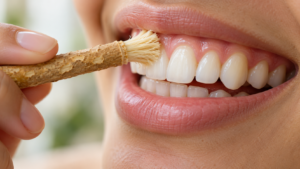
Chew the tip like you normally would. A good stick separates into soft, flexible fibers — a tiny natural brush.
A failing stick breaks into hard, sharp splinters instead. Some pieces may even flake off in your mouth.
Why it happens: same cause as the snap test — dryness. The fibers have lost the moisture that lets them separate cleanly.
Verdict: fixable, usually. Soak overnight, trim generously past the splintered section, and try again on fresh wood. If it still splinters after a proper soak, the stick is done.
Sign 5: It Tastes Like Nothing
This is the sign almost everyone misses — and the one experienced users trust most.
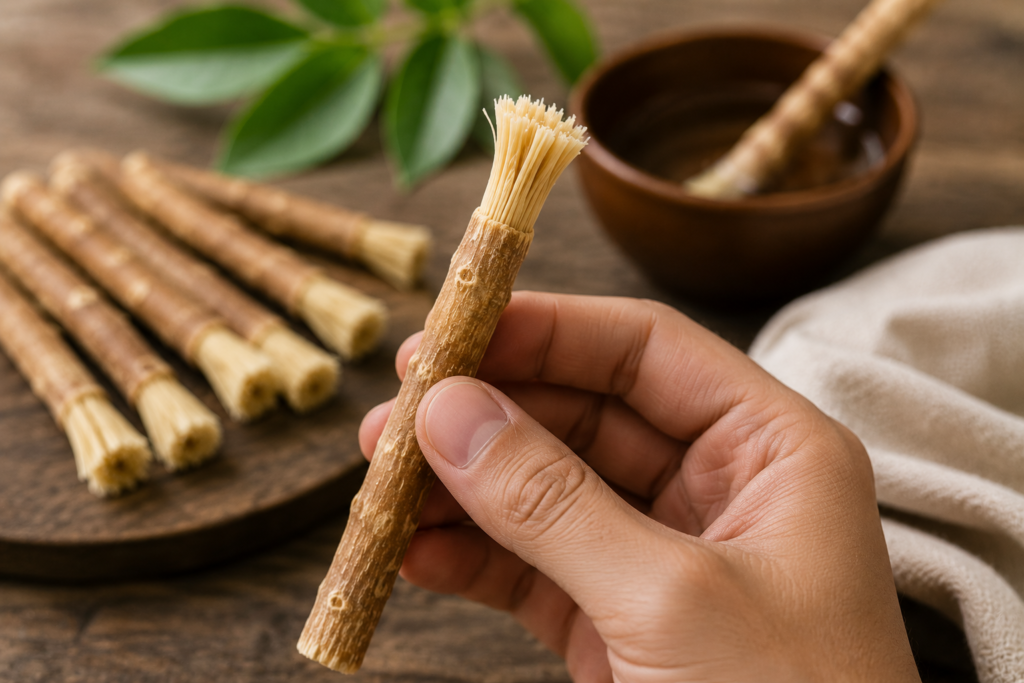
A fresh peelu miswak tastes alive. Peppery, slightly bitter, a little warm on the tongue. That taste comes from the essential oils and active compounds inside the wood. The same compounds that fight bacteria and calm your gums.
When the taste fades to plain wet wood, those compounds have faded with it.
Here’s the catch: a flavorless stick can still feel fine. Soft bristles, good flex, no smell. It will still scrub your teeth. But the medicinal edge — the thing that makes miswak more than a wooden brush — is mostly gone.
Verdict: replace soon. It won’t harm you. It’s just doing half its job.
Sign 6: It’s Too Short to Grip
Simple mechanics. You trim the tip every two or three days, so the stick shrinks with use. Once it drops below roughly 10 centimeters, you can’t hold it properly — and bad grip leads to bad angles, jabbed gums, and sloppy brushing.
Verdict: retire it with honor. It served its time. A stick usually reaches this point after three to four weeks of daily use, which lines up neatly with the natural end of its life anyway.
Sign 7: It’s Simply Been Too Long
Even a well-stored, well-trimmed stick has a working life of about three to four weeks once opened. After that, the oils are depleted and the wood is tired — regardless of how it looks.
If you can’t remember when you started your current stick, that’s your answer. Start a fresh one.
Verdict: replace on schedule. Some people mark the date on their calendar when they open a new stick. It sounds fussy. It works.
A Ten-Second Check You Can Do Anytime
Before every new stick — and every few days on your current one — run this:
Bend. Smell. Look. Chew.
Flex it gently. Sniff it. Glance over its color. Test the tip. Four quick checks, ten seconds, and you’ll catch every sign on this list before your gums do.
Dry vs. Moldy: The Rule That Covers Everything
If you take one thing from this post, take this:
A dry miswak is an inconvenience. A moldy miswak is a hazard.
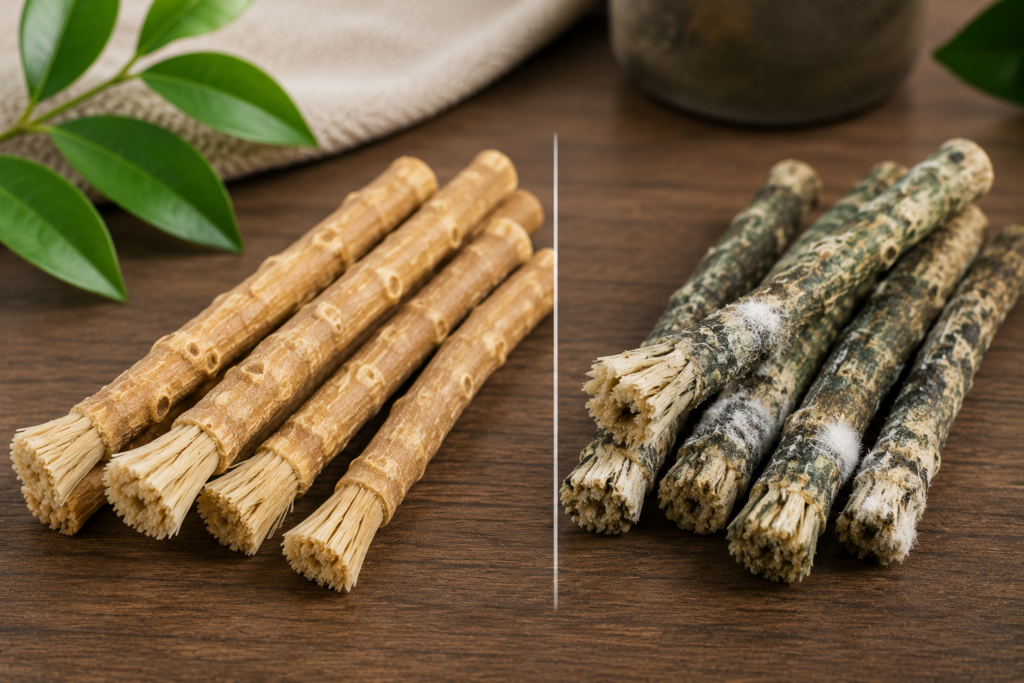
Dryness (signs 1 and 4) can often be reversed with a soak and a trim. Contamination (signs 2 and 3) can never be reversed — the stick goes in the bin the moment you spot it, no matter how new or expensive it was.
When you’re unsure which one you’re looking at, treat it as mold and discard. A replacement stick costs little. An oral infection doesn’t.
How to Make Replacements Rare
Most of these signs trace back to one root cause: poor storage. A stick kept tip-down in a little water, spares damp-wrapped in the fridge, and everything checked weekly — that stick rarely surprises you. Our full guide on how to store miswak properly covers the complete system, and the freshness methods that work best get their own deep-dive if you want the details of each one.
And remember the habit that beats every storage trick: trim the tip every two to three days. Hardened old bristles cause more “bad stick” complaints than actual bad sticks do.
Frequently Asked Questions
How often should I replace my miswak? Every three to four weeks with daily use — or immediately if it shows mold, a musty smell, or won’t stop splintering after a soak.
Can I use a miswak that dried out? Usually, yes. Soak it in clean water for 4–8 hours, cut off the old tip, and chew fresh fiber. It will brush well again, though some potency is permanently lost.
Is slightly discolored miswak safe? Even, gradual darkening with age is normal. Distinct dark patches, fuzz, or green spots are mold — discard immediately.
What happens if I use an expired miswak? A merely old stick just cleans less effectively. A contaminated stick can introduce bacteria and mold straight to your gums — which is why the smell and look tests are non-negotiable.
Why does my miswak keep going bad so fast? Almost always storage: left flat on a counter (dries out), or sealed while wet (grows mold). Fix the storage and the same sticks last weeks longer.
The Bottom Line
Your miswak tells you when it’s done — you just have to check. Bend, smell, look, chew: ten seconds, every few days. Trim regularly, replace monthly, and treat any hint of mold as final.
Do that, and the stick in your hand will always be the soft, peppery, working kind — not the dried-out impostor that gives miswak a bad name.