Here’s a frustrating truth about miswak that nobody tells beginners: most sticks don’t fail because they were bad sticks. They fail because of what happened after they left the tree. I’ve seen people buy beautiful fresh peelu, leave it on a bathroom shelf for two weeks, and then conclude that “miswak doesn’t work” — when what they actually tested was a piece of dead, dried wood.
Storage is the difference between a stick that cleans, medicates, and massages your gums, and a stick that scratches them. This guide covers the entire subject: the best ways to keep your miswak fresh day to day, how long a stick actually lasts, the signs it needs replacing, travel storage, the mistakes that ruin most sticks, and the role humidity plays in all of it.
Why Storage Matters More Than You Think
A miswak isn’t like a toothbrush, which works the same on day one and day ninety. A miswak is living plant tissue. Its cleaning power depends on moisture and on active compounds — silica, tannins, essential oils, antibacterial agents — that degrade when the stick dries out or gets contaminated. (That chemistry is the whole reason people choose miswak over plastic; the science behind what’s inside the stick explains why it’s worth protecting.)
Three things happen to a badly stored miswak. It loses moisture, so the soft bristles turn into a wire brush. It loses potency, as the volatile oils responsible for its antibacterial effect evaporate. And in the worst case it grows mold, which turns a health tool into a health risk.
Good storage is simply the art of avoiding all three at once: moist but not wet, sealed but not suffocated, cool but not cooked.
Best Ways to Keep Miswak Fresh
There are four proven methods, and the right one depends on whether the stick is in daily use or waiting its turn.
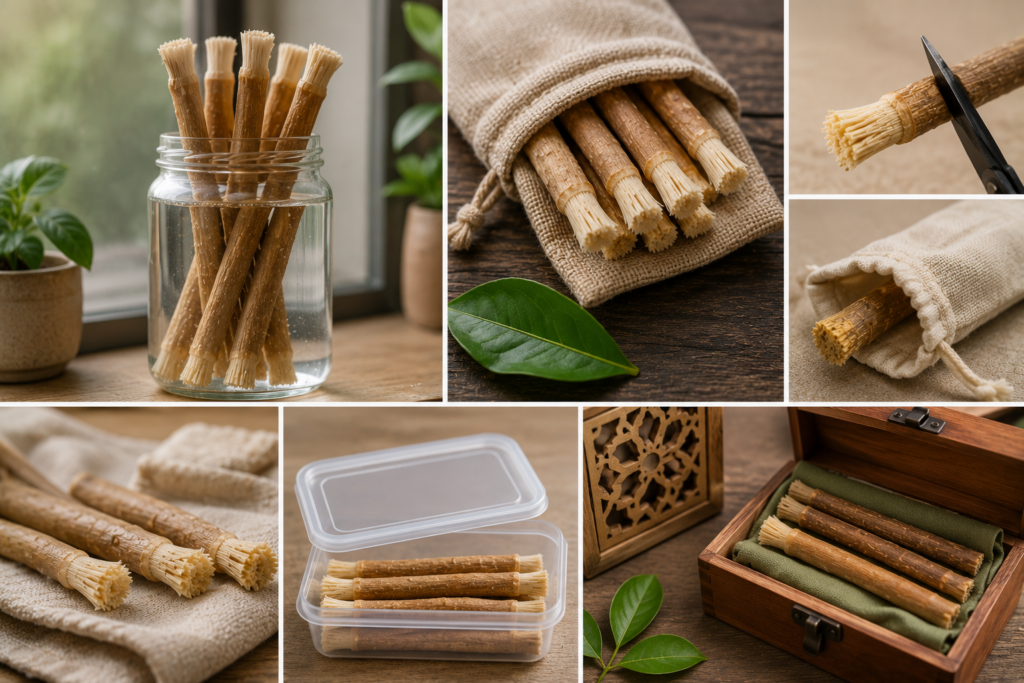
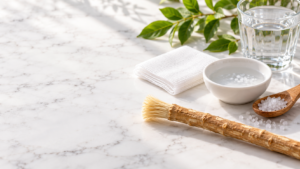
The upright cup method (best for your daily stick). Stand the stick bristle-end down in a small cup with about a centimeter of clean water — just enough to submerge the chewed tip. The bristles stay hydrated while the shaft stays dry. Change the water daily and rinse the stick after every use. This is what most daily users settle on, because it takes zero effort and works.
The damp wrap method (the traditional way). Rinse the stick, shake it off, and wrap it in a clean damp cloth. Keep it somewhere cool. This is how miswak was carried for centuries, and it still works — it just needs the cloth re-dampened regularly.
Refrigeration (best for opened spares). Wrap unused sticks in a slightly damp cloth, place them in a breathable bag in the vegetable drawer, and check weekly. The cold slows both moisture loss and oil evaporation dramatically.
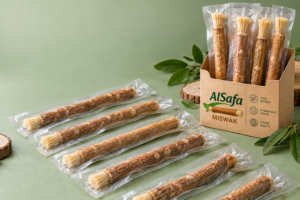
Vacuum seal, or freezing (best for stockpiles). Sticks that arrive vacuum-sealed should stay sealed until needed — a sealed peelu keeps for many months at room temperature. This is exactly why serious suppliers seal at harvest; the packaging process behind commercial miswak exists to solve the storage problem before it starts. For loose bundles, individual wrapping and freezing achieves nearly the same thing at home. Thaw at room temperature — never the microwave.
Each of these methods deserves more detail than an overview can give, but the short version is: cup for today’s stick, fridge for this month’s sticks, seal or freezer for everything beyond that.
How Long Does Miswak Last?
Rough working numbers, assuming decent quality to start with:
In active daily use: 2–4 weeks per stick, with the tip trimmed every two to three days. Opened, damp-wrapped in the fridge: 1–3 months. Frozen: 6 months or more. Unopened vacuum-sealed: 6–12 months at room temperature; longer refrigerated. Loose and unwrapped on a shelf: 1–2 weeks before noticeable stiffening.
That last number explains why loose shop-counter sticks are such a gamble — much of their life was spent dying in open air before you ever bought them. Buying sealed from the start matters as much as anything you do at home; if you’re still sourcing sticks, it’s worth knowing what separates fresh stock from shelf-dead stock before you spend money.
One nuance worth understanding: a stick’s lifespan isn’t binary. It doesn’t go from “fresh” to “dead” overnight. It slides — first losing flavor, then softness, then flexibility. Which brings us to the warning signs.
Signs Your Miswak Needs Replacing
Run this four-part check before opening a new stick, and every few days on your current one:
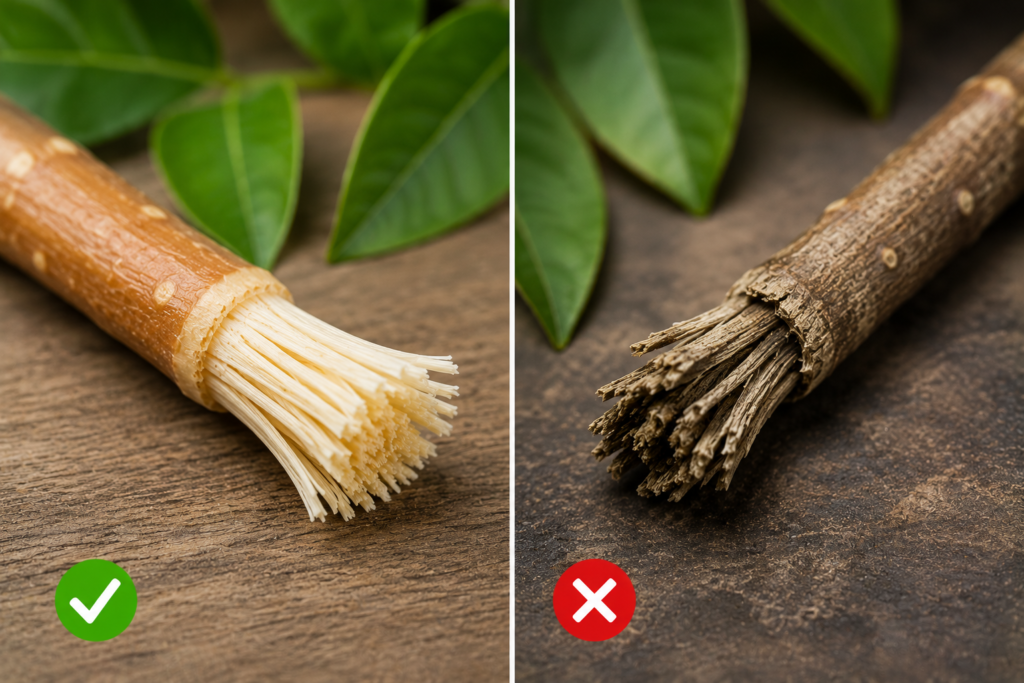
The bend test. A healthy stick flexes slightly under gentle pressure. If it snaps like a dry twig, it’s past comfortable use.
The smell test. Fresh miswak smells woody, slightly peppery, faintly sweet. A musty, sour, or moldy smell means contamination — no trimming, no soaking, no second chances. Bin it.
The look test. Pale yellow to light brown is normal. Dark patches, white fuzz, or greenish spots are mold. Bin it.
The bristle test. Chew the tip. Soft, flexible, separating fibers mean you’re fine. Stiff splinters mean the stick is too dry.
There’s also a quieter sign people miss: taste. When a stick that used to taste peppery and alive starts tasting like plain wet wood, its oils are depleted — it will still scrub, but the medicinal edge is gone. Many experienced users replace on taste alone, before texture ever becomes a problem.
A dry stick is an inconvenience (often revivable with a 4–8 hour soak in clean water, though some oils are gone for good). A moldy stick is a health risk you’d be brushing directly onto your gums. Know the difference.
Travel Storage Tips for Miswak
Miswak is arguably the best travel oral-care tool ever made — no paste, no water, no charger — but travel is also where most sticks die. Heat, dry air, and crushed luggage are a brutal combination.
The essentials: use a ventilated holder (a tube with small air holes — never a fully airtight case with a damp stick inside), rinse before packing so you’re not sealing in food particles, and keep it off the dashboard — a hot car interior can kill a stick in an afternoon.
For trips longer than a week, don’t try to keep one stick alive the whole time. Pack sealed spares and open them as needed; they weigh nothing. On flights, the dry cabin air dehydrates sticks fast, so a damp paper towel inside the ventilated holder buys you the journey. And in hotel rooms, the upright-cup method works exactly as it does at home — any glass will do.
Common Miswak Storage Mistakes
After years of hearing “my miswak went bad,” the same handful of mistakes come up every time:
- Leaving it flat on the sink counter. Fastest way to dry a stick, plus bathroom counters are a bacteria buffet.
- Full submersion for days. People think more water means more freshness. Instead the stick waterlogs, turns mushy, and leaches out the very compounds you wanted.
- Sealing a wet stick in an airtight container. This is the number-one cause of mold. Moisture plus zero airflow equals fuzz within days.
- Storing it in direct sunlight or near heat. A windowsill, a radiator shelf, a car dashboard — heat evaporates the essential oils and sunlight accelerates it.
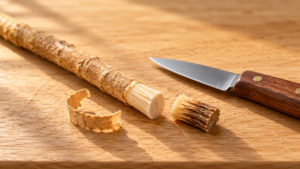
- Never trimming the tip. Even perfectly stored bristles harden and fray after two or three days of use. Old bristles are the most common reason beginners blame “the stick” for gum irritation. (Trimming is part of the basic routine — this complete usage walkthrough covers it alongside the brushing technique itself.)
- Forgetting the stick exists. A damp-wrapped stick in the fridge still needs a weekly glance. Storage methods slow decay; none of them stop it unattended.
Notice a pattern? Every mistake is either too much moisture, too little moisture, or too much heat. Get those three variables right and it’s genuinely hard to ruin a miswak.
How Humidity Affects Miswak Quality
This is the factor almost nobody talks about, yet it quietly decides how your storage methods perform.
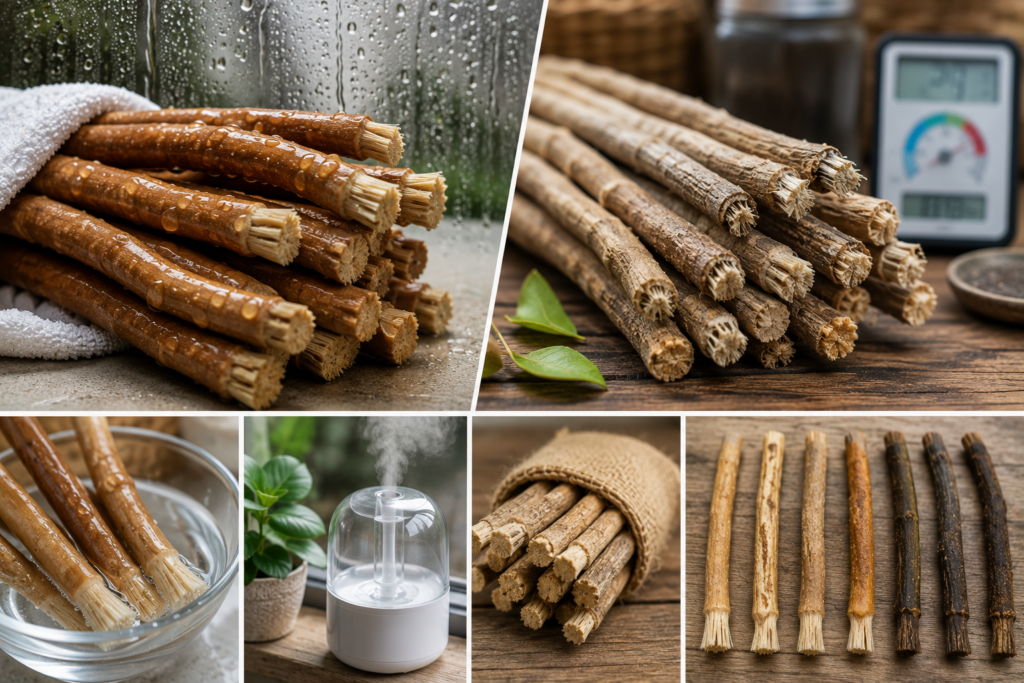
`In dry climates and dry seasons — desert regions, winter indoor heating, air-conditioned rooms — sticks lose moisture far faster than the standard advice assumes. A stick that lasts two weeks on an open shelf in mild weather might stiffen in four or five days in a heated apartment in January. In these conditions, lean wetter: check your cup daily, re-dampen wraps more often, and consider keeping even your daily stick wrapped between uses.
In humid climates — coastal cities, monsoon season, steamy bathrooms — the risk flips from drying to mold. Damp wraps that are safe elsewhere become mold incubators here. Lean drier and airier: more ventilation, lighter wraps, more frequent inspection, and move storage out of the bathroom entirely if it fogs up daily.
The bathroom question. Most people store miswak in the bathroom out of habit, but a bathroom is a humidity rollercoaster — bone dry, then sauna, then dry again, several times a day. Those swings stress the wood more than any single stable condition would. A bedroom shelf or kitchen cupboard with a steady climate is genuinely better.
The takeaway: standard storage advice assumes moderate conditions. Read your own climate and adjust the moisture dial accordingly.
A Simple Routine That Ties It All Together
If you want this whole guide in four habits:
- Buy sealed, keep sealed. Open a stick only when its predecessor retires.
- Daily stick lives tip-down in a small cup of water — fresh water daily, rinse after every use.
- Opened spares live in the fridge, damp-wrapped, checked weekly.
- Trim every 2–3 days, replace every 3–4 weeks — or sooner if the bend, smell, look, or bristle test says so.
Do those four things, adjust for your local humidity, and you’ll never meet the stiff, scratchy, flavorless stick that turns so many first-timers away.
Frequently Asked Questions
Should I store miswak in water or keep it dry? Split the difference: only the chewed tip sits in about a centimeter of water, with the rest of the stick dry and upright. Full submersion waterlogs it; full dryness stiffens it.
Can I store miswak in the fridge?
Yes — the fridge is the best home for opened spare sticks. Damp-wrapped in a breathable bag, they stay usable for one to three months.
Is it okay to freeze miswak sticks?
It is, and it’s the best home option for stockpiles. Wrap individually, freeze airtight, thaw at room temperature. Expect six months or more.
Why did my miswak get moldy?
Almost always one cause: a wet stick sealed without airflow, or a damp wrap that never got checked. Rinse well, shake off excess water, allow ventilation, inspect weekly.
How do I know when to throw a miswak away?
Replace it when it fails any of the four tests — snaps instead of bending, smells musty, shows dark or fuzzy patches, or splinters instead of forming bristles. When in doubt about smell or appearance, always discard.
Does storage really affect how well miswak works?
Significantly. The antibacterial oils and gum-soothing tannins degrade as the stick dries, so a poorly stored miswak keeps its scrubbing ability but loses the medicinal edge that sets it apart from an ordinary brush.
The Bottom Line
Miswak storage comes down to one sentence: protect the moisture, protect the oils, watch for mold. Tip-down in a little water for the stick in use, damp-wrapped in the fridge for spares, sealed until needed for the rest — with the moisture dial adjusted for your climate, and a quick bend-smell-look-bristle check before anything touches your mouth.
My grandfather’s generation knew this instinctively; they wrapped their miswak in damp cloth without ever reading a word about essential oils. The science caught up later. The habit was always right.