
Not while it is still healing. A new oral piercing is an open wound, and nothing rough should go near it. Once it has healed, the miswak is fine. Use a soft, well-soaked tip, keep your strokes light, and work around the jewelry instead of across it.
That is the short answer. The longer one depends on where the piercing is, how old it is, and how careful you are with stray fibers. If you are new to the stick itself, start with what a miswak is and how it works, then come back here.
Why can’t you use miswak on a fresh piercing?
Because a fresh piercing is a wound, not a decoration.
For the first few weeks, there is an open channel through your tongue or lip. The tissue around it is swollen and tender. Anything that scrapes, pokes, or drags across it can tear the new tissue, push bacteria into the channel, or slow the healing down.
Miswak fibers are soft, but they are still fibers. They catch on to things. On healthy gums, that is fine. On a two-week-old piercing, it is not.
During healing, stick to what your piercer told you. That is usually a saltwater rinse, a gentle brush on the rest of your teeth, and nothing abrasive near the site.
How long does an oral piercing take to heal?
It depends on where it is. Tongues heal fastest. Cheeks take the longest.
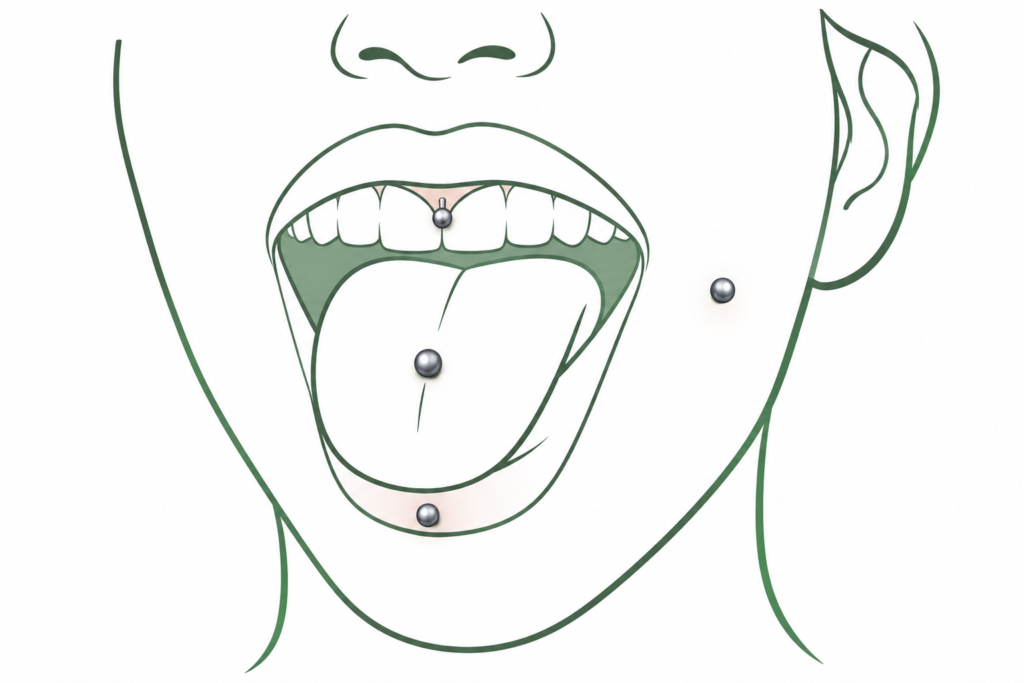
ROUGH HEALING TIMES
| Piercing | Usual healing time | What to know |
|---|---|---|
| Tongue | 4 to 6 weeks | Swells a lot in the first week, then settles quickly |
| Lip or labret | 6 to 8 weeks | Sits against the gums, so needs extra care later too. |
| Smiley or frenulum | 6 to 8 weeks | Right against the front teeth, it rubs easily. |
| Cheek | 8 to 12 weeks or more | Slowest of the group, and the fussiest. |
These are rough guides, not promises. Everyone heals at their own pace. Your piercer can tell you whether yours is actually done, and that is a better answer than a number on a page.
When can you start using miswak again?
Once the piercing is fully healed, and not before.
Healed means no swelling, no soreness, no crust, no discharge, and the jewelry moves freely without pulling. If any of those are still happening, it is not healed yet, however many weeks have passed.
When you do start again, go gently for the first few days. If anything stings, stop and give it more time. The same patient approach applies after dental work, which we went through in using miswak after a tooth has been taken out.
How do you use miswak around jewellery?
The method is the same one people with braces use. Work around the metal, never against it.
- Soak the tip longer than usual so it is soft all the way through, not just on the surface
- Keep the brush head short so the fibers do not splay out and catch
- Use short, light strokes from the gum towards the tooth
- Go around the jewelry, not across it or underneath it
- Never lever the stick against a bar, ball, or ring
- Rinse well afterwards and check in a mirror
If that sounds familiar, it is. We set out the same approach for brackets and wires in our guide to miswak with braces, and the reasoning carries over almost exactly.
What if fibers get caught in the jewelry?
This is the main nuisance, and it is worth taking seriously.
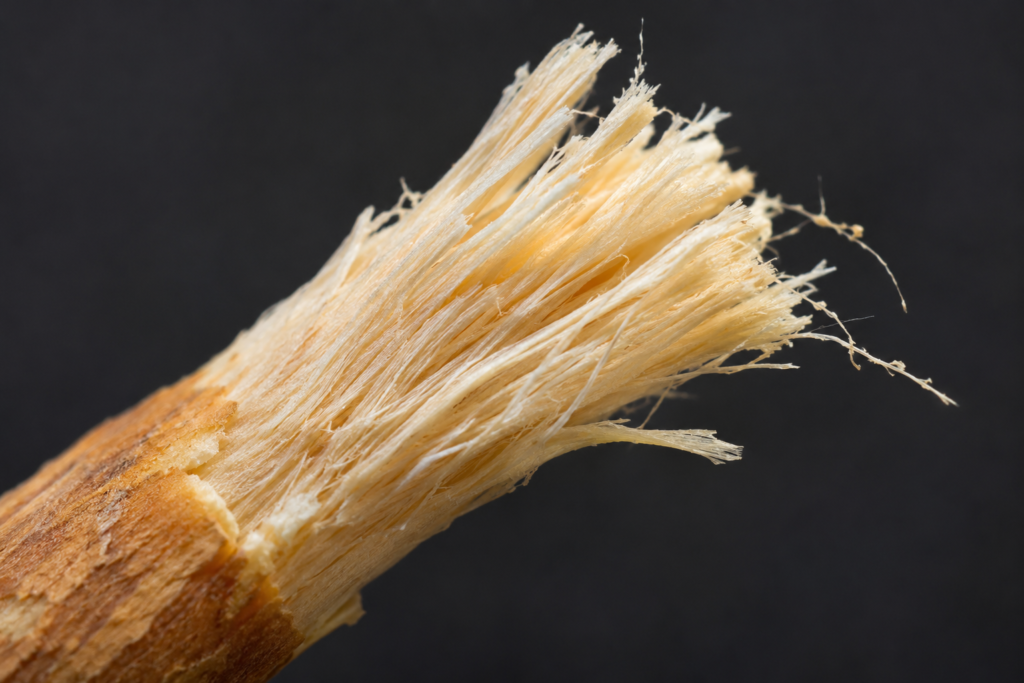
A loose fiber caught under a barbell or behind a ring sits pressed against soft tissue. Left there, it rubs, and rubbing causes sore spots. You will often not feel it until it has been there a while.
Two things cut the risk down:
- Check in a mirror after every use, with the light on. Look under the bar, not just at it
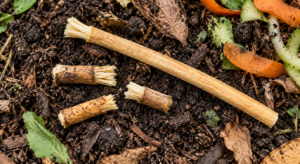
Trim the tip back to fresh wood more often than you normally would. Cutting and trimming a miswak covers how, and a tidy tip sheds far fewer loose fibers than a worn one.
If a fiber is stuck and you can’t rinse it out, use floss or a soft interdental brush. Do not dig at it with the stick.
Does oral jewelry damage gums and teeth on its own?
Yes, sometimes, and this is worth knowing whether or not you use a miswak.
Metal sitting in your mouth all day rubs against the same spot. Over months and years, that can wear down gum tissue, especially with lip and labret piercings that rest against the lower front gums. Biting or clicking jewelry against teeth can also chip enamel. Dentists see both regularly.
None of that is caused by miswak. But it does mean the gums near your piercing may already be thinner than the rest, so they need a lighter touch. Our post on whether miswak can harm your gums explains why pressure matters more than the tool.
If you notice the gum around your piercing looking lower than it used to, that is a conversation for your dentist, not something to fix with a different toothbrush.
Which piercings cause the most trouble?
Lip and labret piercings, by a distance. They sit right against the gum line, so they collect plaque and rub the same patch of gum every day.
Tongue piercings are easier. The bar sits away from your gums, and the tongue itself is tough. The main job there is keeping the underside of the bar clean.
Smiley piercings, through the little flap of tissue above your front teeth, are the fussiest to clean around. That flap is thin, and it tears easily. Go very gently, and plenty of people decide to leave that area to a soft toothbrush instead.
Do you still need to clean the jewelry itself?
Yes. Plaque builds up on metal just like it builds up on teeth.
Most people take removable jewelry out now and then, clean it, and put it back. Ask your piercer what is safe for your particular piece, since materials differ. A miswak is not the tool for cleaning jewelry.
Keep the stick itself clean too. Rinse it after every use, let it air dry, and never share it with anyone. Storing miswak properly goes beyond the basics, and they matter more than usual when there is a piercing involved.
When should you stop and ask someone?
See your piercer or your dentist if:
- The area around the piercing swells, throbs, or leaks after you think it has healed
- A sore spot or ulcer appears where the stick touches
- The gum near the jewelry looks lower than it used to
- A tooth near the jewelry feels chipped or rough
- Fibers keep getting stuck no matter how carefully you trim
None of these are emergencies. All of them are easier to fix early.
Frequently asked questions
Can you use miswak with a tongue piercing?
Yes, once the piercing has fully healed. Use a soft, soaked tip, keep strokes light, and work around the bar rather than across it. Avoid it completely during the first four to six weeks while the tongue is still healing.
How long should you wait after getting a piercing?
Until it is fully healed, which usually means four to six weeks for a tongue, six to eight for a lip, and longer for a cheek. Healed means no swelling, no soreness and no discharge, whatever the calendar says.
Can miswak fibers get stuck in jewelry?
Yes, and it is the most common problem. Trim the tip back to fresh wood regularly and check in a mirror after each use. A rinse removes most loose fibres, and floss will get a stubborn one.
Is miswak safe with a lip or labret piercing?
Once healed, yes, but go gently. Lip jewelry rests against the lower front gums, so that gum is often already worn and needs a lighter touch than the rest of your mouth.
Can miswak damage my piercing?
Not if the piercing is healed and you use a soft tip without pressure. Problems come from hard scrubbing, a dry stiff tip, or levering the stick against the jewelry.
Should I use miswak or a toothbrush with a piercing?
Use both. A soft toothbrush handles the area closest to the jewelry, and a miswak works well for the rest of the mouth and for cleaning between meals.
Can I use miswak on a smiley piercing?
Be very careful. That flap of tissue is thin and tears easily. Many people leave that spot with a soft toothbrush and use miswak everywhere else.
The short version
Wait until the piercing has healed. Then soak the tip well, keep your strokes light, work around the metal rather than against it, and check for stray fibers every time.
Do that, and a piercing is no reason to give up miswak. Rushing it while the wound is still open is the only real mistake here.
Stocking miswak for a natural oral care range?
Slimmer sticks suit customers with jewelry or braces, and fresh, sealed stock sheds far fewer loose fibers than old wood. See our bulk miswak supply or ask for a sample pack before ordering.