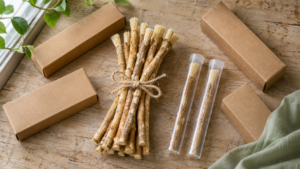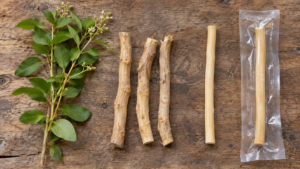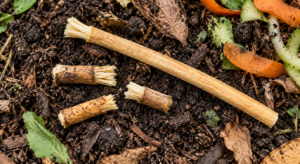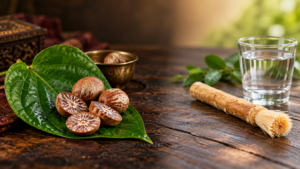
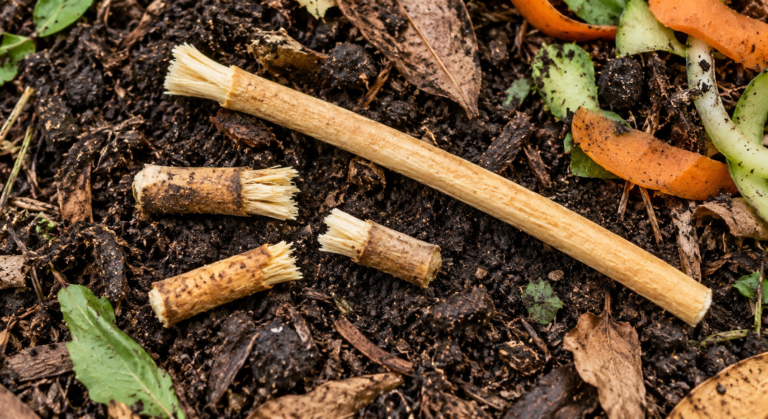
A used miswak is just a piece of wood, so you can compost it. Snap or cut the old stick into small pieces, bury them in your compost heap or in a plant pot, and they will break down on their own in a few months. The only stick that should not go in the compost is a moldy one. That one belongs in the bin.
That is the short version. The rest of this guide explains how to compost a miswak properly, how long it takes to rot down, what to do with a stick that has gone off, how to deal with the wrapper, and the few things you should never do with an old stick.
Why Bother Composting a Little Stick?
Most people finish a miswak, drop it in the bathroom bin, and never think about it again. Fair enough, it is a small thing. But a miswak is one of the few items in your bathroom that can actually go back into the soil.
A plastic toothbrush is plastic, nylon and glue. Nothing in it rots. A miswak is wood and plant fibre, nothing else, so it behaves like any twig from the garden. If you use miswak all year you are throwing away roughly twelve to seventeen sticks, and every one of them can feed your soil instead of sitting in landfill. That gap between the two is one of the reasons people switch in the first place, and we set it out properly in our comparison of miswak and a regular toothbrush.
Is Miswak Biodegradable?
Yes, completely. A plain miswak stick is a cut piece of root or branch from the arak tree, also called Salvadora persica. There is no plastic handle, no nylon bristles, no paint, no glue, and no metal. What breaks it down is the same thing that breaks down leaves and twigs: moisture, warmth and soil fungi.
The same is true of the other woods people use. Peelu, neem, olive and date palm sticks are all plant material and all compost the same way. If you are not sure which wood you have, our guide to the different types of miswak explains how to tell them apart.
One thing to check: the stick is compostable, but the packaging might not be. A clear plastic sleeve or a plastic tube has to be separated out before the wood goes anywhere near your compost. More on that further down.
This takes about a minute and you only need a knife or a pair of secateurs.
How to Compost a Used Miswak, Step by Step
- Cut off the used tip. The frayed end is the part that has been in your mouth the most. Trim the last centimeter or two and get rid of it with your normal waste.
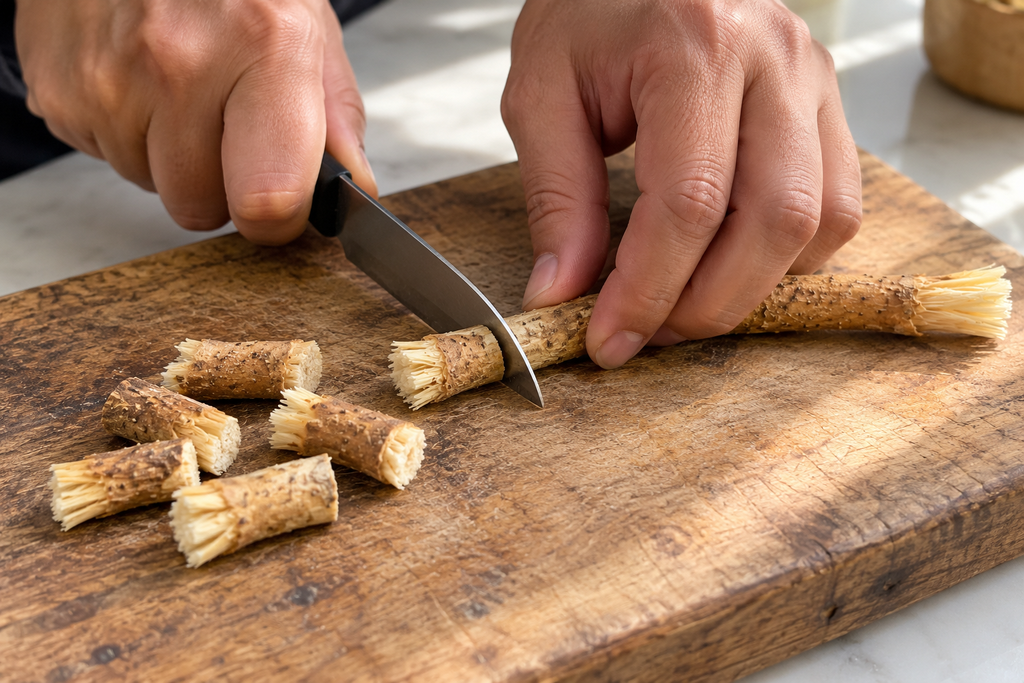
- Rinse the rest. A quick rinse under the tap washes off saliva and any food bits. Let it dry for a day if you can.
- Break it into small pieces. Two to three centimeters is ideal. Whole sticks take years. Short pieces take months. This one step makes the biggest difference.
- Bury the pieces in the middle of the heap. Not on top. The center is warmer and damp, which is where things rot fastest.
- Balance it out. Wood counts as a “brown” in composting terms. Mix it with greens such as vegetable peelings, tea leaves, or grass clippings so the heap keeps working.
- Keep it damp and turn it now and then. A dry heap does nothing. Damp like a wrung-out cloth is about right.
If you only have a small worm bin, keep the wood pieces to a minimum. Worms prefer soft food scraps and will ignore hard wood for a long time.
How Long Does a Miswak Take to Break Down?
It depends almost entirely on two things: how small you cut it, and how much air and moisture it gets. Here is a rough guide.
| Where it ends up | How long it takes | Why |
|---|---|---|
| Hot compost heap, cut small | 2 to 4 months | Heat and bacteria work fast. |
| Cold home compost bin, cut small | 6 to 12 months | Slower, but it still gets there. |
| Buried in garden soil | 1 to 2 years | Soil fungi do the work quietly. |
| Left whole on a heap | 1 to 2 years | Thick wood takes much longer. |
| Council garden waste collection | Weeks | Industrial composting runs much hotter. |
| Landfill | Decades | Sealed waste gets almost no air. |
That last row surprises people. Wood does not rot properly in a landfill because the waste is packed down and sealed, so there is barely any oxygen. A miswak thrown in the general bin is still better than plastic, but composting it is far better again.
What If Your Miswak Has Gone Mouldy?
Dark spots, white fuzz, or a musty smell mean the stick is finished. Those are the clearest signs a miswak needs replacing, and no amount of soaking or trimming will bring it back.
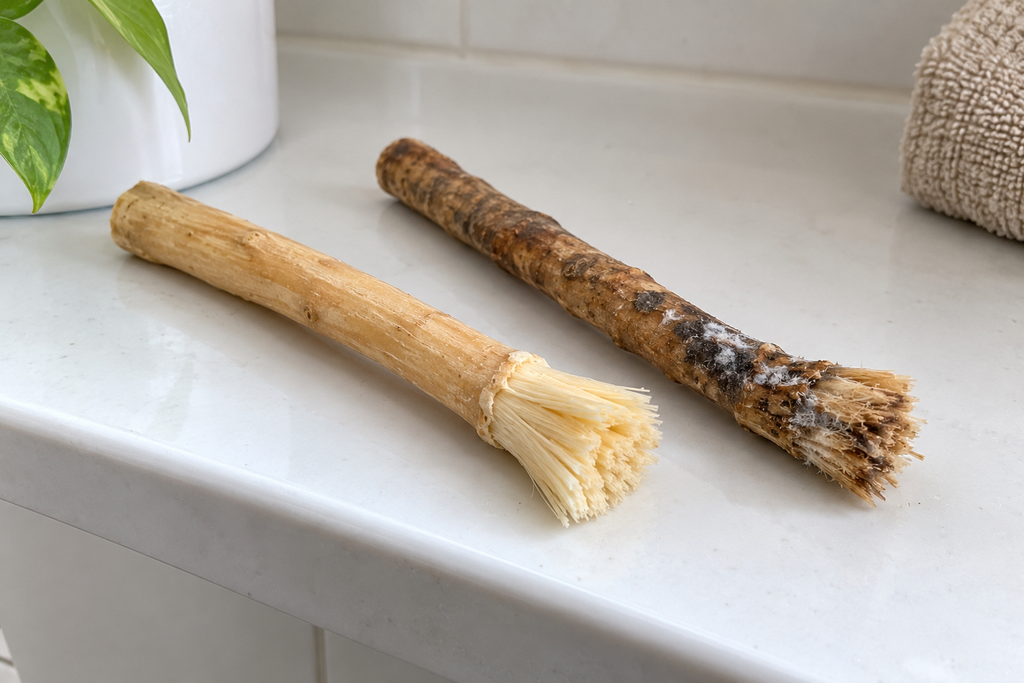
For disposal, play it safe:
- Hot, active compost heap: fine. The heat deals with it, and compost is full of fungi anyway.
- Small cold bin or worm bin: skip it. Put the stick in your general waste instead.
- Either way: do not try to clean it up first, and do not keep it “just in case.”
And do not boil it to rescue it. We explain why that does more harm than good in our post on boiling and sterilising a miswak.
No Compost Bin? Here Are Your Other Options
You do not need a garden or a fancy setup. Any of these work.
- Bury it in the garden. Dig a hole about 10 to 15 centimeters deep, drop the pieces in, and cover it over. Done.
- Push it into a plant pot. Small pieces tucked into the soil of a houseplant or a balcony pot rot down slowly and add a little organic matter.
- Use your food or garden waste bin. Most councils accept small amounts of untreated wood in the garden waste collection. Check your local rules first, since they vary a lot.
- Burn it. A dried-out stick is clean, untreated wood. It is fine as kindling in a fire pit or wood burner, and the ash can go in the garden.
- General waste, as a last resort. Not ideal, but it is still plant material rather than plastic.
Things You Should Never Do With an Old Miswak
- Do not flush it. Wood does not soften in a pipe. It is a blockage waiting to happen.
- Do not put it in the plastic or paper recycling. It is not recyclable in that sense. Compost or bin it.
- Do not leave it sitting in a sealed bag. Trapped damp wood grows mold fast, and that mold can spread to the fresh sticks stored nearby.
- Do not pass it on to anyone else. A miswak is personal, exactly like a toothbrush.
- Do not reuse it in the kitchen. No skewers, no stirrers. Once it has been in your mouth for weeks, keep it out of food.
Can You Reuse an Old Miswak Instead of Binning It?
Only outside the bathroom. Once a stick is retired, it should never go back in your mouth, but the wood itself is still useful:
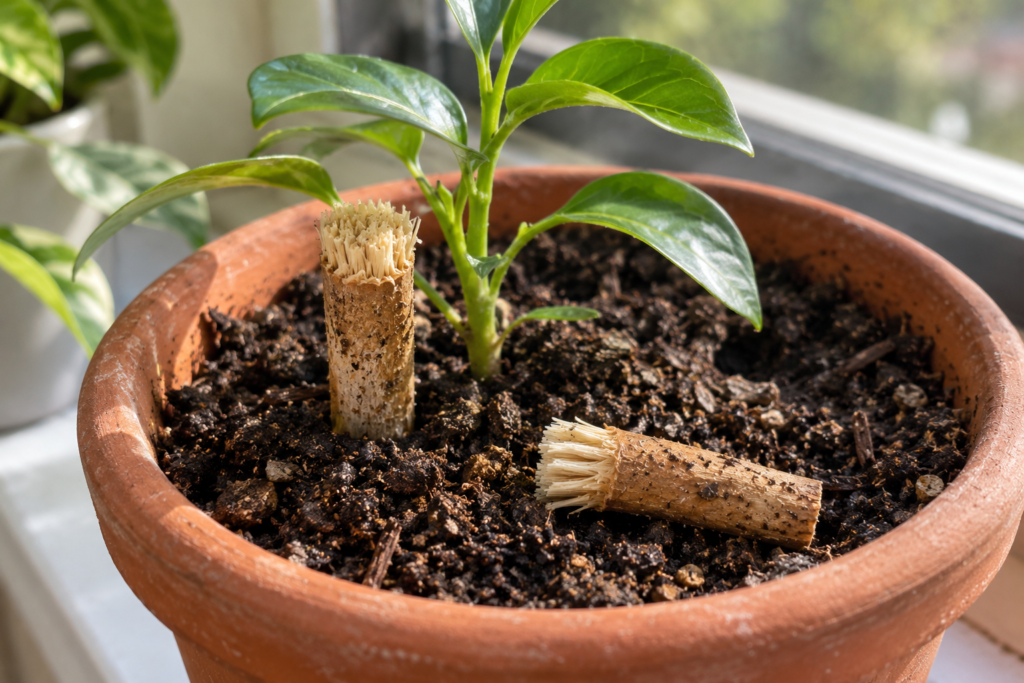
- Plant labels. Write on a split piece with a marker and push it into the pot.
- Seedling supports. A short stick props up a young plant nicely.
- Pot drainage. A few broken pieces at the bottom of a pot help water move through.
- Kindling. Dry sticks catch quickly.
None of this is essential. It is just a nicer end for the stick than the bin.
What About the Wrapper, Tube, or Case?
The packaging is usually the only part that is not compostable, so split it off before you do anything else.
| Part | Where it goes |
|---|---|
| Paper sleeve or label | Paper recycling, or compost it with the stick. |
| Clear plastic film or sealed wrapper | General waste, or a soft plastic collection point. |
| Plastic travel tube or case | Wash it and keep using it, or recycle if your council accepts it. |
| Cardboard outer box | Flatten it and recycle. |
| The stick itself | Compost. |
If you sell miswak rather than just use it, packaging is worth a proper thought, because a plastic-wrapped stick undercuts the whole natural selling point. We cover paper sleeves, card boxes, and other options in our miswak packaging guide for brands and retailers.
The Easiest Way to Throw Away Less: Make Each Stick Last
A well-kept stick lasts three to four weeks. A badly kept one can be ruined in days, which means more waste and more money spent. Two habits fix most of it.
The first is trimming. Cutting the frayed end back every two or three days keeps the bristles soft and stops you giving up on a stick that was perfectly fine underneath. Our walkthrough on cutting and trimming a miswak shows exactly where to cut.
The second is storage. Sticks die from being left dry on a shelf or sealed up wet in a bag, and both are avoidable. Our full guide on storing miswak properly covers the cup, the fridge, and the travel case.
Miswak and a Plastic Toothbrush at the End of Their Life
| Miswak | Plastic toothbrush | |
|---|---|---|
| Made of | Arak wood and plant fibre | Plastic handle, nylon bristles |
| Compostable | Yes | No |
| Time to break down | Months in compost | Hundreds of years |
| Recyclable | Not needed, it composts | Rarely, mixed materials |
| Waste in a year | About 12 to 17 sticks, all compostable | About 4 brushes, all landfill |
A Simple Routine to Follow
- Use the stick for three to four weeks, trimming the tip every couple of days.
- When it stops bending, stops tasting peppery, or starts to smell, retire it.
- Cut off the chewed end, rinse the rest, and snap it into short pieces.
- Bury the pieces in your compost, a plant pot, or the garden.
- Separate any plastic wrapper and put that in the right bin.
Frequently Asked Questions
Can you compost a miswak?
Yes. A miswak is untreated wood, so it composts like any garden twig. Cut it into short pieces and bury them in the middle of the heap so they break down faster.
Is miswak biodegradable?
Completely. It is a cut piece of arak wood with no plastic, nylon, glue or paint, so soil organisms break it down naturally.
How long does a miswak take to decompose?
Around two to four months in a hot compost heap if it is cut small, six to twelve months in a cold home bin, and one to two years if it is buried whole in soil.
Can I put a miswak in my food waste bin?
Usually it belongs in the garden waste collection rather than food waste, but rules differ by council. Check your local guidance before you add wood.
Can I compost a mouldy miswak?
Only in a hot, active heap. In a small cold bin or a worm bin, put it in your general waste instead.
Can I just throw an old miswak in the garden?
Yes, although burying it works better than leaving it on the surface. A buried stick stays damp and rots much faster.
Can I burn an old miswak?
Yes. It is clean, untreated wood, so it is fine as kindling in a fire pit or wood burner, and the ash can go on your soil.
Can I put a miswak in the recycling bin?
No. Recycling is for paper, plastics, glass, and metal. Wood goes to compost, garden waste, or general waste.
How often should I throw a miswak away?
Most sticks last three to four weeks with daily use. Replace it sooner if it snaps instead of bending, smells musty, or shows dark spots or fuzz.
Is it wasteful to throw away a miswak every month?
Not really. The stick is a natural material that returns to the soil, which is very different from throwing away a plastic brush every three months.
The Bottom Line
Disposing of a miswak is simple because there is nothing complicated in it. Trim the chewed end, rinse the stick, break it into short pieces, and put it in your compost, a plant pot or the garden. Give it a few months and it is gone. Keep mouldy sticks out of small compost bins, separate any plastic wrapper, and never flush it.
It is a small habit, but it closes the loop. The stick came from a tree and it can go back to the soil, which is more than most things in your bathroom can manage.
Buying Miswak in Bulk?
Shops, pharmacies and natural product brands increasingly get asked whether a product is compostable, and miswak answers that question on its own. Al Safaa Miswak supplies genuine Salvadora persica sticks to retailers and distributors worldwide. See our bulk miswak tooth stick supply or request a wholesale quote.