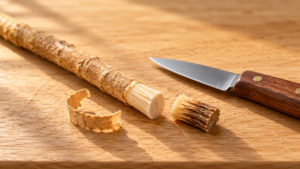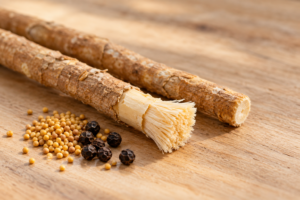
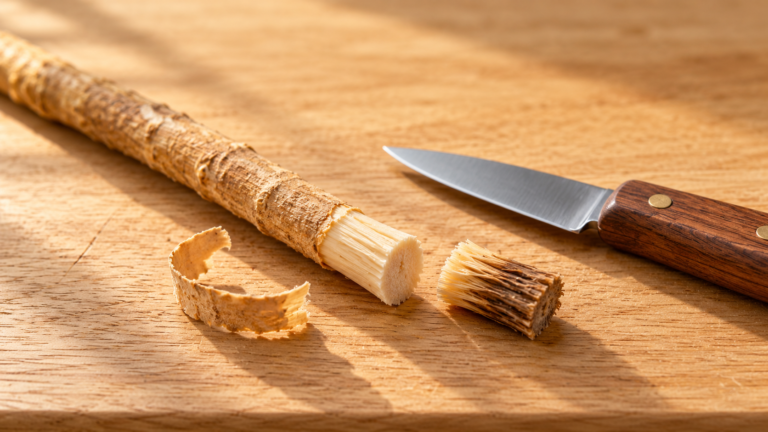
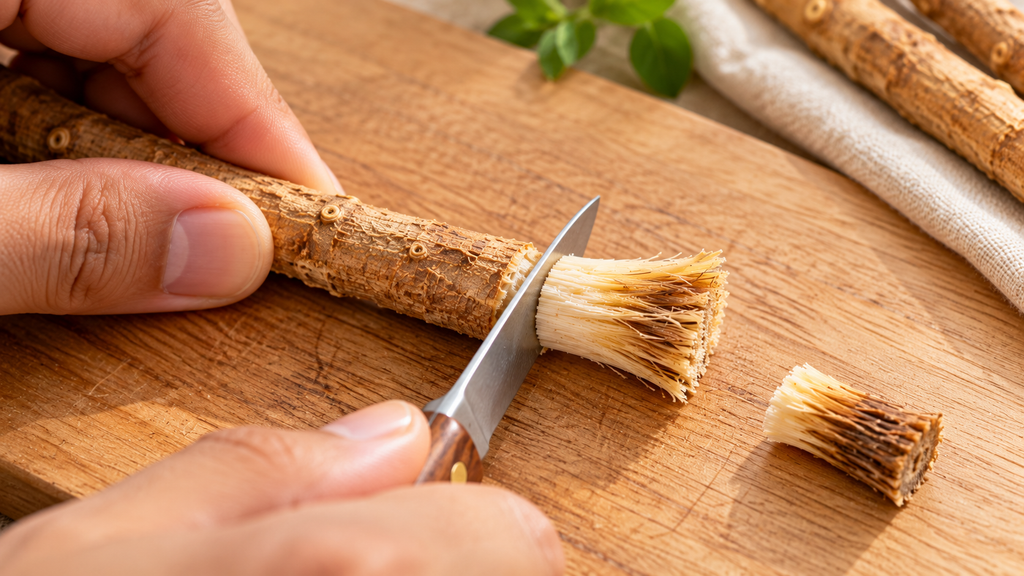
To trim a miswak, cut off the old, worn bristles with a clean, sharp knife or scissors, about one centimeter at a time. Then peel back roughly a centimeter of bark from the new end and chew the fresh wood until it forms soft bristles again. Do this every day or two, or whenever the bristles look limp, splayed, or discolored.
It sounds simple, and it is, once you’ve done it a few times. But a lot of people get small details wrong. They cut too much and waste the stick, or too little and keep brushing with stale fibers. Or they use a blunt blade that crushes the wood instead of cutting it. This guide walks you through the whole process, from the very first cut on a new stick to the last trim before it’s time for a new one. If you’re still learning the basics of brushing itself, start with our complete guide to using miswak safely.
Why Do You Need to Trim a Miswak at All?
A miswak works in two ways. The fibers scrub your teeth, and the fresh wood releases natural compounds that help fight plaque bacteria. Both fade with use.
After a day or two of brushing, the bristles soften, splay out, and start to discolour. They clean less well, and the compounds in that section of wood are mostly used up. Old bristles also hold on to bacteria from your mouth. Trimming exposes a fresh layer of wood, so every session starts with clean, active fibers.
There’s a traditional view on this too. Classical guidance on miswak etiquette says the stick shouldn’t be too hard or too soft. In practice, that means you keep using a tip until it has gone soft and worn, then cut it off and move on to the next section.
What Do You Need to Cut a Miswak?
You don’t need anything special. Any of these will do:
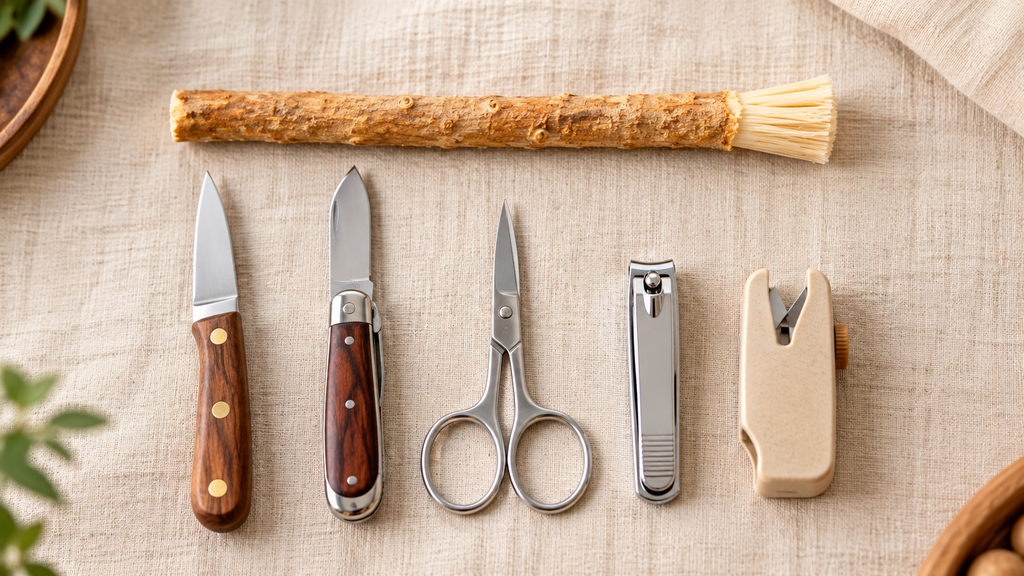
• A small, sharp knife. A paring knife or a folding pocket knife gives the cleanest cut.
• Sharp scissors. Kitchen or craft scissors work well for thinner twig sticks.
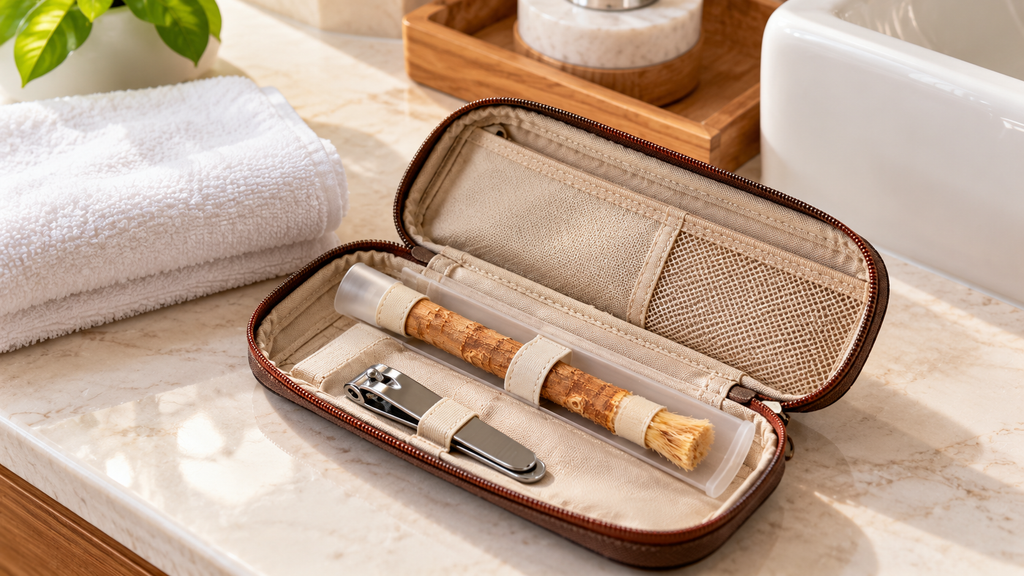
• Nail clippers. These are handy for travel and quick daily trims on slim sticks.
• A miswak cutter. Small dedicated cutters are sold for exactly this job, if you want one.
Whatever you use, keep it sharp and clean. A blunt blade crushes the fibers instead of slicing through them, and that leaves a ragged end that never chews into neat bristles. Wipe the blade before and after each use.
How to Prepare a New Miswak: The First Cut
A brand-new stick needs a slightly different first step from a daily trim.
1. Check the stick. It should bend slightly without snapping and smell fresh and woody. A stiff, dry stick needs soaking first.
2. Soak the end if it’s dry. Stand the tip in clean water for a few hours, or overnight if it’s very hard.
3. Cut a clean end. Trim off a few millimeters to remove any dust or dried wood from the tip.
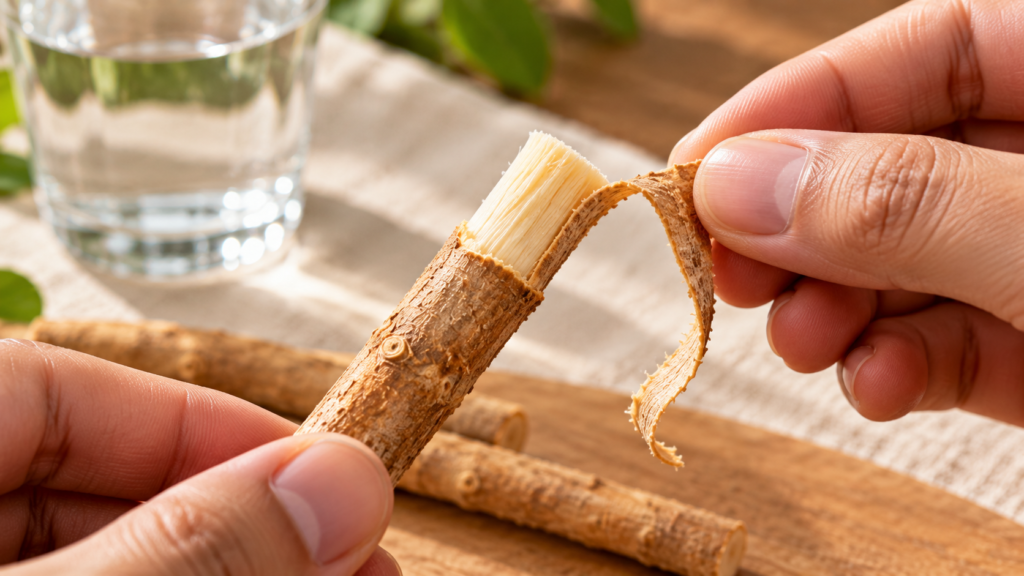
4. Peel back the bark. Score around the stick about one centimeter from the end, then peel or scrape the bark away. On fresh sticks it often comes off with your fingernails.
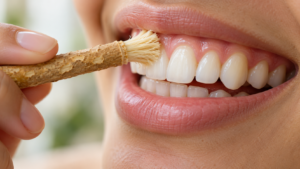
5. Chew the exposed wood. Gently chew the tip with your back teeth, turning the stick as you go, until the fibers separate into soft bristles.
6. Shape the brush head. Aim for bristles about half a centimeter to one centimeter long. Longer bristles flop around and don’t clean as well.
How to Trim a Used Miswak: Step by Step
This is the routine you’ll repeat for the life of the stick.
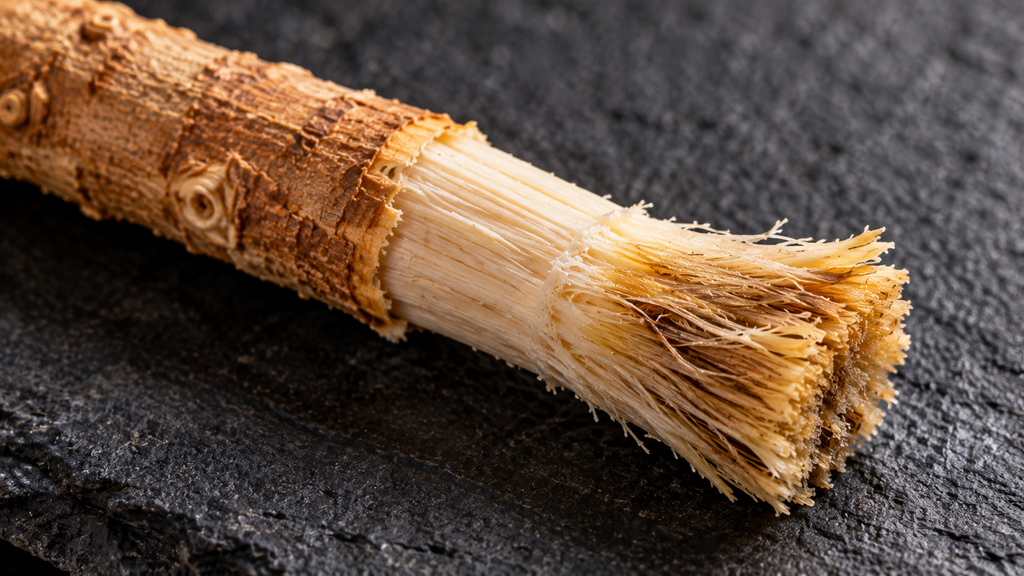
1. Rinse the tip. Run it under clean water to wash away loose debris.
2. Find where the fresh wood starts. Look for the point where the bristles change from limp and discolored to firm and pale. That’s usually around one centimeter from the end.
3. Cut straight across. Hold the stick firmly on a clean surface or over the sink, and cut just below the worn section. Always cut away from your hand and body.
4. Peel the bark again. Remove about one centimeter of bark from the new end so you have fresh wood to work with.
5. Chew a new brush head. Chew gently until soft bristles form, just as you did the first time.
6. Rinse and store. Give it a final rinse, let it air-dry, and put it away properly.
In that last step, how you store the stick between trims matters as much as the trim itself. Our guide on keeping a miswak fresh between uses explains the details.
How Much Should You Cut Off?
It depends on the state of the tip. Here’s a quick reference:
| Situation | How much to cut | Why |
| New stick, first use | A few millimeters, then peel 1 cm of bark. | Removes dust and dried wood from the end |
| Daily or every-other-day trim | About 1 cm | Removes the worn bristles, keeps fresh wood |
| The tip has gone hard or dry | Cut back to wood that bends, then soak. | Hard fibers scratch the gums. |
| The tip looks dirty or discolored deep down. | Cut past all discolored wood. | Old fibers hold bacteria. |
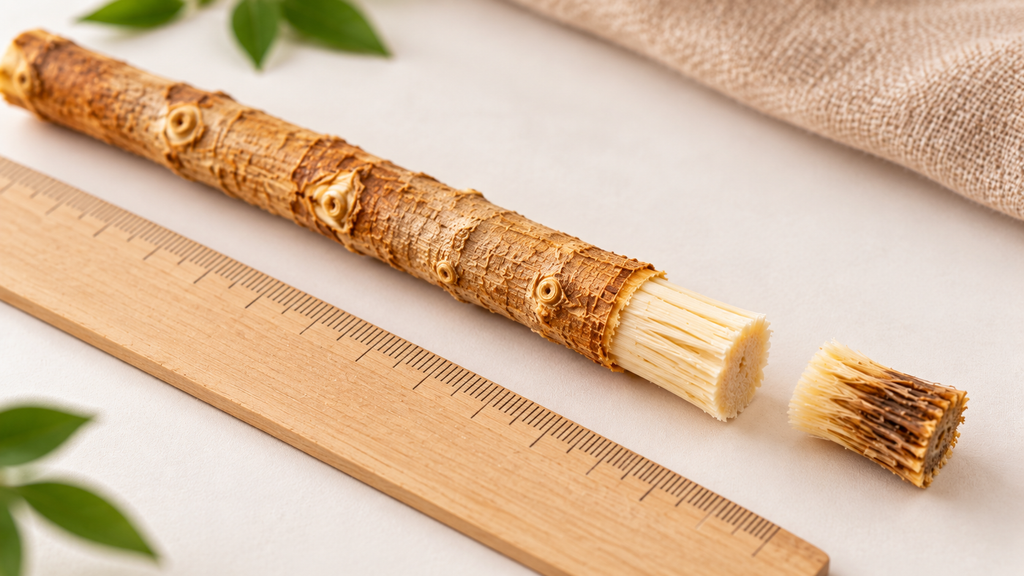
| The stick is under about 10 cm long. | Stop trimming. | Too short to grip safely |
Cutting more than you need wastes the stick. Cutting too little leaves tired fibers behind. One centimeter is the sweet spot for most daily trims.
How Often Should You Trim a Miswak?
For most people, every day or two is right. Don’t go by the calendar, though. Go by what the tip looks and feels like. Trim when you notice:
• bristles that are limp, flattened, or splayed like an old broom
• fibers that have turned yellowish or grey
• a flat taste where there used to be a peppery bite
• bristles that feel stiff or scratchy against your gums
If you use your miswak several times a day, you may need to trim daily. If you only use it once a day, every other day is usually fine.
When Should You Stop Trimming and Replace the Stick?
Trimming keeps a stick going for a few weeks, but not forever. Each trim takes a little length off, and eventually there isn’t enough left to hold comfortably. Once a stick drops below about 10 centimeters, your grip suffers and you’re more likely to jab your gums.
Other signs mean trimming won’t help: mold, a musty smell, or wood that snaps instead of bending. We’ve covered every one of these in our guide on when a miswak is ready to be replaced. For a realistic idea of how many weeks a stick lasts with regular trimming, see our lifespan guide.
What Are the Most Common Trimming Mistakes?
• Using a blunt blade. It crushes the fibers and leaves a messy end. Keep your knife or scissors sharp.
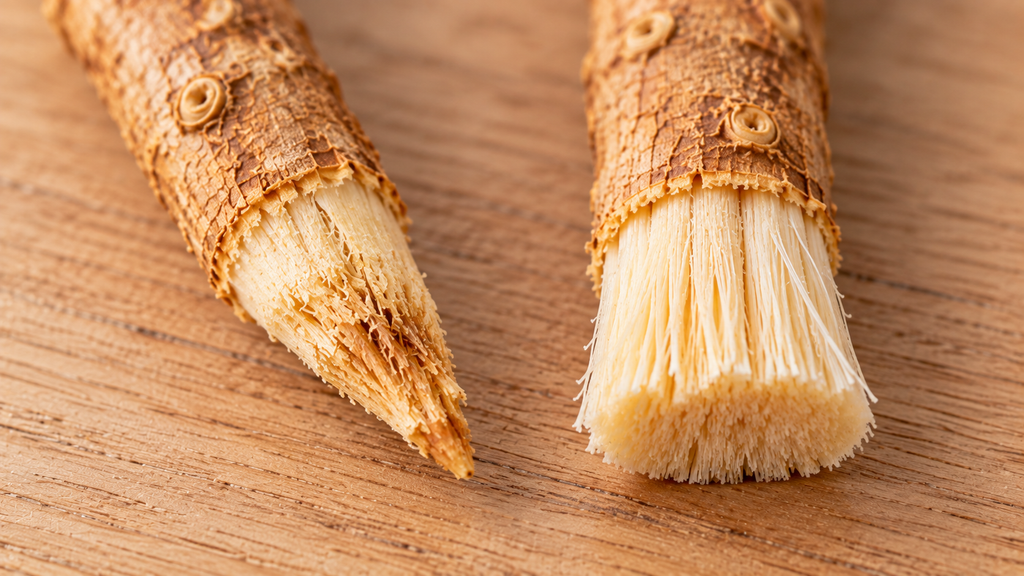
• Cutting at a steep angle. A long slanted cut leaves a sharp point that can poke your gums. A straight cut is safer and easier to chew.
• Skipping the bark. Chewing through bark is tough and bitter, and it gives you an uneven brush head.
• Chewing a dry tip. Dry wood splinters instead of fraying. Soak it first.
• Leaving splinters behind. Check the new tip and pull away any loose, sharp slivers before brushing. Splinters are one of the avoidable causes of sore gums with miswak.
• Trimming over a dirty surface. Cut over a clean board, sink, or bin so debris doesn’t end up back on the stick.
Is Trimming Different for Root and Twig Miswak?
Slightly. Root miswak is usually thicker and denser, so a knife works better than scissors, and the bark can be tougher to peel. Twig miswak is thinner and softer. Scissors or nail clippers handle it easily, and it usually needs a shorter brush head. The difference comes from which part of the Arak tree the stick is cut from, and the trimming steps are the same either way.
How Can You Trim a Miswak Without a Knife?
If you’re travelling or caught without tools, you have a couple of options. You can bite through the worn fibers with your front teeth and pull them away, or bend the tip back and forth until the old section tears off. Neither gives as clean an end as a blade, so tidy it up properly once you’re home. For regular travel, a small pair of nail clippers in your bag solves the problem.
Does the Quality of the Stick Affect Trimming?
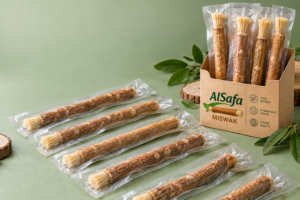
Yes, and more than people expect. A fresh, supple stick cuts cleanly, peels easily, and chews into fine, even bristles. An old or badly stored stick is brittle. It cracks when you cut it and splinters when you chew. If you buy for a shop or in bulk, fresh, properly sealed miswak sticks make the whole routine easier for your customers.
Frequently Asked Questions
How often should you cut a miswak?
Every day or two for most people. Trim whenever the bristles look limp, splayed, or discolored, or when the taste goes flat.
How much of a miswak should I cut off?
About one centimeter for a normal trim. Cut a little further if the tip has gone hard or looks dirty deeper down.
Can I use scissors to trim a miswak?
Yes. Sharp scissors work well, especially on thinner twig sticks. For thick root sticks, a small sharp knife usually gives a cleaner cut.
Do I need to peel the bark every time I trim?
Yes. After each cut, peel about a centimeter of bark from the new end so you’re chewing fresh inner wood, not tough, bitter bark.
Should I cut a new miswak before using it?
Yes. Trim a few millimeters off the end to remove dust and dried wood, peel back about a centimeter of bark, then chew it into bristles.
Why does my miswak go hard after trimming?
The stick has probably dried out. Soak the tip in clean water for a few hours before chewing it into bristles, and store the stick somewhere cool and ventilated.
When should I stop trimming and get a new miswak?
When the stick is shorter than about 10 centimeters, or if it shows mold, smells musty, or snaps instead of bending. With regular use, that’s usually after three to four weeks.
The Bottom Line
Trimming is the small habit that keeps a miswak working. Use a sharp, clean blade, cut about a centimeter off straight across, peel the bark, and chew a fresh brush head every day or two. Do that, and every session starts with clean, active fibres, right up until the stick is too short to hold and it’s time for a new one.