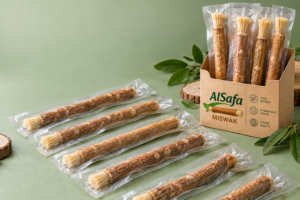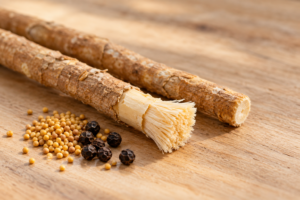
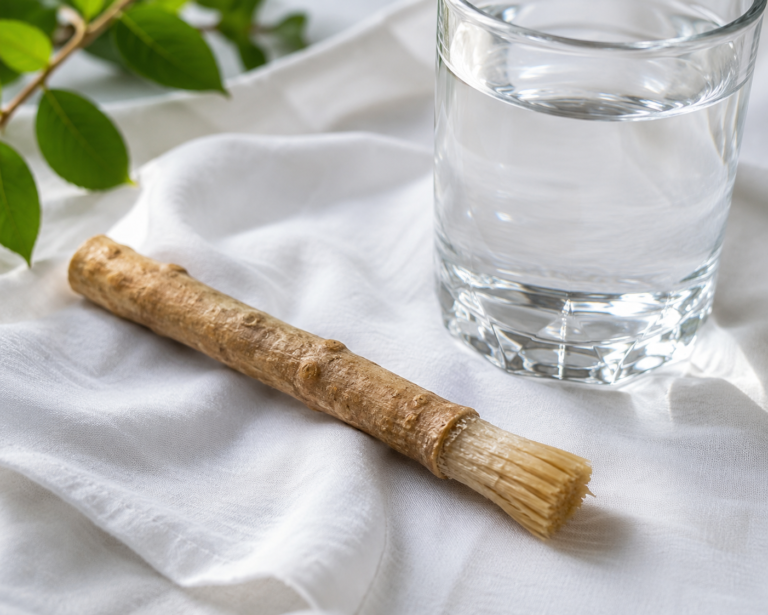
Miswak has been cleaning teeth for well over a thousand years, and modern research keeps confirming what people already knew: it works. But here’s a question almost nobody asks before putting a stick in their mouth: Can miswak cause any harm?
The honest answer is yes, it can — but almost never because of the stick itself. Nearly every miswak side effect comes down to one of three things: using it too aggressively, using a stick that’s gone bad, or buying poor-quality miswak in the first place. All three are avoidable, and this guide will show you exactly how.
So before you write miswak off (or worse, keep scrubbing your gums the wrong way), read through this. Ten minutes here can save your gums years of trouble.
First Things First: Is Miswak Actually Safe?
For the vast majority of people, absolutely. Miswak comes from the Salvadora persica tree, and its natural compounds — fluoride, tannins, alkaloids, and essential oils — are the reason the World Health Organization has acknowledged it as an effective oral hygiene tool. We’ve covered what these compounds do for your teeth in detail on our miswak benefits page, so we won’t repeat it all here.
The problems start when the technique goes wrong or the stick itself is compromised. Think of it like a toothbrush: a toothbrush is safe too, but brush with a frayed, months-old brush using a heavy hand and you’ll damage your gums. Same logic applies to miswak. The tool isn’t the risk — the habits around it are.
Possible Side Effects of Miswak (And What Actually Causes Them)
1. Gum Recession from Aggressive Brushing
This is the most common issue dentists see in long-term miswak users, and it has nothing to do with the wood. When you scrub hard, day after day, in a horizontal sawing motion, the gum tissue slowly pulls back from the teeth. Once gums recede, they don’t grow back on their own.
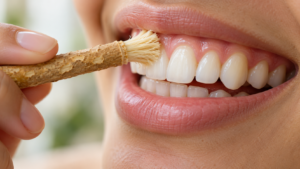
The fix is simple: light pressure, gentle strokes, and brush away from the gum line rather than digging into it. Miswak bristles clean through their natural compounds and fine texture — force adds nothing except damage.
2. Tooth Enamel Wear
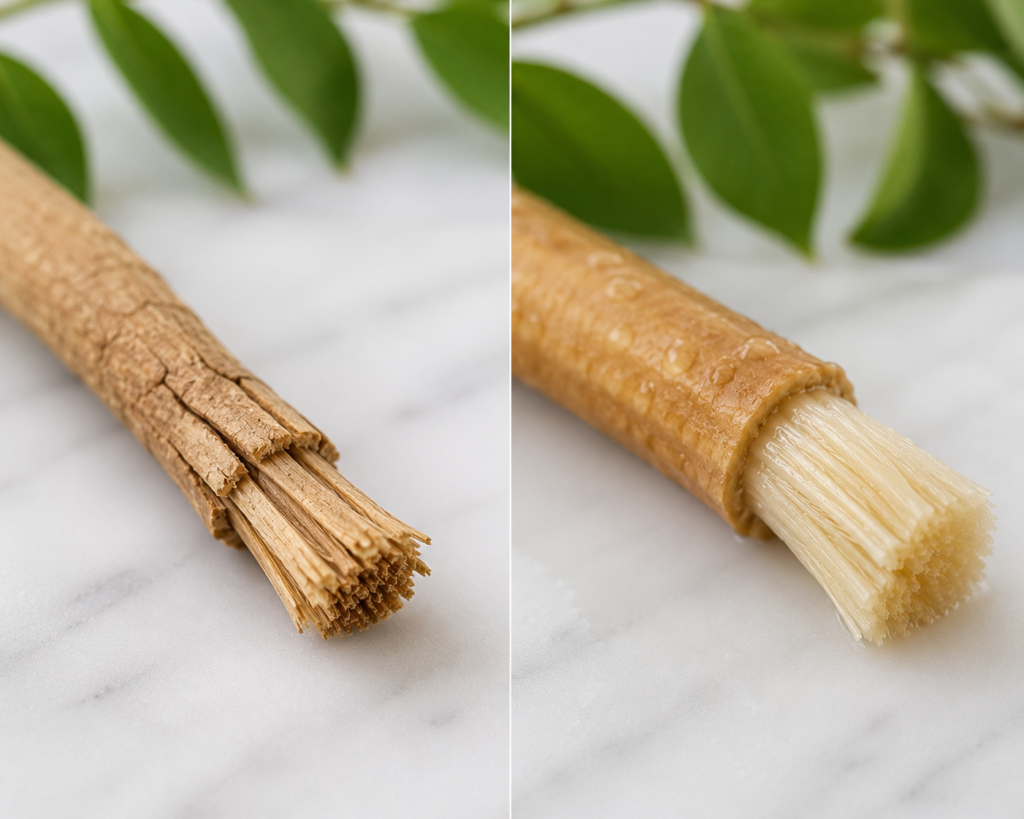
A bone-dry, hardened miswak used with pressure acts a bit like fine sandpaper on your enamel. Over years, that can thin the enamel and cause sensitivity to hot and cold. Again — the culprit is a hard, dried-out stick plus heavy scrubbing, not miswak itself. A properly softened, fresh stick is gentle on enamel. If your miswak has dried stiff, soak the tip in clean water for a few hours before use, or trim back to fresher wood.
3. Bacterial Build-Up on Old or Badly Stored Sticks
Here’s the side effect people genuinely underestimate. Miswak is organic material — it’s a twig, kept moist, going into your mouth twice a day. Stored damp in a closed pocket or plastic bag, it becomes a breeding ground for the very bacteria you’re trying to remove. Some studies have found more microbial growth on old miswak bristles than on used toothbrush heads.
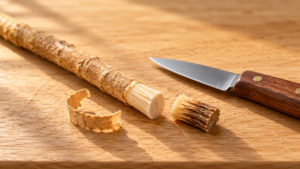
The solution isn’t complicated: rinse after every use, let it air-dry, keep it in a ventilated cover, and cut off the used bristles daily to expose a clean layer. We’ve written a full guide on how to store miswak properly, plus the best ways to keep miswak fresh — both are worth five minutes of your time.
4. Splinters and Frayed Bristles
An overused miswak head splays out, hardens, and starts shedding tiny wood fibres. Those fibres can lodge between teeth or poke into gum tissue — irritating at best, a source of small cuts at worst. When the bristles look messy, feel stiff, or taste flat, trim the head and chew a fresh tip. Not sure when it’s time? Check our post on the signs your miswak needs replacing.
5. Mild Irritation or Allergic Reaction (Rare)
A small number of first-time users notice a peppery, slightly bitter warmth from the natural oils in Salvadora persica. That’s normal and usually settles within a few days as your mouth adjusts. What’s not normal: swelling, persistent burning, rash around the lips, or ulcers that keep coming back. That points to a genuine sensitivity — stop using it and speak to a dentist. It’s rare, but it happens, just as some people react to certain toothpaste ingredients.
6. The Wrong Tree Altogether
This one matters more than people realise. “Miswak” traditionally refers to specific trees — Arak (Salvadora persica), Peelu, Neem, olive, date palm. Random twigs from unknown trees can contain sap and compounds that were never meant to go in a human mouth. Some are outright harmful. If you’re curious how the legitimate varieties compare, our breakdown of the types of miswak covers Arak vs Peelu vs Neem vs Date Palm honestly, strengths and weaknesses included.
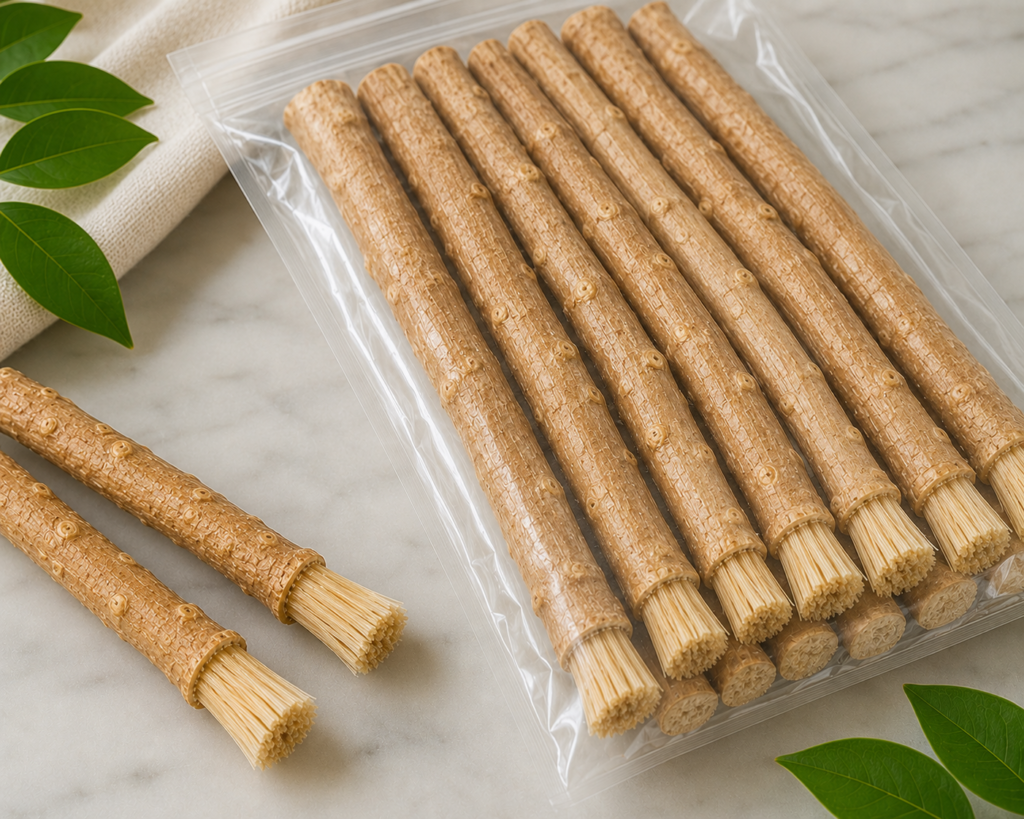
This is also the strongest argument for buying from a verified source. Every stick in our product range is harvested from genuine Salvadora persica trees and processed under hygienic, export-grade standards — no mystery wood, no shortcuts.
Who Should Be Extra Careful with Miswak?
- People with existing gum disease or receding gums — get your dentist’s go-ahead first, and be religious about the light-pressure rule.
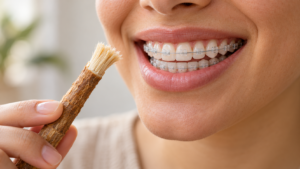
- Anyone with braces, veneers, implants or recent dental work — a stiff stick around brackets and crowns needs care. Ask your orthodontist before making it a habit.
- Young children — a rigid stick plus running around is a poke-injury waiting to happen. Supervise, always, and keep it out of reach otherwise.
- People with very sensitive teeth — start with a well-soaked, soft stick and short sessions, and see how your teeth respond.
Safe Usage: 8 Simple Rules
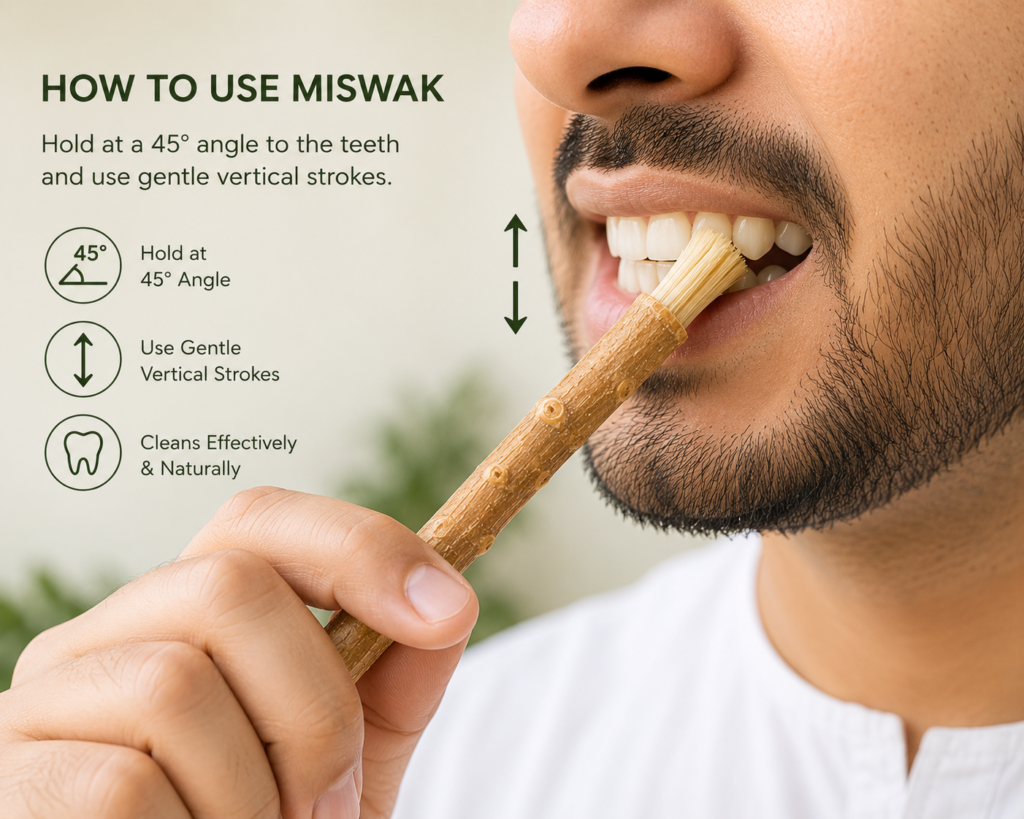
- Soften before you start. Chew the tip gently or soak it in clean water until the bristles flex like a soft brush.
- Use feather-light pressure. If your hand is tired afterwards, you were pressing too hard.
- Brush away from the gums, with short vertical strokes — not horizontal sawing along the gum line.
- Trim the bristles daily. A fresh cut means a clean surface and active natural compounds.
- Rinse and air-dry after every use. Never seal a damp stick in plastic.
- Never share your miswak. It transfers saliva and bacteria exactly like a shared toothbrush would.
- Replace the stick entirely every few weeks — sooner if it dries out, frays, or loses its taste.
- Buy quality. Genuine Salvadora persica from a trusted supplier removes half the risks on this page in one move.
Does This Mean Toothpaste Is Safer Than Miswak?
Not really — it means both are safe when used properly, and both cause problems when they’re not. Toothbrushes wear down enamel with hard bristles and aggressive scrubbing too; some toothpastes carry abrasives and additives that certain people react to. The comparison is genuinely interesting, and we’ve laid it out fairly in Miswak vs Toothpaste: Which One Actually Cleans Your Teeth Better? — worth a read if you’re weighing up your daily routine. Many people, honestly, get the best results using both.
Frequently Asked Questions
Can miswak damage your teeth?
Only through misuse — hard scrubbing with a dry, stiff stick over a long period can wear enamel and push gums back. A softened stick used gently is very kind to teeth.
Is it okay to use miswak every day?
Yes. Daily use is exactly how miswak is meant to be used. Just keep the pressure light, trim the head regularly, and store it dry between uses.
Why does miswak burn or taste spicy at first?
That mild peppery kick comes from the natural essential oils and alkaloids in the wood. It fades as you get used to it. Persistent burning, swelling, or sores are different — stop and see a dentist.
How long can I keep using the same stick?
With daily trimming, a stick typically lasts a few weeks. Once it dries out, frays badly, or loses its fresh taste, it’s done — replace it.
Can children use miswak?
Older children can, under supervision and after they’ve learned the gentle technique. Keep sticks away from toddlers — a rigid stick is a safety hazard for small kids moving around.
The Bottom Line
Miswak’s side effects are real but small, rare, and almost entirely self-inflicted — hard scrubbing, old sticks, poor storage, or unverified wood. Fix those four habits and you’re left with a natural oral care tool that has earned its reputation over centuries, backed by modern research.
Quality is the one factor you can lock in before the stick ever touches your mouth. If you’re a retailer, distributor, or business looking for hygienically processed, export-grade Salvadora persica miswak in bulk, get in touch with our team — we’ll help you source miswak your customers can use with complete confidence.